Showing posts with label comics. Show all posts

Thursday, November 17, 2022

The Goals of Lettering in Comics

 Mentors have told me that the best lettering in comics is the lettering that you don’t notice. It’s the pages where the lettering blends seamlessly into the art, where the reader is immersed into the story by the lettering. Lettering is, however, often noticed when a reader is confused on the reading order, or if it’s difficult to read. 

For those unaware, lettering is the name of the process of adding in the written dialogue, the speech bubbles, and sound effects. Sometimes the artist letters their own work, sometimes they draw in the bubbles and have someone else letter, or hand draw sound effects, and sometimes a letterer adds all of these parts on top of the final art file themself. It depends on the project, the team, and their process. 


The goals of lettering should be to be accessible and legible and to elevate the art and the story without distracting from it. Colors used, font choice, bubbling, and placement all contribute to the success of lettering. 

An example here I love is from Mamo by Sas Milledge. This page shows a conversation between characters, and the lettering guides the reader between each speaker in an S shape that also takes the reader throughout the page. When lettering, or planning for lettering as an artist, it’s good to think of ways you can use the bubbles to lead readers’ gaze, as well as the way readers would naturally read a page. For example, for English readers, one would naturally try to read left to right, top to bottom. While exceptions can be made, it’s important to do those intentionally, and to make sure that the page is clear with that in mind.


When it comes to accessibility, font and size can come into play here. Here I have a test panel I did as a student. While I loved the font (and still do!), I learned later that this style of ‘E,’ where it looks like a backwards 3, is particularly difficult for people with dyslexia. Most comic fonts are already dyslexia-friendly, most famously Comics Sans, but it’s important to check before putting out a book that could cause frustration, especially in children’s books. 

Lettering is often a quiet part of making comics and graphic novels (if the number of times I’ve had to explain to friends and family what lettering is or how it works is anything go by, anyways), but it’s a critical part of each book production. It’s often what makes a comic, well, a comic, and is what binds the writer’s words to the visual storytelling. 
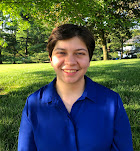


Cindy Harris (she/they) is a Mexican American comics artist and illustrator that works in the publishing industry. She has worked as a letterer, editor, illustrator, and writer, and loves stories about identity, relationships, and growth.

Thursday, November 3, 2022

Local Comics Expos in the Comics Ecosystem

Some of the best stories and art you’ll find will be at local conventions and expos. Some are run by nonprofits, such as the Small Press Expo, while others are run by colleges and universities to give their students a chance to show off and gain experience. 

These smaller shows are great opportunities to connect with small publishers, editors, artists, and writers in ways that can be difficult at larger conventions. It’s a lot easier to chat in a crowd of a few hundred instead of a few thousand! And these connections can be great to look back on when looking for people to collaborate with, or to simply find new friends in the space or authors and artists you admire.

These expos also often feature panels and demonstrations from working artists, where they can get into their process, techniques, and inspirations, and it’s easier to talk to them and ask more specific questions. These are great places to talk shop and learn more about the craft, whether you’re also a cartoonist or just want to explore the perspective. 


Artist’s tabling at these smaller conventions often show off more niche and experimental work. When I recently attended MICE 2022, I saw artists showing off mixed media comics, experimenting with format, and selling limited run prints, shirts, and, in one case, home-made cat toys to go with their books! (My cat definitely approves).


As an artist tabling, you can meet your table neighbors, which can include indie publishers, learn more about your local comics and book scene, and also test the waters with your original work! Many artists I spoke to had shorter 10-20 page comics that were test-runs of long-form, one-day-to-be graphic novels. These are great ways to get eyes on your work, and to also show proof-of-concept to anyone you pitch to. 

These conventions and expos are pillars in the comics industry. They’re great ways to meet peers and make friends with people with similar experiences, to learn and gain inspiration, and to get lay of the land on what’s popular and what speaks to you. Aside from that, is there really any better feeling than getting to talk to an author or artist about their work in person? Or having someone ask you to sign your zine or book?


Cindy Harris (she/they) is a comics artist and illustrator that works in the publishing industry. She has worked as a letterer, editor, illustrator, and writer, and loves stories about identity, relationships, and growth.

www.cyngharris.com


Thursday, September 1, 2016

Gene Luen Yang's "Glare Of Disdain"

From the New York Times, our National Ambassador for Young People's Literature published this comic: Glare of Disdain, a self-searching exploration of the power of story...

The first few frames of Glare of Disdain

Check out the whole comic here. I hope it inspires you, too.

Illustrate and Write On,
Lee

Friday, July 8, 2011

In the News This Week

Fridays on the SCBWI blog, I share snippets of and links to some of the publishing/media-related news I've read during the last week that I found interesting, helpful, and/or fun. Click titles to get to the full articles.

Today's news bits include virtual book clubs (or critique groups?) made easy, more on the WSJ YA story, e-readers print habits, some love for publishers, a digital deal for Harper, and more.


Host A Virtual Book Club Using Facebook, Skype Or Google (eBookNewser)
Having a virtual book club has never been easier thanks to new tools from Facebook, Skype and Google. Today Facebook announced new updates that make it easier to chat with multiple people and to hold one-on-one video calls.

YA Author Apologizes To 'Wall Street Journal' Critic (NPR)
Debates over what material is appropriate for teen readers have been raging ever since the young adult--or "YA"--genre first emerged.But the argument took on new life in June, when Wall Street Journal children's book critic Meghan Cox Gurdon suggested that teen fiction had gone from dark to lurid.

Comics And Kids Book Apps Lead Top Grossing iPad Book Apps (eBookNewser)
To prepare for Mediabistro’s upcoming Publishing App Expo on December 7-8, we will be spotlighting the top grossing book apps every week–helping our readers discover and analyze successful content.
 
Twitter Tip: Don’t Auto-Connect Your Facebook And Twitter Accounts
(AllTwitter)

Twitter has made it deceptively easy to connect your Twitter account to your Facebook account, but don’t be fooled. It’s usually not a good idea.  

Why You Should Own Your Domain Name (GalleyCat)
Having an online presence is critical for writers to market their work. In a recent blog post, author John Scalzi urged writers to purchase their own domain name online.

Tablet, E-reader Owners Also Print Junkies (MediaPost)
People who are heavy print magazine and newspaper readers might seem like the last ones to embrace gadgets like tablets and e-readers. But new research from Gfk MRI shows tablet owners are 66% more likely than the average U.S. adult to be big print magazine consumers and 54% more likely to be heavy print newspaper readers. Similarly, e-reader owners are 23% more likely to be print magazine enthusiasts and 63% more likely to get newsprint on their hands.  

Cherish the Book Publishers—You'll Miss Them When They're Gone (WSJ)
The Klondikers of digital publishing are rushing to stake their claims, inspired by tales of the gold to be found in the Kindle hills. A few pioneering prospectors have indeed struck it rich with light entertainments, most famously Amanda Hocking, who is a sort of Tolkien for our times (if Tolkien had been an avid fan of "Star Wars" instead of an eminent scholar of "Beowulf"). Her self-published e-books racked up so many sales over the past year that St. Martin's Press recently signed her for some $2 million.

Harper Children's Books Debuts Digital 'I Can Read' Series (PW)
HarperCollins Children’s Books is teaming with both the Apple iBookstore and Barnes & Noble’s Nook Bookstore to launch digital editions of its popular I Can Read early reader picture book series. Harper will set up I Can Read digital boutiques at each online store, launching with 80 titles with plans for more to come.