Showing posts with label creative practice. Show all posts

Thursday, June 12, 2025

My Process, My Nightmare!

Desk covered with books, paper drafts with highlights, a notebook with sticky notes in rows, open books, a plant and a window in the background.


I taught writing for two decades, for middle school through PhD students. You might assume I have my writing process down. RIGHT?

<Maniacal laughter – face plants in crumpled paper.>

Teaching taught me so much, like how unique everyone's process is. I also learned that sometimes it's easier to be kind to other writers than to oneself. I honestly would prefer to write a quippy post about process hacks (I love me some rainbow sticky notes!). But what has saved me this year is revising how I think and feel about my creative process.

When I worked with struggling readers, I used to start the school year by having a volunteer come to the front of the class. I asked them to repeat negative statements about our situation such as, I don't want to do this. This is pointless, and so on. I had them raise their arm from their side. I'd try to press it down -- and down went their arm. Easy. Then I had the students repeat affirming phrases about the task and themselves. I can do this! I'm strong! Suddenly their strength manifested. Even when I pushed hard, they held ther arms firm. I wanted students to discover the power of their own self-talk and belief. A power that still surprises me.

Two women with light skin sitting on a classroom floor surrounded by balloons
(Fellow Language Arts teacher Karen Ernst and me in 2000, on the last day of school. By this day, many of our students had discovered that they could do more than they thought!)


It's funny. I used to encourage my students to think about how their brains naturally work in order to figure out their writing process. Were they list people? Did they need to freewrite to find out what they think. Were they more visual, auditory, kinesthetic, concrete or abstract, and so on. There was no right or wrong answer. How could they work with their brains, not against them? For which parts of their writing would they need support -- because we all need help. 

Author Mary Logue talks about considering how we do other tasks, maybe at home or work, and how that might give us insights into our creative process. Do we need external deadlines? Do we need silence or visual reminders? As Lee Wind recently pointed out, the secret is not learning how others work but how we work. Yes! Good! Smart!

But in my weaker moments, I'm embarrassed by my early drafts. I berate myself. I feel ashamed at how ridiculous, how messy, how longwinded my work is. Who puts in that many details? What even IS my process? I have a thousand process hacks, and they definitely help, but at a certain point, everything falls apart. Who writes like this?!

Me, apparently.

<Outstretched arm drops.>

This spring my process -- and my self-talk -- were put to the test. Yes, there were tears. But there was also an unexpected discovery. It brought me back to the truths I once offered my young student writers all those years ago. As always, they are still teaching me.

Image of workspace with computer, drafts, books, and a corkboard with colored squares of paper pinned up.


This March, we were at the dinner table when i couldn't hold back the sobs. I had been struggling for weeks to craft an op-ed in response to the U.S. Supreme Court case Mahmoud v. Taylor, which names my picture book Love, Violet, along with eight other LGBTQ+ picture books. The clock was ticking down to the oral arguments. Would I miss my chance to speak? The strain of dredging up old experiences of growing up queer and religious was draining my reserves. I’m chronically ill, so most days I’m also managing shifting symptoms and brain fog. I couldn't wait for a better health season. This op-ed had to be done now! How could I condense a complex experience into 750 words? Every revision sprawled longer. I started over, over and over. This essay was getting WORSE. My process was a nightmare.

<Cue sobbing>

After listening, my spouse gently pointed out that despair was part of my process.

What?! Unhelpful! Try again, dear wife!

Except… she was right.

At some point, my projects always fall apart. As do I. Maybe I can’t find the structure or focus. I'm asked to cut something meticulously crafted or to abandon my approach. At some point, everything feels impossible.

Yet realizing this is my "normal" process reminded me of something else I knew in my bones but didn't want to admit:

My best epiphanies follow despair. After “giving up,” I wake up the next day with a fresh fierceness to solve problems. After the collapse of hope, I'm suddenly open to extreme revision. Maybe it’s a survival instinct: Am I really going to let this project die? Maybe for me, testing the stakes of actually quitting forces me to do what it takes to make a project work.

Apparently, this is my process.

Realizing that despair isn’t the end but a means has truly helped me. Isn’t that what stories teach us, too? That as bad as things get... there is hope?

That op-ed that had me in tears somehow ended up published in U.S. News and World Report (video intro) the night before the Supreme Court oral arguments – just in time. I have no idea how I got from mess to focus to the right voice. And maybe that isn't helpful... except to know that it happened. It was possible when it felt like it wasn't. That's something.

US News and World Report. Title: "Commentary : Supreme Court Case on LGBTQ+ Storybooks Raises Questions for All Parents: My dad was an Evangelical pastor. I wish I'd grown up with books featuring LGBTQ+ characters." By Charlotte Sullivan Wild, Contributor, April 21, 2025, 7:06 PM. Cartoon of nine U.S. Supreme Court justices each holding a picture book named in this case.

Here's the most important part of the story -- the part that I hope would make my students proud. After that impossible op-ed, there was one more topic I dearly wanted to write about before the Supreme Court announced their decision in June or July. <Clock resumes ticking.> This idea was complex. I had tried to write an op-ed bout it a years ago. It was about justice. It felt urgent. But as is my way, that first attempt became so tangled with sprawling sentences and too many ideas... I gave up in despair.

Could I do it now?

This time, I began differently, with the same determination -- but also with grace, with acceptance of my terrible unique process. I WOULD NOT PANIC. No matter how tangled my drafts became, I would persist, step by step, breath by breath, because recently, my nightmarish process had worked.

I began with raw scribbles. I scratched out points on scraps of paper. I laid them out. My teaching friend Karen (pictured above) and I used to call this stage notecard solitaire. I looked for groupings, a possible order. Slowly and painfully, I let myself write everything I wanted to say in a 7,000-word draft. Ridiculous! Who writes this long?! The familiar thoughts rose like shrieking vampires from my nightmares.

[Sidebar: You might enjoy this song about killing the vampires of doubt (with swearing): https://scbwi.blogspot.com/2025/06/pointless-joy-returning-to-heart-in-our.html ]

This time, instead of berating myself, instead of abandoning hope, I chanted: This is my process, This is my process. This is…


Typed drafts with colored markings, handwritten outlines, and scraps of paper with ideas, in a jumble on a blue table.

This time, I didn’t cry. There were a thousand deep sighs. There were wretched drafts that kind people reviewed to help me find my way. This is my process. This is possible. This is...

How that essay transitioned from an unreadable franken-draft to the 3,600-word essay that is now on submission… I have no idea. Except that I understood that the nightmare was wasn't the ending. It was the means.

I wish I could reveal your perfect process, offer you the exact right tips. Your proces might change with each project or with time. There are so many resources on process here at SCBWI and at Kidlit 411 (Here are some that have worked for me). But what has helped me most is accepting that my nightmarish process is mine -- and it can work. Somehow that takes the fear out of it, at least a little.

What makes our work shine is the particular weirdness of our brains. Only we can create what we create. Criticizing our own brains and processes is a waste of energy. Not every project will work... but many projects can work if we embrace our unique way of being in the world.

Even our nightmares have their uses.

And isn’t that kind of like life? Just when everything feels unbearable, impossible… the morning comes?

I'm wish you faith for the nightmares, and joy for the journey.

XO Charlotte


Morning sun breaking over the mountains and pines

In case you missed it, here’s my last post: “Pointless Joy! Returning to the Heart in our Art

Doodle of the word "Joy" with images like a starry sky, a sailboat and sunset, flower, doodled lines.

Charlotte Sullivan Wild is the author of several picture books. Love, Violet (illus. Charlene Chua) is a Stonewall Book Award winner, Charlotte Huck Honor Book, and Lambda Literary Award Finalist. The Amazing Idea of You (illus. Mary Lundquist) is a lyrical celebration of the potential in living things, especially in every child. She has taught language arts, literature and writing, worked as a bookseller, and volunteered as the SCBWI RA for Southwest Texas. She is represented by AnalĂ­a Cabello at Andrea Brown Literary Agency. Learn more: www.CharlotteSWild.com 

Thursday, April 17, 2025

Get Creative With Your Creative Accountability

My head likes to lie to me. It says:

You’re lazy.

You don’t write enough.

You’re not a real writer.


What I’ve come to learn—in life as well as in my creative endeavors—is that my head can be an unreliable narrator at best and a bully at worst. It will present False Evidence Appearing Real (FEAR) and taunt me with Shoulda Already Mastered Everything (SHAME). It’s sometimes an unsafe neighborhood to hang out in, which is challenging for me because it’s where all my best ideas, characters, scenes, snarky quips and plot twists live.


Due to a number of factors (some in my control, others not), I likely write less than the average professional author. But I DO write, stringing words into sentences, sentences into paragraphs, paragraphs into pages, and pages into full manuscript drafts, long and short. Regardless of what my head would have me think, I’m not lazy, I do get a lot of writing done, and I am a real writer.


My head can be relentless, though, so I needed a way to reassure myself and to provide clear evidence of all the work I was doing. To that end, I developed a new practice after a casual conversation with my mom. (Moms are special that way, aren’t they?) She was telling me about a composer she liked who’d mentioned in an interview that he puts a checkmark in his calendar for every day he worked on his music.


October calendar page with large and small star stickers on most days and misc. other markings.
Oct 2021 creative accountability
calendar page


Checkmarks seemed a bit dull for me, so I used colorful star stickers I had on hand, “awarding” myself a star for every day I wrote. Before long, I thought why stop at merely marking writing days? How about days with author activities, artist’s dates, drawing for fun? Heck, I stuck swim days and social activities in there too, as both contribute to my mental health and ability to re-fuel creatively. 

Add in the occasional hand-drawn doodle or mini-photo, and these creative accountability calendars started being not only really funbut opportunities for additional creativity! 


Photo of various mini-sticker sheets including books, pencils, hearts, stars, the letter Z, etc. Insert in top left corner shows what each sticker stands for.
My min-sticker collection

I upped my sticker game too, using super cute pencils, books, hearts and more—all purchased on Etsy, so I’d be supporting indie artists. 

Now when my brain tries to tell me I’m lazy, I need only to glance at my Creative Accountability Calendar right beside my desk to prove my head wrong. I share photos of my calendar on line, at first worrying that it would seem like I was bragging or something, but being reassured by friends that it was fun and inspiring.


April calendar page with various stickers on most days along with misc. other markings.
April 2024 creative accountability calendar page
I urge you to give this a try if you have a bully brain like mine—or if you just like keeping track of work in a fun, arty way. There’s no right way to do it, no rules. Maybe the simple checkmarks work for you? Or maybe you want to draw your own symbols or make your own stickers? Just have fun with it. 

Personally, I love looking at all the stickers I’ve “earned” in a given month, and I bet you will too!

Karol Ruth Silverstein's author photo. She's a white woman with wavy brown hair, wearing blue glasses and a lavender top emblazoned with the word "PROUD." The "O" on proud is a dynamic wheelchair icon.


KAROL RUTH SILVERSTEIN is an award-winning children's book author and disability activist. She lives in West Hollywood, CA with two impossibly fluffy cats. 

Tuesday, December 31, 2024

Creative Gifts You Can Give Yourself in 2025: Inspiration (both External and Internal)

The Playbill for Hamilton: an American Musical

I remember seeing the musical Hamilton years ago and being blown away. It was so creative, and made history feel very current and relatable and pretty cool, too.

And then for a while afterwards, I felt kind of stuck creatively. As much as I loved the music, I didn't listen to the cast album again for weeks. I felt overwhelmed, and got stuck in my own creative work, thinking: well, how can I compete with that?

I finally figured out that I don't need to compete with Lin-Manuel Miranda, and certainly I don't need to be him creatively. He's doing a swell job of being himself creatively.

My job is to be ME creatively.

To take inspiration from outside, things like the musical Hamilton, and consider how I might make history feel current and relatable and pretty cool in my own way. (Editors often call this our "voice" - the thing that makes OUR telling of a story uniquely ours.)

The other thing I've discovered is that inspiration works from the inside, too. One way I do this is by making a list of the things I LOVE and that inspire me about my current work-in-progress. 

I've found this is a great way to fall in love with a project again, and a useful strategy to get past feeling stuck.

So as we move into 2025, I hope you'll give yourself the gift of Inspiration -- both external and internal. And let your creative work be a celebration of the things that most inspire you!

Illustrate, Translate, and Write On,
Lee

PS: If you haven't seen them yet, you can catch up on the other creative gifts you can give yourself in 2025 series; Community, Time to Play, and Education on the Craft and Business of Children's Books.

Tuesday, December 17, 2024

Creative Gifts You Can Give Yourself In 2025: Time to Play

Continuing this series of looking ahead at creative gifts you can give yourself in 2025, today's post is giving yourself the gift of time to play.

This can look like so many things, but the core is to allow yourself time to create just for the fun and joy of creating. Creating not with the intent that it will be consumable by others, or ultimately for others, but creating something just for you. For the process more than the result.

For the last two years, at the suggestion of my adult daughter, our family has done a parallel-play (where we do it at the same time but everyone works on their own) new year vision collage. This has involved going through old magazines, cutting out images and words and just letting things flow, assembling something that resonates both visually and with words that can be like a poem or even a rallying cry of encouragement for the year ahead. I keep mine up by my desk all year, as a reminder of the joy of creativity.

You don't have to collage, but I encourage you to start playing in some way. With art. (Try out a new medium - get messy!) With words. (Try a new structure of poetry!) Build a sand castle. Or a snow fort. Maybe even put on some music and dance, as if—as the saying goes—no one is watching. 

Interestingly, I don't have a lot of photos of me playing... mainly because when I do it's not something I document to share with others. But this is a photo from a vacation, where I did play with some balloons and created a hat. Balloons are not generally my medium. No one is going to write a symphony about the creativity behind this balloon hat, but that wasn't the point. It was play pure and simple, and joyful just for the creative process. 

The act of creating, just for us, has so much joy and value built in it, and it's a great thing to remind ourselves that we can give ourselves this gift whenever we need it. We can even give it to ourselves regularly, if we find it contributes to our joy. If it helps to make it happen, put some time aside in your calendar now. 

I hope, in the year ahead, you'll consider giving yourself the gift of time to play, whatever that looks like for you. I fully believe the rest of your creativity—and you—will benefit.

Illustrate, Translate, and Write On,
Lee

P.S. If you haven't seen it yet, I invite you to check out the first creative gift post, the Gift of Community.

Thursday, June 6, 2024

Five Reasons To Type Up Other Writers' Books

A common piece of advice for aspiring writers is to read lots of recent books in their genre, advice I agree with 100%. But I’ll add a twist—not only should aspiring picture book authors READ a lot of recent picture books, they should also TYPE up picture books they love.


Some writers are initially confused by this advice. Shouldn’t they be focusing on their own stories, not other people’s stories? I believe writers can become better writers by typing other authors’ words. Here are my reasons why:

  • It’s a hands-on study of what a picture book IS. I type up books using page spreads, i.e: pg 4-5, pg. 6-7. After typing up hundreds of picture books over several years, my first drafts are now much more polished than when I first started writing since I now have an innate sense of wording, sentence length, pacing, page turns, etc.
  • If you are an author (not an author/illustrator), it’s a black-and-white “snapshot” of what catches an agent’s or editor’s eye. Since the illustrator is hired by the publisher, typing up the text of a picture book that has both an author and an illustrator, shows you how the manuscript looked when it was acquired. Yes, there may have been a few art notes. And, yes, there were likely some edits done after acquisition, but you will get a general idea of what the author submitted. After you type it up, print it out. Then study it. By removing the words from the art, can you see how much room the author left for the illustrator? And when looking back at the art, can you see how much the illustrator added their “story” to the book independent of the words? You can glean so much about the collaboration of words and art!
  • It can be helpful when tackling revisions. When working on a new project, I type up comps of the style/genre of the book I’m working on. When I get stuck on revisions, I compare my text side by side with the text I typed up. Then I dissect it. How did the author write scenes or explain difficult concepts so a young reader can understand them? How did the author use page turns to increase tension in the story? What literary techniques—metaphor, simile, alliteration, onomatopoeia, etc—did the author use? Can some of their techniques help my story? (Obviously, I don’t copy what they did. I just use their examples as inspiration.)
  • You can be a better critique partner. By typing up lots of picture books, as noted above, you get a better feel for what a successful picture book looks like on the page. Which helps you provide a better critique. And you’ll have a “library” of picture books to suggest as comp titles or to use as samples in techniques for your critique partner to consider. I frequently email typed-up stories to critique partners to save them a trip to the library and so they can see the words without the art.
  • It’s “helpful” procrastination. On days when the words aren’t flowing for me or I don’t feel like writing, I pick up a picture book from my library stack to type up. I may not be getting actual writing done, but I’m practicing what good writing is. And often that process helps me find a way out of my brain block. 


I’ve been typing up picture books since 2015 and have over 300 of them typed up. I continue to type up favorites. I know, without a doubt, I am a better writer because I do so.


©Yanka Photography


Debra Kempf Shumaker started reading at the age of four and hasn't stopped since. She grew up on a small dairy farm in Wisconsin but now writes picture books from her home in the suburbs of Northern Virginia. She is the author of FREAKY, FUNKY FISH (2021), TELL SOMEONE (2021), PECULIAR PRIMATES (2022), and the upcoming WIND IS A DANCE (October 1, 2024). 


Debra is a member of SCBWI, several critique groups, and also a co-host of #PBPitch, a Twitter pitch party for picture books. Debra reviews picture books on Instagram every Monday, Wednesday, and Friday, firmly believing there is a picture book for every reason, every season, and every age. Visit her online at www.debrashumaker.com, on Twitter or X at @ShumakerDebra, on Instragram at @debrakshumaker, and Bluesky at @debrakshumaker.

Tuesday, September 27, 2022

Quarterly Goal Setting

A screen shot of the October, November and December 2022 Calendar dates


Businesses often have quarterly goals, and statements, and reports.

But often, when we talk about our creative goals, even when it comes to the business of our creating books for kids and teens, we shift the timeline out to a year, or three years, or 'what's your five year plan?'

Perhaps some of that is due to the particular pace of publishing, which can seem glacial until suddenly there's a panic to rush-rush-rush... and then it can seem glacial again.

And perhaps it's because so often we hold aspirations that are outside of our control, and putting a longer timeline on it makes it seem more possible.

For now, consider setting a creative and a creative business goal for the next three months: October, November, and December. I'd suggest these be two separate goals, and for things you do control. 

An example of a creative goal could be writing, or drawing, or translating, every day for twelve minutes (per Linda Sue Park's writing sprint suggestion.) 

An example of a creative business goal could be submitting your illustrations to all three of SCBWI's monthly draw this! challenges.

You choose - and keep in mind that creating our work is one part of this gig, and submitting/offering/promoting our work is another.

What are your 4th quarter 2022 goals?

Share them or keep them close - the idea is to keep us productive, and inspired, and accountable.

Illustrate, Translate, and Write On,
Lee

Thursday, July 14, 2022

Refreshing Your Illustrations with Social Media Drawing Challenges

Some of my favorite portfolios pieces are random, one-off illustrations that I seem to conjure from thin air. Typically, I have no trouble dreaming up a scene, characters, and color palette to illustrate. Just put the Apple Pencil in my hand, my iPad in my lap, and let me get to work! However, every once in a while I find that big white space daunting. I just can't think of a thing to draw! And if I do, I find myself slipping into my comfort zone and drawing things I've already drawn a thousand times.

How to get motivated to take on that blank page? To create something new and different? Social media to the rescue! Well, to be more specific, illustration and drawing challenges you can find on social media. (Instagram in particular has a robust children's illustration community.) These challenges are sure to boost your creative thinking.

If I stare into space long enough...

Below are some of my personal favorite drawing challenges.

1. #dtiyschallenges

DTIY stands for "draw this in your style." Illustrators create an image, label it as a #dtiy, and post it on Instagram. This label is an invitation for you to draw the same image in your own style. It's so fun to see how different illustrators render the same image. Some have been dtiy-ed thousands of times! Most of these images are of individual human characters, but a good search using the #dtiyschallenges will yield landscapes, anthropomorphized animals, and still lifes. If you choose to do this challenge, use good etiquette and be sure to post the original image along with your own, use the creator's hashtag, and tag them in the post as well.

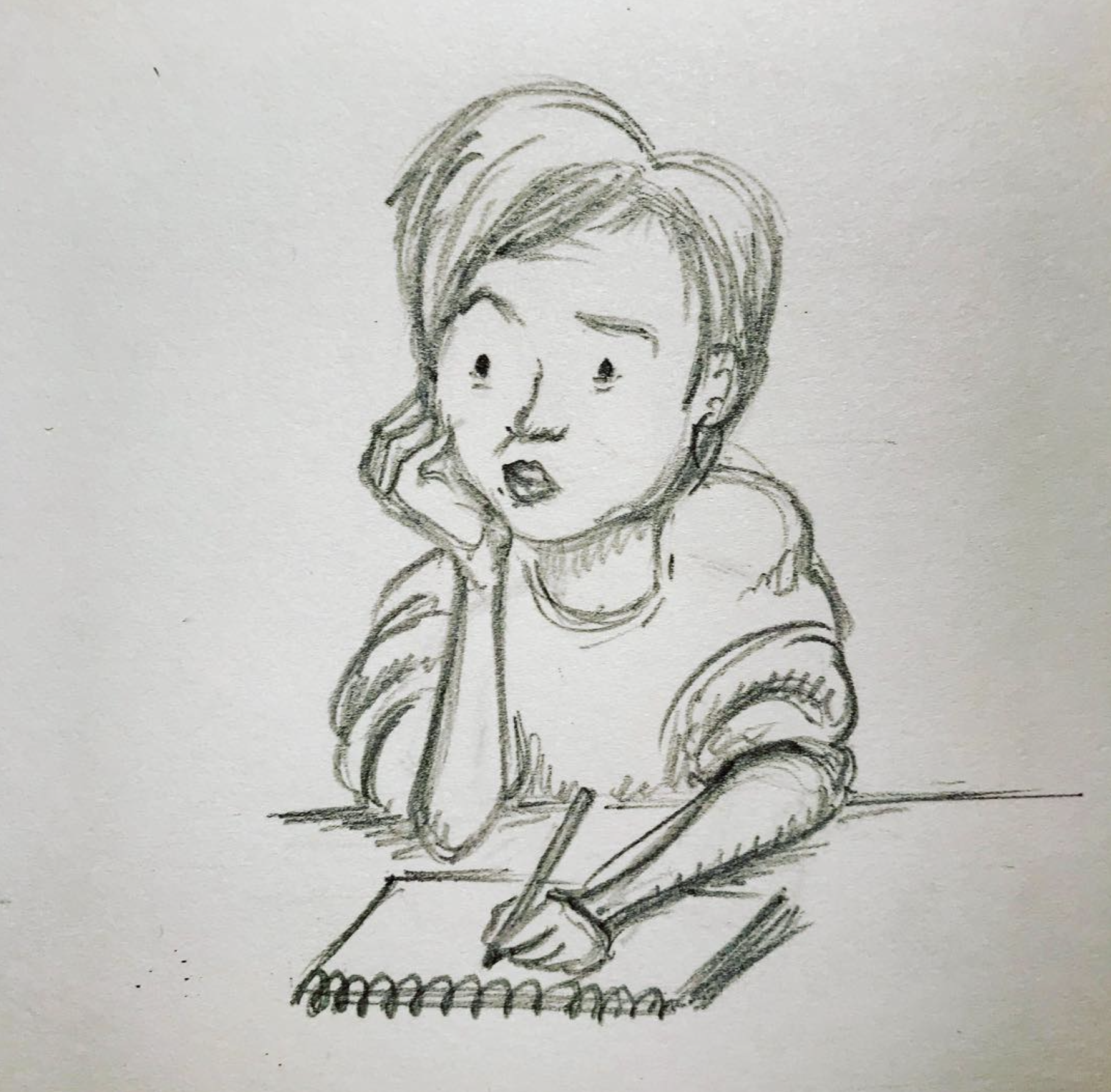
My very first #dtiy! So far ONE person has recreated their own version of it!

2. Virtual Studio

Head over to Twitter and check out @StudioTeaBreak. Virtual Studio provides a different illustration challenge Monday through Thursday. Monday is #mythicalmashup, in which you draw the combination of a mythical creature and some other object. Tuesday and Wednesday is for the #shapechallenge. An empty shape with a dot inside is provided and your challenge is to find out what it can become. Thursday, is my personal favorite, the #portraitchallenge. Portraits by famous painters are provided (out of copyright and by mostly dead painters) for you to recreate in your own style.

3. #transmundanetuesdays

On the first Tuesday of the month illustrator Carson Ellis posts an incredibly unique drawing challenge on Instagram, which was born out of the pandemic. On these "transmundane Tuesdays" she reveals prompts that fit in the following categories: Mundane - ordinary descriptors, Transmundane - out of the ordinary descriptors, and Garb - what they're wearing. This one is so much fun that my local SCBWI chapter (Western Washington) hosted a virtual get-together to do our transmundane illustrations together.


The #transmundanetuesday prompt from July 5th

4. Animal Alphabets

Another one on Twitter, this challenge provides the name of an animal every Tuesday in alphabetical order. They have done the alphabet MANY times over and as a result, the animals they choose are quite specific and unique. At the time of this post, they are currently on Lionhead Rabbit. 

5. Various monthly challenges

Mostly on Instagram, there are a number of monthly challenges you can undertake. Some of them even provide a daily prompt word. Here are just a few:

September - #sketchtember

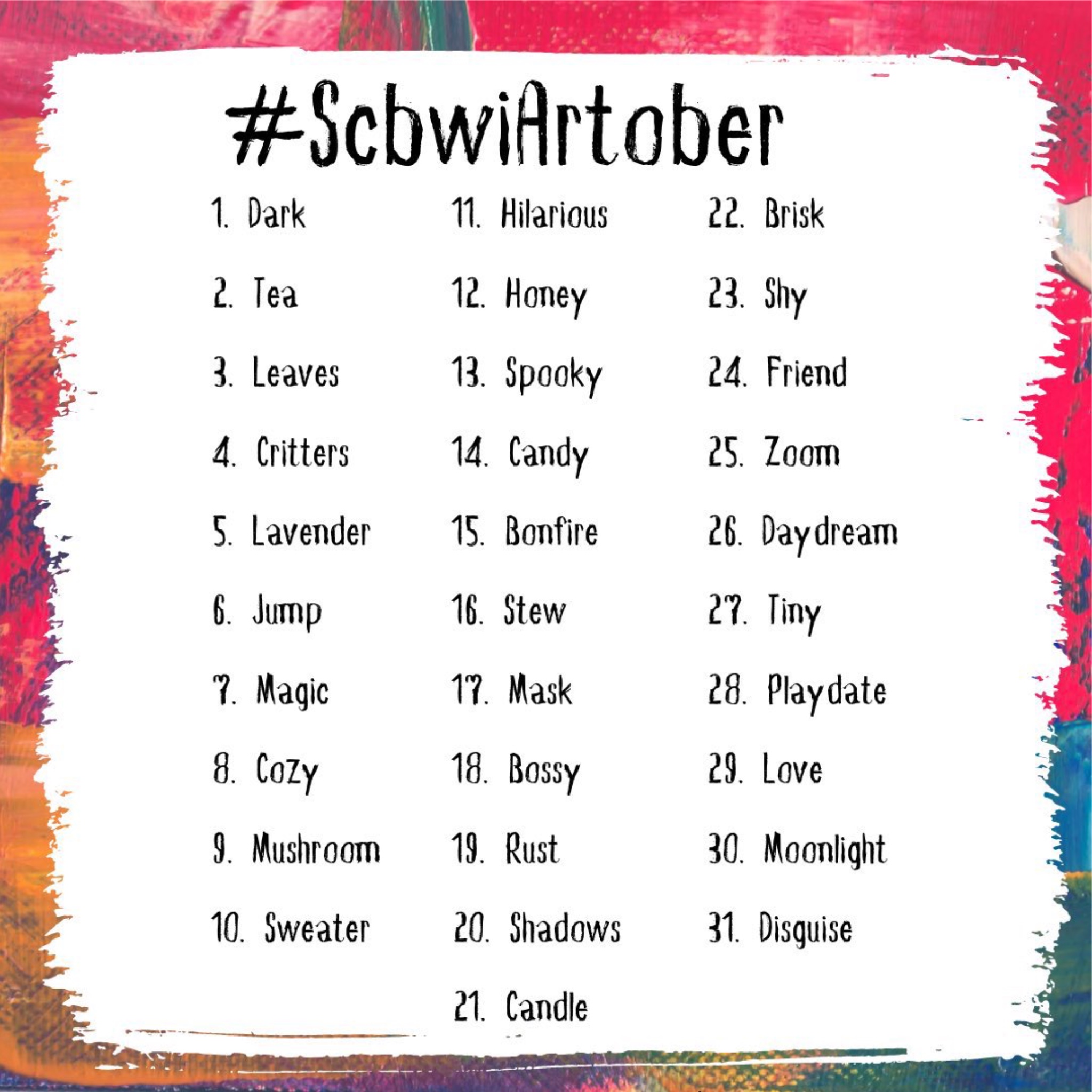
October - #inktober #scbwiartober

November - #folktaleweek

May - #mermay

June - #junicorn


2021 prompts

My creation for #13 - Spooky pushed me to use a dark palette and to learn how to use gaussian blur!

6. #bscolorchallenge

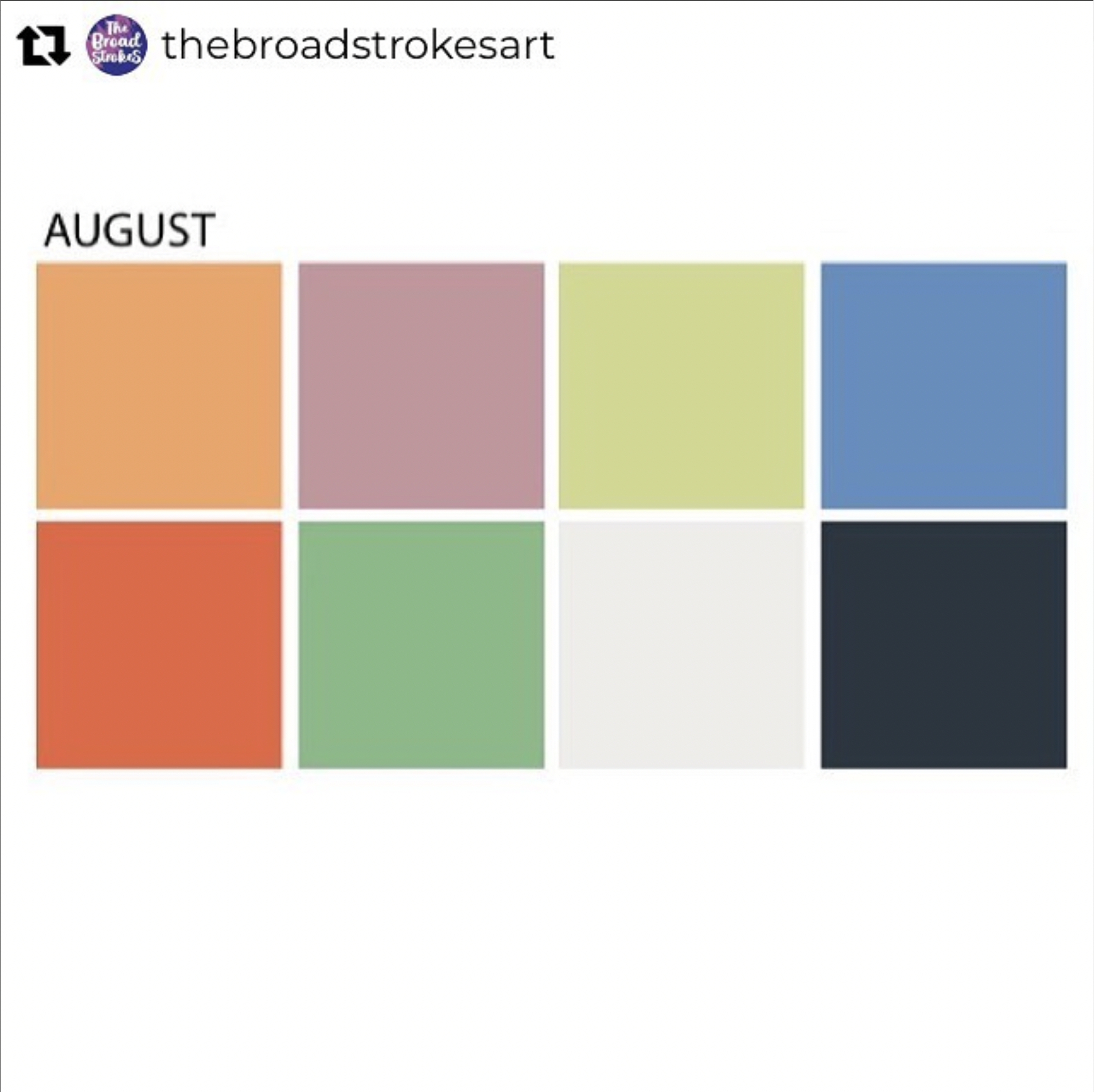
And, I'll take a moment to promote an illustration challenge presented by my very own critique group @thebroadstrokesart. Every month, we post an eight color palette created by the very talented Leanne Hatch. It's a flexible challenge in which you can attempt to use as many or as few of the colors as you like to create your illustration. It's incredible to see the variety in the illustrations produced with the same handful of colors! We're taking a break for the summer, but will be back with a new palette in September.

The #bscolorpalette from August of 2021
My creation based on the palette.


I hope you'll check out at least one or two of these challenges the next time your creative practice needs a refresh. (Um, maybe even try out my #dtiy?...) Do you have a favorite illustration challenge on social media? Please feel free to share it in the comments below! 


Ellie Peterson is an author and illustrator of many picture books including HOW TO HUG A PUFFERFISH and SCHOOL IS WHEREVER I AM. Find out more about Ellie and her work at elliepetersonart.com.