
The Internet is full of writing challenges: NaNoWriMo, StoryStorm, 12x12, and more*. And those writing challenges are a great tool for moving your story forward.
*The various writing challenges are explained in more detail at the end of the post.

My debut picture book, FREAKY, FUNKY FISH: ODD FACTS ABOUT FASCINATING FISH, is the result of several writing challenges. In November 2012, I was participating in Tara Lazar’s PiBoIdMo while at Disney and wrote down Idea #32 “fish in a zoo” after seeing how many fish were named after animals. In 2013, I used that idea and wrote a first draft of a fiction story called NOT A GOLDFISH as a part of Julie Hedlund’s 12x12 challenge. That book never sold. But, in spring 2018, I was brainstorming topics for a rhyming, nonfiction picture book and I remembered all the strange fish from that earlier book and thought that might be a fun topic. I joined Paula Yoo’s NaPiBoWriWe and wrote a new draft about odd fish. After a few months of revisions, I sent it to my agent. In January of 2019 I had my first offer on a picture book! FREAKY, FUNKY FISH came out in May 2021.

My upcoming picture book, WIND IS A DANCE, is also the result of a combination of writing challenges. First, I came up with the idea during PiBoIdMo in November of 2015. For Idea #18 I wrote, “Lyrical NF book about wind—different types? (Similar to WATER IS WATER.)” In February 2016, The Lyrical Language Lab Alumni Group on Facebook had a “poem buddy” challenge in which we emailed poems to each other throughout the month. I decided to take my PiBoIdMo idea and wrote poems on wind. Eventually, I revised and strung those poems together to create a picture book. That book found a home with Kids Can Press and WIND IS A DANCE comes out on October 1st.
Other writers have also found success with writing challenges:

Katrina Swenson’s upcoming debut picture book, LOVE, GRUMBLE, is the result of a writing challenge. Katrina says, “The story started out as a Susanna Hill Valentiny story in 2018. I got an honorable mention and was so encouraged. . . I flushed it out into a full-length manuscript, and then revised it a billion times before earning a PB Chat mentorship with it in 2020 where I revised it some more.” In 2022, Katrina signed with an agent. LOVE, GRUMBLE sold in 2023 and will be released Fall 2026.

Kelsey Gross also has a success story from Susanna Hill’s contests. Kesley says, “At the end of November 2020, I was already thinking about writing a winter solstice book when Susanna Leonard Hill announced the guidelines for the Kidlit Holiday Writing Contest. That year, all entries had to focus on “helping”. The line, I can help to shine the light! came to mind, and soon I had a draft featuring this repeated line.” Kelsey was a finalist in the contest and she lengthened the story before submitting it to her agent. In January 2021 her agent subbed WINTER: A SOLSTICE STORY and it soon sold to Paula Wiseman/Simon and Schuster. It came out in 2023.
 |
| @Electric Ad Agency |
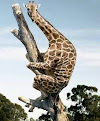
Lisa Katzenberger’s picture book, IT WILL BE OK: A STORY OF EMPATHY, KINDNESS AND FRIENDSHIP, was inspired by this fun photo she saw on Twitter. In January 2017 she wrote her first draft of the story for Julie Hedlund’s 12x12. A few years later, through an SCBWI opportunity, she submitted the story to Sourcebooks. The editor acquired it and it came out in 2021.

Not only do writing challenges provide momentum to get words down on paper, they also help writers find community. Over the 10+ years that I’ve been writing, I’ve participated in many challenges including ones for revision, for studying mentor texts, etc. I not only moved my stories forward with these challenges, I also made some great friends.
While some of these writing challenges have fallen by the wayside, if you’re looking for a challenge to help your writing and can’t find one, consider creating your own! All of these challenges started out with a writer who had an idea to help other writers. Maybe a new one started by you can help others find success, too.
Here is a bit more about the challenges mentioned in this post:
Tara Lazar’s PiBoIdMo (Picture Book Idea Month) used to be every November and just for picture book writers. But in 2017 Tara moved it to January, renamed it Storystorm, and is open to writers for all ages, not just picture books. More info can be found here: https://taralazar.com/storystorm/. Participating in it is free.
Julie Hedlund’s 12x12 is a challenge for picture book writers to write a rough draft every month for a year. But it's so much more than that. Membership includes a community forum, webinars, opportunities for critiques, and more. There are different levels of memberships at different price points, with the highest level providing submission opportunities to agents. More info can be found here: https://www.12x12challenge.com/membership/.
Paula Yoo’s NaPiBoWriWee (National Picture Book Writing Week) was a challenge to picture book writers to write one rough draft every day for one week. While it no longer happens, her website still has great posts from when it ran from 2009 - 2019. Check it out for some inspiration! https://napibowriwee.com/.
The Lyrical Language Lab is an online class taught by Renée LaTulippe. After the course, you can join the Alumni Group on Facebook. In 2016, Renée created a "poem buddy" challenge. While there aren't always challenges with this group, the class is top notch if you want to learn more about writing lyrically. More information can be found here: https://www.reneelatulippe.com/lyrical-language-lab/
Susanna Leonard Hill’s Writing Challenges: Susanna is an author who hosts holiday-themed writing challenges on her blog for Valentine’s Day, Halloween, and the December Holidays. More info can be found here: https://susannahill.com/for-writers/contests/
 |
| ©Yanka Photography |
Debra Kempf Shumaker started reading at the age of four and hasn't stopped since. She grew up on a small dairy farm in Wisconsin but now writes picture books from her home in the suburbs of Northern Virginia. She is the author of FREAKY, FUNKY FISH (2021), TELL SOMEONE (2021), PECULIAR PRIMATES (2022), and the upcoming WIND IS A DANCE (October 1, 2024).
Debra is a member of SCBWI, several critique groups, and also a co-host of #PBPitch, a Twitter pitch party for picture books. Debra reviews picture books on Instagram every Monday, Wednesday, and Friday, firmly believing there is a picture book for every reason, every season, and every age. Visit her online at www.debrashumaker.com, on Twitter or X at @ShumakerDebra, on Instragram at @debrakshumaker, and Bluesky at @debrakshumaker.


