Showing posts with label book banning. Show all posts

Tuesday, April 15, 2025

Rally for Inclusive Education at the US Supreme Court April 22, 2025

Shared by our friends at Authors Against Book Bans, here's the scoop on the Rally for Inclusive Education, happening Tuesday April 22, 2025 from 8am-2pm Eastern:

screenshot from the Rally for Inclusive Education website

On April 22, 2025, the Supreme Court of the United States will hear arguments in Mahmoud v. Taylor, a case brought by a group of parents in Montgomery County, Maryland, who sued the school district for the right to opt their children out of using certain books in school they argue are against their religious beliefs. The books all have LGBTQ+ characters and themes.

covers of some of the LGBTQ+ inclusive picture books.


To support inclusive education, the Coalition for Inclusive Schools and Communities and the Montgomery County Pride Family are planning a rally on the steps of the US Supreme Court on Tuesday, April 22, 2025 from 8am-2pm ET. “The opposition seeks to erase LGBTQIA+ identities from the classroom!” say the organizers. “Now is the time to stand together and defend diverse, affirming learning environments that uplift and empower all students.” Anyone who is able to attend is encouraged “to join the rally, share stories, and send a clear message: We will not be silenced. We will not be erased.”

Lee's editorial thoughts on this:

This issue goes far beyond these nine lovely, inclusive, and very age-appropriate picture books. (Truly, if you're not sure, read them. Full list below.) If parents can opt their children out of stories of LGBTQ+ lives and characters, with the humiliation and othering that would entail, and the messaging to ALL kids that there's something wrong with Queer lives and identities, it will not stop there. 

It is not hard to imagine the next series of communities that would be scapegoated in this way. Parents wanting to opt their children out of books that share the stories of Black and African American People.  The stories of Asian American, Native Hawaiian, and Pacific Islander people. The stories of Disabled People,. The stories of Latino/a/e people. The stories of women. The stories of Muslim people. The stories of Jewish people... The list would be endless, and damage immense.

As the organizers of the rally say, "now is the time to stand together."

Illustrate, Translate, and Write on!
Lee

Here are the nine books in this case:

Born Ready: The True Story of a Boy Named Penelope by Jodie Patterson, illustrated by Charnelle Pinkney Barlow 

IntersectionAllies: We Make Room For All by Chelsea Johnson, LaToya Council , and Carolyn Choi, illustrated by Ashley Seil Smith 

Jacob’s Room to Choose by Sarah Hoffman and Ian Hoffman, illustrated by Chris Case 

Love, Violet by Charlotte Sullivan Wild, illustrated by Charlene Chua 

My Rainbow by DeShanna Nealand  Trinity Neal, illustrated by Art Twink 

Pride Puppy by Robin Stevenson, illustrated by Julie McLaughlin 

Prince & Knight by Daniel Haack, illustrated by Stevie Lewis 

Uncle Bobby’s Wedding by Sarah S. Brannen, illustrated by Lucia Soto 

What Are Your Words? by Katherine Locke, illustrated by Anne Passchier  

Want to read more on this? Start with: Unite Against Book Bans's Mahmoud vs. Taylor: Take Action; and the statement by the authors as posted on PEN America

Tuesday, March 18, 2025

Should parents be allowed to opt their children out of seeing books that include people who are different than themselves?

At Issue:

In this poignant essay in TIME, Our Books Help Teach LGBTQ Themes in Schools. Should SCOTUS Allow Parents to Opt Out?, children's book authors Sarah and Ian Hoffman explain their perspective on being both the parents of a child who doesn't fit the gender binary's strict two-and-only-two boxes of behavior and the authors of one of the books being challenged in a case about to go the Supreme Court of the United States of America.

screenshot of TIME article on Our Books Help Teach LGBTQ Themes in Schools. Should SCOTUS Allow Parents to Opt Out?


They write,

Jacob’s Room to Choose is one of nine children’s picture books named in Mahmoud v. Taylor, a lawsuit filed in Montgomery County, Md., by parents who are upset that their children saw books like ours in their classrooms—books that teach self-acceptance and kindness.

Speaking of the power of representation – how meaningful it is when you have it, how devastating when you don't, Sarah and Ian share:

Allowing families to opt their children out of reading our books hurts the children whose lives and families are reflected in those books. “Opt-out” policies starkly communicate to classrooms of children that behaving decently to all human beings is optional and tells kids who are different that they and their families don’t merit the respect of all their classmates.

Some Thoughts on Creating In the Midst of This:

I'm a Gay man who writes books to empower kids and teens. Many of my books are inspired by Queer history and social justice.

The precedent if SCOTUS allows parents to opt-out of seeing and knowing diverse books exists would be wide-ranging. It's not much of a stretch to envision the subsequent groups whose representation in schools would be denied next... 

But diverse readers who need to see themselves reflected in books will still need that representation. 

And readers from the dominant culture will still need to have empathy and understand that they share so much with people who on the outside may seem really different from themselves.

And maybe most of all, living in community doesn't mean everyone is the same. Rather than seeing that as something to deny, or tolerate, or even accept, shouldn't we be working toward a world where our differences are celebrated?

That's the world I want my kiddo to live in. It's the world I want to help create. And that's a big part of what drives me creatively.

Illustrate, Translate, and Write On,
Lee

Thursday, December 12, 2024

Frankfurt Diaries: The Frankfurt Kids Conference, Part 2 - Guest Blog Series by Lawrence Schimel

As I wrote last week, at this year's Frankfurt Book Fair I wound up moderating half a dozen events, which I've been sharing here on the SCBWI Blog for those who couldn't attend the Buchmesse in person this year.

After Cornelia Funke's keynote conversation, we had a session featuring publishers, with Ken Wilson-Max, an author-editor from Zimbabwe now based in London, who was previously editor at Alanna-Max, an independent press devoted to children's books with diverse characters, and now runs Kumusha Books, the first imprint from HarperCollins UK to focus on publishing more inclusive books; Ani Rosa Almario, VP of Filipino publisher Adarna House; and Dominique Raccah, founder, publisher and CEO of Sourcebooks.

I had met both Ken and Ani before, but it was my first time meeting Dominique in person, so I got to fanboy a little from the stage, having watched Sourcebooks rise from outside the traditional channels of publishing and in their maverick way create space for so many books and voices, coming to be one of the largest publishers in the US and a serious rival to the Big Five. Just a few weeks before our discussion, Newsweek had found Sourcebooks to be one of America's Most Loved Workplaces, and Dominique was able to talk about hiring diversely and *supporting those people* (emphasis mine) as a key philosophy to their success. 

I especially admire a brief interview Dominique gave to the Frankfurt Bookfair, which is full of concrete, actionable things publishing people can do to help promote Freedom of Expression, and I invited Domonique to share with the audience (who might not have read it before) a recap and to explore further those elements. I would urge everyone to click through and read that now before continuing:

https://www.buchmesse.de/en/news/dominique-raccah-freedom-expression-week

Ani spoke about creating space for Filipino voices, especially after the many years of both Spanish and English colonial rule, as well as some of the challenges of making sure Filipino culture reaches kids in the diaspora as well; Adarna House has a proprietary app, for instance, so kids can access books in the languages of the Philippines from anywhere in the world.

Ken talked about some of the challenges about publishing more inclusively from within corporate publishing. He spoke about some of the education he has wound up having to do in house, and the battles he sometimes faces to publish books by inclusive creators but not necessarily books about diversity (especially those aimed at educating a white audience) or being different.  He ended by reminding the audience that there isn't a binary of corporate bad, independent good. The entire publishing world needs to be both intentional and proactive about publishing inclusive works and voices.

The next session was on Books Without Barriers: Accessibility in Publishing, with panelists Carolina Ballester, executive director of the International Board of Books for Young People (IBBY); Karine Pansa, the outgoing president of the International Publishers Association (IPA); and Åsa Bergman, head of the Astrid Lindgren Memorial Award, the world's largest prize for children's and young adult literature, with a prize of five million Swedish kronor. [note from Lee: that's more than $450,000 USD]

Karine (who is also the publisher of Brazilian children's publisher Editora Girassol) spoke about the power of children's books to build critical thinking and empower people, but how "We're seeing just the opposite happening" referring to the attacks on freedom to publish, with book bans in countries like the United States, Turkey, Hungary, and others.

Åsa talked about how the award, while not explicitly so, tends to implicitly support writers and organizations that help children access great stories and books. She talked about this year's current winner, the Indigenous Literacy Foundation, to recognize and support the work of this community-led organization to provide culturally relevant books and literacy resources for Australia's Indigenous Communities. And last year's winner, Laurie Halse Anderson, whose books have come under attack for giving necessary voice to subjects such as rape, and who donated $100,000 of her award money to fight book bans in the USA.

Carolina talked about some of the work IBBY is doing to help ensure books reach all readers, including their biannual Outstanding Books for Children with Disabilities list, and their Reading Promoter Award, among others. She also talked about how IBBY works together with the United Nations and other partners on the SDG Book Clubs

Karine also talked about how, in Brazil, since 2023 the law stipulates that every book must be made available in an accessible format, within 30 days of request from a user. She emphasized that this was achieved after years of conversation between associations, both in Brazil and internationally, whose data and market statistics helped convince lawmakers of the need for this legislation.

For the final session, we once again heard from various voices in the publishing industry, although not only editors, discussing "Responsibility in children's book publishing": Paolo Canton is the co-publisher of Topipittori, the Italian children's book publisher devoted to children's books that he co-founded with Giovanna Zoboli in 2004 and which today has a catalog of some 250 titles; Daniela Filthaut is the general manager of Gerstenberg Verlag in Germany, having previously been program director at children's book imprints Sauerländer, Patmos, kbv Luzern, aare, Dachs at Patmos Verlagshaus, and Coppenrath Buchverlage. Ivan Fedechko is the rights sales manager for Starylev/Old Lion Publishing House in Ukraine, which won the Bologna Prize for Best Children's Publishers of the Year in 2023. 

Both Paola and Daniela talked about intentionality in creating a divers and inclusive publishing program, and not just waiting or relying on what gets submitted to them, by creators or agents or other publishers. 

Paolo talked about how, in a year when Italy was the Guest Country at the bookfair, rather than being an Italian publisher of picture books, he is a publisher of picture books, originating in Italian, but with contributors that often come from around the world, for both texts and art. For him, it is the book which is in charge, and has its own strength and power.

Ivan talked about the responsibility of promoting Ukrainian culture around the world, especially at a time when Ukraine is seen only as a victim due to the ongoing Russian invasion. While their books about the war are perhaps easier sales abroad for translation, it is important for their culture to also be translated and published, just as they continue to operate (attacks and power outages permitting) in order to have a life to resume after the invasion is over.


The Responsibility in Children's Book panel at the Frankfurt Kids Conference

Frankfurt Kids Conference Books Without Barriers Panel 1
Just like these photos, the Frankfurt Kids Conference was stacked with great panel discussions!
(Photos courtesy of Riky Stock)

If this summary seems somewhat breathless and hurried (I'm already over word-length, but trying to cover as much as possible) that's how moderating so many sessions back-to-back did feel. I will conclude by saying how sweet it was that the organizers of the Frankfurt Kids Conference wished me a happy birthday in the introductory and closing remarks, and gave me some gluten-free, dairy-free, chocolate-free (I'm allergic, alas!) sweets. 

And what better way to celebrate my birthday than sharing time and space with so many book lovers, both speakers and audience, trying to make a better world for readers and offer more diverse and inclusive stories for them.

####

Lawrence Schimel

Lawrence Schimel is a multilingual author and literary translator, working primarily in and between Spanish and English. He has published over 130 books as an author, and has translated over 190 books. He has won a Crystal Kite twice, for his picture books Lucky Me, illustrated by Juan Camilo Mayorga (Orca) and Read a Book With Me, illustrated by Thiago Lopes (US: Beaming Books, Singapore: Epigram). His most recent children's book is HaiCuba/HaiKuba: Haikus about Cuba in Spanish and English, co-authored with Carlos Pintado, illustrated by Juan José Colsa (NorthSouth Books) which won a Eureka Honor from the California Reading Association and was chosen by the NYPL as a Best Books for Kids 2024.


Tuesday, December 3, 2024

Updates from the Offense Against Book Banning - We Are Stronger Than Censorship

Me (Lee Wind) wearing my STRONG LIKE A READER t-shirt with pride
Me (Lee Wind) wearing my STRONG LIKE A READER t-shirt at the beach with pride.

SCBWI is a partner of this cool program from the Independent Book Publishers Association in cooperation with EveryLibrary Institute, that aims to buy and donate two books for every one book challenge or ban.

As you consider the many worthy causes you might support this Giving Tuesday and holiday season, I wanted to share that We Are Stronger Than Censorship has reached two exciting milestones: 

1)

We've selected the full group of 20 books from independent publishers that will be purchased and donated—two books to offset every one book challenge or ban.

2)

We're buying our first 1,000 books to donate!

You can help us do so much more - please consider donating, and/or buying some STRONGER merch to look stylish while also contributing $16 to buy two books to offset one book challenge or ban.

Other ways to help that cost no money include:

  • ordering these books from your local library,
  • if you love them review them online,
  • thank teachers and librarians in your community who are supporting the freedom to read, and
  • spread the word!

Thank you!

Illustrate, Translate, and Write On,
Lee

Tuesday, October 1, 2024

Anti-Censorship PSAs with Student Advocates for Speech

Paying attention to and fighting book banning isn't just something to do during Banned Books Week -- this is an ongoing effort for young readers to have access to books that can be life-saving and life-changing.

Watch the video where teens tell us in their own words how important some of these challenged books have been for them

From the press release:

In the face of escalating challenges to our freedom to read, student voices are both crucial and often unheard. That’s why the SCBWI Impact and Legacy Fund (SCBWI ILF) and the National Coalition Against Censorship (NCAC) have joined forces to create this powerful new resource in our shared fight against book banning.

Facing this challenge to our intellectual freedom has never been more important. So we couldn’t be more excited to present this 11-minute PSA featuring thoughtful, well-informed testimonials from high school students across the country. These students share how banned books like The Color Purple, Maus, This Book is Gay, All Boys Aren’t Blue, and Are You There God? It’s Me, Margaret have impacted their lives—and inspired them to use their voices to fight for the freedom to read. Their stories underscore why the right to read diverse literature is vital for a thriving democratic society.

This video is more than just a collection of testimonials—it's a tool for you to use in conversations, promotions, and educational settings to highlight the profound impact of banned books. SCBWI hopes you use it to champion the intellectual rights of young readers in your own communities.

Illustrate, Translate, and Write On,
Lee

Tuesday, April 2, 2024

Check out Authors Against Book Bans (Important for Illustrators and Translators as well!)

screenshot of the home page for Authors Against Book Bans

Authors Against Book Bans was featured last month in an article by Emma Kantor in Publishers Weekly. Their mission:

We are Authors Against Book Bans. 

We stand united against the deeply unconstitutional movement to limit the freedom to read. We unequivocally support the availability of diverse voices on our library shelves, in our schools, and in our culture. We pledge to band together against the oppression of literature, to speak when our voices are silenced, to go where our bodies are needed, and to fight as one to ensure this freedom. Together, we shall be fearless.

Our concern is not only for the books themselves, but for the children, families, educators, librarians, and communities that suffer when the freedom to read is challenged and taken away. We abhor the bias of the current organized attempt to censor books in schools and libraries across our nation, particularly because of these efforts’ insidious targeting of BIPOC and LGBTQ+ stories, erasure of history, and silencing of voices that speak truthfully about essential human experiences. The great power of literature is its ability to create empathy, foster self-empowerment, imbue knowledge, and enhance diversity of thought. We will defend this power from those who seek to subvert it.

As authors and as members of our local and national communities, we pledge to protect the rights of all young people to access the books they need and deserve.

If this is something you care about, consider signing up at the Authors Against Book Bans website. As they explain:

We need ALL authors on board, whether your books have been banned or not, because the fight for the freedom to read is every author’s fight.

Illustrate, Translate, and Write On,
Lee 

Tuesday, September 19, 2023

The Chilling Effect of All These Book Bans - School Library Journal Releases Their 2023 Censorship Report


screen shot of the School Library Journal article, "Book Challenges Are Having a Chilling Effect on School Librarians Nationwide | SLJ Survey"

It's not just about the titles that get called out, or have their out-of-context salacious bits read aloud at public hearings. It's about the overall chilling effect of the challenges and bans that make librarians hesitant to bring in any other books that might be challenged -- and this directly impacts books that represent communities that traditionally have been under-represented, especially Black and LGBTQIA2+ communities.

As the lead paragraphs of the article by Marlaina Cockcroft that sums up the results of  SLJ’s 2023 Controversial Books Survey read:

“The surge in book challenges nationwide is having a chilling effect on school librarians, who are more likely to avoid buying books or to remove titles from collections because of their content than they were last year...

“Thirty-seven percent of librarians said book challenges influenced their purchasing decisions for the library, up from 27 percent in 2022, an effect that spans all grade levels. Twenty-four percent of respondents said they’d experienced harassment over books or displays in their library.”

The article -- and report -- are well-worth reading.

Illustrate, Translate, and Write On,
Lee

Friday, June 2, 2023

SCBWI member Lee Wind’s new Queer YA Podcast Bypasses “Don’t Say Gay” Legislation to Empower LGBTQIA2+ Teens – an Interview by Lin Oliver

Sometimes, the people behind the scenes at SCBWI have news. I took the opportunity to talk to Lee Wind, SCBWI’s official blogger, about an initiative he’s launched this June.

the QUEER AS A FIVE-DOLLAR BILL: THE PODCAST logo

Lin: Hi Lee! What’s behind turning your YA audiobook into a podcast?

Lee: Making the audiobook of Queer as a Five-Dollar Bill into a podcast that’s free and available to anyone, anywhere, is a way around the banning of books with LGBTQIA2+ content, and the recent legislation banning any mention of Queer lives and loves from public schools all the way through 12th grade in Florida, and beyond.

With every chapter an episode, QUEER AS A FIVE-DOLLAR BILL: THE PODCAST, will drop thirty-six episodes on five Thursdays in June. 

Lin: What do you hope the podcast accomplishes?

If I’d found out that Abraham Lincoln was in love with another man back when I was thirteen, or fifteen, it would have changed my whole life. Growing up gay and closeted, the idea that important people in history were also guys who like-liked other guys might have helped me love myself a little bit more – it certainly would have given me hope.

While I don’t have a time machine to go back and give my books to myself when I most needed them, I can pay it forward. QUEER AS A FIVE-DOLLAR BILL: THE PODCAST is a way to empower the young people who need this today.

Lin: Speak to us about the partnership between Lerner, your traditional publisher for the nonfiction books, and self-publishing your novel QUEER AS A FIVE-DOLLAR BILL.

Lee: Queer as a Five-Dollar Bill is the fictional story of Wyatt, a bullied and closeted teen who triggers a conservative backlash and media firestorm when he reveals the real-world evidence that Abraham Lincoln was gay. I crowd-funded and published the book in 2018, raising enough money to hire a great team to professionally publish the novel and donate over 900 copies to LGBTQIA2+ teens with the help of the nonprofit Brave Trails. The audiobook was brilliantly narrated by Michael Crouch, who also voiced the audiobook of Simon vs. The Homo Sapiens Agenda by Becky Albertalli. Queer as a Five-Dollar Bill won the National Indie Excellence Award for Best Book: LGBTQ For Children & Young Adults and was named a Publishers Weekly Indie Success Story. Kirkus Reviews said, “The premise is a real hook… with real potential to influence and educate, on top of entertaining.”

The evidence that Lincoln was indeed in love with another man is further explored in my award-winning non-fiction book for ages 11 and up, No Way, They Were Gay? Hidden Lives and Secret Loves (Zest Books/Lerner Publishing Group), and with their kind permission, the Lincoln chapter including the primary source letters and analysis is available as a free PDF download from my website, leewind.org

the cover of "No Way, They Were Gay?" by Lee Wind


Bonus episodes of the podcast will include me being interviewed by legendary children’s and YA author and poet Lesléa Newman, a new audio recording of the Lincoln chapter from No Way, They Were Gay?, and a sneak peek at the introduction from my upcoming nonfiction title The Gender Binary is a Big Lie (Zest Books/Lerner Publishing Group, April 2024.)

It’s great synergy between the book I published myself and the books I have with Lerner, and I can’t say enough great things about the team there. Special shout-outs to Rachel Zugschwert who’s their marketing genius and my amazing editor Shaina Olmanson.

Lin: What do you have coming out next?

Lee: I’m really excited about a new picture book that will be coming out from Reycraft Books, Love of the Half-Eaten Peach. It’s inspired by a true love story from Queer history… back before China was unified, in the time of Confucius, there was a ruler of the state of Wei, Yuan, Duke Ling of Wei. Yuan loved this guy, Mi Zi Xia. They were walking through an orchard and Zi Xia picked a ripe peach off a tree and started to eat it. It was so delicious he stopped after a few bites and offered the half-eaten peach to Yuan. The Duke made a really big deal about Zi Xia giving up his own joy to share it… Something about that moment captured the imagination of people at that time, and for over 1,000 years, the way they said “gay” in Chinese was “love of the half-eaten peach.”

I took that true story, and did a lyrical, epic fairy-tale take on it. The artwork by Jeiting Chen is breath-taking – I can’t wait for the world to see it, and to learn about this amazing story from our Queer history.

Lin: Happy Pride month!

Lee: Thanks, Lin. Knowing SCBWI is a community that cares about me and my LGBTQIA2+ community means more than I can express. I continue to be grateful for the opportunity to be part of the good work SCBWI does!

**

Lin Oliver is Managing Director of the SCBWI Impact and Legacy Fund, is the co-founder of SCBWI, a New York Times best-selling author of over 65 books for children, and Executive Producer of numerous television series and films for family audiences. She is a prominent advocate for literacy and has served on the Board of the Los Angeles Library Foundation and Advisory Council of Common Sense Media.


Tuesday, March 28, 2023

Behind the Book Banning -- Chatting with Publisher and Author/Illustrator Maya Gonzalez


photo of Maya Gonzalez

Maya's picture book They, She, He, Easy as ABC was on PEN America's top ten list of banned picture books for the 2021-2022 school year. We connected to find out more and get the scoop behind the book banning...

Lee: Hi Maya! What’s your mission/vision as an artist, and as a publisher?

Maya: In 2009, my partner and I cofounded Reflection Press, a small, Queer/Trans, POC press committed to equity and freedom. We published the social justice curriculums I developed and taught over the years for educators and professors. Then in 2017, we needed books about gender for our four year old. So using my many years in the children’s book industry coupled with my gender curriculum, we started making picture books! We’re still at it. 

We recently created an imprint for our growing gender materials called the Gender Wheel World. This year we’re producing another 3 books and an educational tool that will fill out the foundation of our curriculum along with our video series and other books. We’re very excited.

Lee: Can you pitch us the book that was banned?

Maya: They, She, He easy as ABC celebrates diversity, while learning the alphabet. It lets kids know that their personal uniqueness is valued and just as necessary and fundamental as the letters of the alphabet. The text is rhyming and playful and the imagery keeps names, clothes, hair and behavior fresh and diverse as kids learn to use multiple pronouns.

Cover of "They, She, He easy as ABC"

It’s a super sweet book that uses the same characters from our They, She, He, Me/Free to Be, a book about breaking down gender stereotypes using pronouns. We were surprised by the intense attacks against ABC. A lot of it was the usual hateful rhetoric, but we were impressed when one called us the “alphabet mafia.” What does that even mean?

Lee: What’s your strategy for putting all the noise of the world aside so you can create?

Maya: That’s a great question. I’ll be honest, last year threw me for a loop. I was disoriented by the aggressive, organized and pointed hate. It was like old ghosts came haunting. Thankfully, the work is rooted in holistic, healing frameworks and geez, did I turn to them to hold me. Somatic Experiencing ™ with Peter Levine, my daily practice called I See Peace, the 5 Agreements with Don Miguel Ruiz, and daily meditation. I’m still employing them all to keep my center as the attacks continue. In a strange twist, “the noise of the world” is encouraging me to call forward the healing frameworks of our gender work. 

Lee: You use crowdfunding as part of your business model - talk to us about that…

Maya: It’s a whole conversation! We’ve used crowdfunding to jumpstart new projects in the past. I thought we had moved beyond it to be honest. But everything changed last year with the book bans, educational gag orders, anti-LGBTQI+ legislation… our book sales plummeted to levels we’ve never seen in all our years having a press. 

We had to have a serious sit down (or ten) about whether it was all even possible, or worth it. We’re still figuring it out. What it showed us though, is how committed we are to our press, our work, and the kids we serve. To keep working we created a presales event for our latest book that includes special offerings not usually available, as well as the opportunity to contribute to our work. 

We have two more books coming out this year and plans to open up bigger conversations about how to bring a holistic approach of gender into the classroom. But what if our books are no longer allowed in the classroom? Where to then? Presales and crowd-funding aren’t going to cut it. How do we keep flowing so we can support our kids through this political onslaught? The conversation continues…

Lee: Tell us about the new project - and why you’re excited about it!

Maya: I wrote and am currently illustrating The Gender & Infinity Book for Kids. Rooted in the Gender Wheel Approach, this framework fundamentally shifts the gender conversation away from definitions and social constructs, and instead centers kids first and foremost in the wonder and awe of nature’s infinite diversity. This is seen in plants, animals, birds, fish, bugs and humans. The kids are then confronted by the two very small gender boxes that all of nature must squeeze into, including themselves.

Two of the kids remember the pressure to conform to gender stereotypes before finding their own comfort and reflection in nature’s necessary and awesome diversity.

A discussion guide in the back provides facts about body and gender diversity in nature and a holistic approach to gender that deepens the story and experience with each reading. Nature’s nonbinary reality is becoming more and more evident. This kind of information helps keep our kids strong and supports them from internalizing damaging political rhetoric. 

You can learn more about it here:

https://www.genderwheel.com/crowdfunding/projects/the-gender-and-infinity-book-for-kids/

Lee: Anything else you want to tell our audience of people who write, translate, and illustrate works for children and teens?

Maya: It’s working! Slowly, but surely, children’s books are bringing new ideas, necessary reflections and fresh paths to our kids. I’ve seen freedom and equity move ever closer over my last 30 years in the industry. It’s a long dance, but the song is getting louder! Lean into the healing this year. Now is the time. You rock! Blessings OUT. xo maya

Lee: Thanks, Maya! 

And for everyone reading,
Illustrate, Translate, and Write On!
Lee

p.s. - Have you had your book for kids or teens banned? Want to share your perspective, your vision, your insights? Let me know, and we'll continue to share some of these 'Behind the Book Banning' stories here.

Tuesday, January 17, 2023

What It's Really Like to Have Your Book Banned as an Author

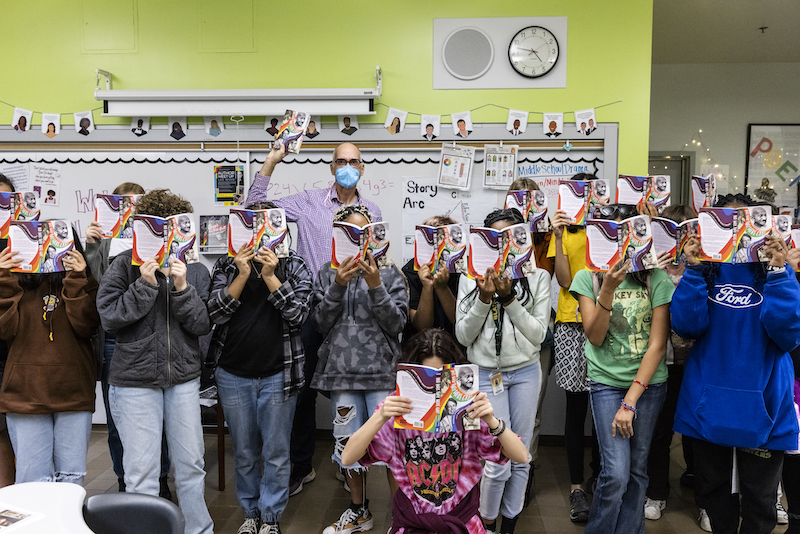
Highest Highs: Lee and a room full of middle schoolers at a school visit in November 2022, organized by We Need Diverse Books and Writers and Artists Across the Country. Every student in the photo is holding their own copy of Lee's nonfiction book for readers age 11 and up, No Way, They Were Gay? Hidden Lives and Secret Loves.


I recently fell down the rabbit hole of searching for my book title, “No Way, They Were Gay?” along with the word “ban.” I don’t generally interview the universe for pain, but my nonfiction book for readers age 11 and up was mentioned in the August 2022 BookRiot article that listed 300 books that had been pulled from a Tennessee school district, and then ranked on how Queer their content was.

So for the first time since my book’s publication over a year and a half ago, last month I did that search and suddenly found out that there have been at least three instances where No Way, They Were Gay? was challenged, or banned, or included on a website’s list of books that were “obscene in nature.” It brought up a lot of emotions, which hit me in stages. I thought it might be helpful (for myself and others) to share:

Stage 1:

Relieved: Thank you!

For gosh sakes, there have been lists of over 800 books put out by conservative politicians and no one’s included mine! I felt kind of invisible, like the book I’d poured so much loving care into didn’t matter – even though I know the impact for the good it would have had on me if I’d gotten to read it when I was a kid. So finally, it was like my book was on the radar. Maybe not on the radar of the people it was awesome to be on the radar of, but at least my book was no longer ignored.

Stage 2:

Isolated: Shouldn’t someone have told me?

You kind of imagine there’s some sort of club, and that the moment your book gets banned, you get a membership card in the mail, saying “welcome, we know how shitty this is, and we’re here to help you get through it.” But that didn’t happen. Everyone’s so busy, and there’s so much book banning and challenging to fight. So, even though this is happening to many, many authors, having it happen to me felt kind of isolating. Maybe it’s part of not being in the top ten most banned lists – the rest of us aren’t seeing huge sales bumps, or press coverage. In fact, with the chilling effect these grandstanding bans have, it’s actually hurting sales of books like mine to libraries and schools. Because teachers and librarians now have to consider – is bringing in a book about Queer history worth the personal risk to their careers? Rather than just being able to bring in a book they know will help their students. (These days, 1 in 5 young people are identifying as part of the LGBTQIA2+ community. And while we’re on this subject, knowing Queer people have a history isn’t just helpful to Queer people. Just like knowing women had a role in history is pretty important for those of us who aren’t women to know.)

Stage 3:

Concerned: Is there something wrong with my book?

And then there’s the moment where you question yourself. Is there something dangerous for kids in what I wrote? It was very brief, but there was a moment of worry I experienced. Could my book hurt someone? And as quickly as this emotion rose up, I tossed it away. The whole point of my book is to help, to empower young people to be their authentic selves. It’s not dangerous for kids, it’s dangerous for the world-view of the banners.

Stage 4:

Indignant: What’s obscene is the effort to hide the truth of Queer people’s lives and loves.

A dear friend who has since passed away, Claudia Harrington authored a series of books about kids in kindergarten with different kinds of families. Seeing her My Two Dads and My Two Moms books listed on another banned list along with my book just pissed me off. There’s nothing “obscene” about her very age-appropriate straightforward stories featuring young children with families where the parents are like me – Queer. Those books aren’t about sex, they’re about love being what holds a family together. And similarly, there’s nothing obscene about my using primary sources to explore the lives and loves of 24 notable people in history. The fact that people like Abraham Lincoln may have been in love with another guy isn’t obscene. It’s mind-blowing, yes, but what’s obscene are the ongoing efforts to hide the true stories of men who loved men, women who loved women, people who loved without regard to gender, and people who lived outside gender boundaries.

Stage 5:

Determined: I will not be silenced.

Finding out my book’s been called out in this way – in Texas, in Tennessee, and online, makes me more determined than ever to get it out into the hands of young people for whom it can be truly life-changing. Knowing that Mohandas Gandhi was in love with the German-Jewish Hermann Kallenbach – that the love of his life was another man – may be more than a footnote. It may be an important part of why Gandhi was able to see that, “Let people’s religions be different…. You worship facing one way and I worship facing the other. Why should I become your enemy for that reason? We all belong to the human race…” And Eleanor Roosevelt’s decades-long love affair with Lorena Hickok – another woman – might have been an important part of Eleanor’s determination to lead the passage of the Universal Declaration of Human Rights at the United Nations. And knowing that Hatshepshut ruled over ancient Egypt for 22 years (from 1479-1458 BCE) while transitioning from a female, to an in-between gender, to a male public presentation is incredible. We Queer people have shaped history, and knowing that is important, and empowering.

I want to add a little context: My book came out in April 2021 from Zest Books (an imprint of Lerner) and was a Junior Library Guild Gold Standard selection, got enthusiastic trade reviews, and won a few lovely awards, including being one of the Children’s Book Committee at Bank Street College Best Children’s Books of the Year, The Chicago Public Library’s Best of the Best Books, and it won the International Literacy Association’s best Young Adult nonfiction award.

The three instances I discovered online weren’t the first time “No Way, They Were Gay?” faced opposition – the nonfiction project had originally been sold to an imprint of Simon & Schuster, and I worked with their team for over a year as we prepped for its intended 2017 publication… But then, two weeks after the November 2016 election of former US President Trump, I was informed that they were cancelling publication. (The idea of publishing a book that laid out the evidence that, among other historical surprises, Abraham Lincoln was in love with another man was suddenly terrifying to them.) It was devastating, and cowardly, but eventually the project found the right publishing home with the brave team at Lerner.

Fast forward to the last year and a half of books for kids and teens being challenged and banned in schools, public libraries, and even in one notable case a bookstore, pretty much just for having characters who are Black or Queer. It’s a politicization of empathy – because in a lot of ways, access to knowing about Black or Queer people existing is a train that has left the station. The people banning books can’t pull that information back – most of the kids in their school districts have the internet on their smart phones after all. 

Books, though, stay with you – they give you access inside the mind and heart of a character who on the outside may seem so different, and then your shared humanity resonates, and changes how you see the world. Books are empathy machines, and books that include Queer stories threaten the demonization of my community. If we Queer people are seen as human, too, that could disrupt the politics of scapegoating with its long and sad history of success.

Laurie Halse Anderson, whose groundbreaking YA Speak was in the top ten of the ALA’s banned books list for years, very wisely summed it up: “Censorship is most often a reflection of the fears of the censors, their fears that they are not up to the task of having conversations about these hard things.”

And yet, that’s precisely why books are so powerful. They let us experience hard things in the safest way possible. They let us see reflections of ourselves, and others. They let us know we’re not alone. And that fuels me in my passion – to write the books that, had I read them as a young gay kid, would have changed my life. Stories to empower kids and teens to be their authentic selves and change the world. Because I really do believe that’s how we change the world – one book, and one heart, at a time.

***

Lee Wind (he/him) writes stories to empower kids and teens to be their authentic selves and change the world – the same books that would have changed his life as a young gay, Jewish kid. His debut picture book, RED AND GREEN AND BLUE AND WHITE was illustrated by Caldecott Medalist Paul O. Zelinsky and received five starred trade reviews, and The New York Times praised it as “Beautiful… It’s a message the world can use, throughout the year.” He is the author of the nonfiction Junior Library Guild Gold Standard selection NO WAY, THEY WERE GAY? HIDDEN LIVES AND SECRET LOVES and the novel Publishers Weekly named a Top Five Independently Published Young Adult Book of 2018, QUEER AS A FIVE-DOLLAR BILL. He also runs the popular blog I’m Here. I’m Queer. What the Hell Do I Read? – words his teenage self only dreamed of saying. He’s the official blogger for the Society of Children’s Book Writers and Illustrators (SCBWI) and the organizer of the Queer Kid Lit Creators community. Lee lives in Los Angeles with his husband of more than 25 years, and they have a grown daughter. Visit Lee online at leewind.org.

Tuesday, September 13, 2022

Good News re: Free Speech and Books for Teens

As reported in the Washington Post and by other media, the Virginia lawsuit attempting to stop Barnes and Noble bookstores from selling -- and public school libraries from carrying -- Maia Kobabe’s “Gender Queer” graphic novel-style memoir and Sarah J. Maas’s YA fantasy “A Court of Mist and Fury” has been dismissed.

screen shot of Washington Post article "Judge thwarts Va. Republicans’ effort to limit book sales at Barnes & Noble"


By calling the books "obscene," conservative politicians in Virginia had been trying to use an old state law that would have opened the door for booksellers and librarians to be criminally liable for selling/making the books available to minors.

It was a new tactic by those who want to silence a Queer voice and limit what other people's children can read. And, though the dismissal is news to cheer, the books themselves were not cleared of the obscenity charges - it was the law that was found unconstitutional.

In the ruling, as reported by Hannah Natanson in the Washington Post, Judge Pamela Baskervill

“said the law violates the First Amendment by enabling governmental censorship and by assuming that anyone distributing an obscene book must be consciously deciding to break the law, when in fact these people might ‘have no knowledge that a book may be considered obscene.'”

Book banning is something that can affect all of us creating works for children and teens. Join the fight for the freedom to read at the American Library Association's Unite Against Book Bans website.

Illustrate, Translate, and Write On,
Lee

Tuesday, July 5, 2022

SCBWI Partners with The National Coalition Against Censorship's "Free Expression Network" to Fight Book Banning

As announced here on the SCBWI website, "SCBWI has joined the NCAC’s working group, the Free Expression Network (FEN)."

screen shot from the Free Expression Network website


FEN is an “alliance of organizations dedicated to protecting the First Amendment right of free expression and the values it represents and opposing governmental efforts to suppress constitutionally protected speech. FEN members provide a wide range of expertise, resources, and services to policymakers, the media, scholars, and the public at large.”

Check out the anti-book banning resources available at the NCAC website, and stay tuned for more information about how SCBWI—and you—can help!

Illustrate, Translate, and Write On,
Lee

Thursday, May 19, 2022

On book banning

Uncle Tom's Cabin

Here’s the thing, banning books is not new; it’s been around for as long as publishing has been around. Words are the seeds of knowledge and knowing is powerful. It’s exactly why enslaved people were punished for learning how to read. 

Harriet Beecher Stowe’s UNCLE TOM’S CABIN, considered by some to be one of the most influential pieces of literature in American history, was a best-selling novel of the 19th century. While it was problematic in many ways, particularly in its stereotypical portrayal of an enslaved Black man, the book had a pro-abolition message. That raised the ire of the Confederacy, who didn’t like anti-slavery messages tainting folks’ minds, and so UNCLE TOM’S CABIN was banned in the south before the Civil War. 


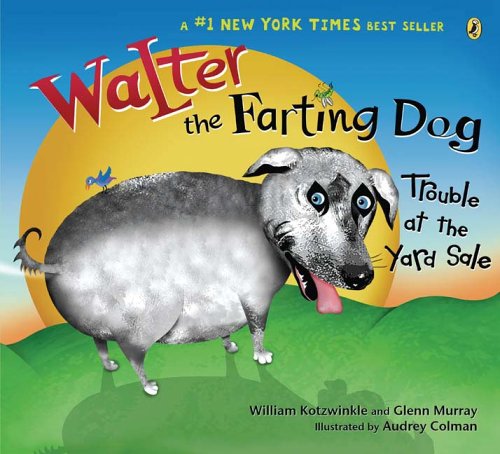
Walter Farting Dog

Throughout my thirty-plus years in publishing, banned book controversies came and went. I mean, heck, CHARLOTTE'S WEB was challenged because “talking animals were disrespectful to God.” WHERE THE WILD THINGS ARE was challenged for “depicting child abuse” (and for Max being depicted too dark skinned). And remember the whole WALTER THE FARTING DOG brouhaha (I loved Walter)? So when recent book banning conversations started during the Covid-19 pandemic, I didn’t think much about them—it's just an ebb and flow issue in publishing, I thought. 


At worst, I figured, if one of my books actually got challenged or even banned, that might be a good thing, right? It might be seen as a badge of honor, as some authors trumpet. Would a banned book boost my sales? Soon after that, chatter about book challenges turned to full-out book bans when politicians began to pass laws demanding that certain books get removed from school libraries—books they deemed “pornographic” or taught “Critical Race Theory.” There was even a list circulated in Texas of some 850 books librarians were asked to remove. Things were getting scary. 


Globetrotters

You see, most of my books are biographies about Black historical figures who overcame obstacles to make important contributions to the country. There’s the story of George Moses Horton, an enslaved man who became the first Black man to publish a book in the South—his poetry protesting slavery. Then there’s the story of John Roy Lynch, a former enslaved man who rose up through politics to become Speaker of the Mississippi House of Representatives in 1872, in the backdrop of the Reconstruction period. And most recently, a book that I illustrated about the Harlem Globetrotters, a basketball team who became known as “The Global Ambassadors of Basketball.” The biggest obstacle each of these figures faced: racism.
Might my books be on these banned lists, too? I was afraid to look. 


In the past few months, I heard stories about authors of diverse books needing to hire security while at school visits. I heard about speakers at conferences wearing bulletproof vests. I learned about librarians  losing jobs for refusing to remove challenged books. I could no longer live in the false security of ignorance—I turned to Google. 


Ron's Big Mission

Turned out, a book that I illustrated, RON’S BIG MISSION, written by Rose Blue and Corinne J. Naden (Dutton, 2009), which is probably my bestselling book, was featured on BEYOND THE BUBBLE, an episode of NBCs SOUTHLAKE. It's podcast that examines the so-called critical race theory battle. I shuttered. RON’S BIG MISSION is an empowering story. It’s about a brave Black boy (young Ron McNair the astronaut who died in the Challenger Space Shuttle accident in the 80s) who staged a protest when he was denied access to a library card due to the color of his skin. Eventually, the librarian gave in and issued him a card, and so that day he desegregated his community library. It’s a story that all children need to know about—to see Black people doing positive things, which can smash biases and build empathy. Thankfully this particular saga ended well, when parents supported the book, and the principal read the story to the entire student body over Zoom.  


But the situation made me think about what more I should be doing. I’m thrilled that there are more diverse books today than when I was a kid. I’m happy that when I enter a library today, I see many more brown faces on bookshelves. I remember a time when publishers shied away from featuring brown faces on the cover of a book—even when the book was about a brown person. I certainly don’t want to return to the days when libraries featured people who looked like Dick and Jane, Goldilocks, and Harry Potter—only! But I’ll be honest, I felt small—powerless. 


Then I thought about young Ron McNair. On the day he protested at his neighborhood library, he faced a Goliath—the giant of racism. Still, he didn’t cower and run away, he made a stand. And his actions made the library a better place for everyone in the future. 


So, what can I do—what can we all do in this book banning conundrum? Shoot, I don’t know. But one thing’s for sure, we need to support librarians. They are strong, but they are hurting. Last month at the Texas Library Association in Fort Worth, Texas, I attended a session where two librarians spoke on the issue of censorship and offered Intellectual #FReadom Resources. Later in the day, I saw the librarians on the exhibit floor, and I was overwhelmed by the gratitude they showed me for simply showing up—for being there to support them. Librarians are doing the tough work of supporting diverse books and student access to books. They need to know that they’re not in the battle alone. 


In his Publishers Weekly article, STAND BY OUR TEACHERS AND LIBRARIANS, author Chris Barton speaks

WNDB

to supporting libraries by saying, “pick an institution that we cherish and make sure the people at that institution know that we appreciate them and have their backs. (Not sure how to effectively demonstrate your support? Ask them!)." Just this week, two-time Newbery Honor-winning author Christina Soontornvat penned a letter to the House Subcommittee on Civil Rights and Civil Liberties, condemning the current wave of book suppression that specifically targets titles by creators who are LGBTQIA+ and Black, Indigenous, and people of color. The letter was signed by over 1,300 children’s book authors—including me! 


Thirdly, everyone needs to take this book banning seriously. Banning books is not a badge of honor, as author Nikki Grimes speaks about on her popular blog NOTES FROM NIKKI. After all, publishing is a moneymaking business. If diverse books become unprofitable because books can’t reach kids, publishers, I believe, will stop making them. 


Most importantly, we should not give up hope. We need to keep doing the work—writing the stories so all children can see themselves and know that they are important in the world in which they live. 


Also read: 


AUTHORS RESPOND


'DEAR MARTIN' AUTHOR RESPONDS TO BOOK CONTROVERSY IN MONETT


BEST SELLING AUTHOR FROM CHESAPEAKE KWAME ALEXANDER TALKS ABOUT BOOK BAN CHALLENGES


Don Tate is the award-winning author and/or illustrator of numerous picture book biographies, including PIGSKINS TO PAINTBRUSHES: THE STORY OF FOOTBALL PLAYING ARTIST EARNIE BARNES (Abrams, 2021) and SWISH! THE SLAM-DUNKING, ALLEY-OOPING, HARLEM GLOBETROTTERS (Little Brown, 2020). His WILLIAM STILL AND HIS FREEDOM STORIES: THE FATHER OF THE UNDERGROUND  RAILROAD
 (Peachtree, 2020) was an SCBWI Golden Kite winner in the nonfiction category. Don is a founding host of the Brown Bookshelf, a blog dedicated to advocating for Black authors and illustrators writing for children. When Don isn’t writing, illustrating or visiting elementary schools, he enjoys working out, swimming, yoga, and anything sweet and chocolaty.


Tuesday, March 1, 2022

YA Author Bill Konigsberg's Open Letter to Parents Who Want To Ban His Book From School Libraries

The following is shared here with Bill's kind permission. You can read the original posting at Bill's website here.

screen shot of the posting on Bill Konigsberg's website of the first paragraphs of "An Open Letter to Parents Who Wish to Ban My Books from School Libraries"

Dated Feb 18, 2022

Dear Mr. and Mrs. Elliott,   

I recently read with interest your call to remove 282 books from your local school library. In it, you claim to have reviewed yourself all of these books and deemed them unfit for K-12 usage (quite a range there!).

I saw that you included among these books my 2020 novel, THE BRIDGE.

First off, thank you for reading my book! I would be happy to chat with you about the book, to see what you took from it.

Second, I want to say up front that I believe your intent here is to protect your children. I echo your concern; I also want safety for children. It’s one of the main reasons I write books for young adults.

THE BRIDGE, as you know, is about two teens, Aaron and Tillie, who are severely depressed. They are both suicidal, and they meet atop the George Washington Bridge in New York City. From there, the book splits into four parts, illustrating all the possible scenarios about what could happen: they could both jump, they could both NOT jump. Or one or the other could jump. The novel follows the impacts of these decisions all the way out, so that readers can come to understand two things—just how difficult it is to be depressed and navigate the disease of depression, and also just how devastating one loss to suicide is to the whole world.

I was a bit surprised to see THE BRIDGE on your list for removal from the library. Not entirely surprised, as I was aware of Matt Krause’s list of 850 books he wants removed, which includes five of my titles. But still I was a bit startled, especially when I read your review of why the book ought to be removed.

You wrote that the book “Contains 1 or more of the following: Marxism, incest, sexual explicit material — in written form and/ or visual pictures, pornography, CRT, immoral activities, rebellious against parents, and the material contradicts the ISD’s student handbook.” As I looked through your screeds, it seems that this is how you describe each of these books. It’s as if you cut and pasted that complaint 282 times. That surprised me, because you took the time, you say, to read each of these books. That’s a lot of reading! Surely you have thoughts about these books you read beyond some cut and paste jargon?

So I want to address these concerns. While I disagree that books should be removed from libraries because some people are uncomfortable with the content, I felt it made sense to go through these since you specified your issues with THE BRIDGE.

• There is no Marxist philosophy in this book. In fact, its author is a capitalist. Of course, since we live in a free country, a book with Marxist philosophy ought to be able to exist in a library, so long as it isn’t threatening to overthrow the government. But that seems like a moot point here.

• Incest is not a part of THE BRIDGE. In fact, my book does not include explicit sexual activity, though one student at one time writes a poem about wishing she hadn’t had sex with a boy. It is not explicit. In fact, I have read a lot of young adult lit, and I know very few books that include incest, and in each of those cases, it depicts incest in order to help readers who have been through that trauma, not to glamorize it. If you wish to start a petition banning books that glamorize incest in school libraries, I might actually sign it. That’s simply not happening here.

• Sexual (sic) explicit behavior: I had to think about that one, since teens are sexual beings and sometimes have sexual thoughts. Both Tillie and Aaron have sexual thoughts, but they aren’t explicit in their thinking. No one has sex in this book. That is not what the book is about.

• Pornography: There is no pornography in my novel.

• CRT: I believe you are referring to Critical Race Theory. My book doesn’t touch on this. Some of my others do, but this book, again, is about suicide and depression. One of the characters is Korean and was adopted at a young age by a white family. At moments she describes what it feels like to be of a different race than her parents and sister, but at no point does this novel delve into theories about race or a screed about racial inequality. I do wonder what your concern is here, as my understanding is that CRT is a scary buzzword for “teaching history as it happened.” What is the problem with teaching American history, and the fact that this country was built on slave labor? What would you have books say instead? I think it is very important to learn about history. We learn about challenging times in history so that we don’t repeat them.

• Immoral Activities: Wow, that’s quite an umbrella there. We’d have to dig a bit deeper to know what you mean, but one thing I will say is that misbehaving is often central to literature, as novels always have a conflict. If you are referring, as sometimes people do, to sex before marriage, or taking street drugs, I think you will agree that these things do not happen in THE BRIDGE. I have read some books in which characters do have sex and take drugs, and my take is that it is rarely done to titillate, or to glamorize drug use. Usually in YA literature, drug use is depicted as something negative, and that is as it should be. Now, it is possible you consider Aaron’s sexuality immoral, since he’s gay, but Aaron has never had sex. So unless you are the thought police (and I’m pretty sure those people are on the Left, correct?), I can’t really see how anything about Aaron’s behavior in this book is immoral.

• Rebellious (sic) against parents: Ah. I think at one point in this book, Tillie skips school. She is depressed, and she is in a therapist’s office with her mother in the waiting room, and she realizes they want to commit her to an institution because she is so deeply depressed, and she freaks out and flees the office. This is, in fact, rebellious behavior. It is also exactly the kind of thing that could happen in the world. I read that you have an elementary school daughter. Congratulations! I don’t have kids, but I have many friends who do. If this sort of rebellious behavior is means for taking a book out of a library, I think you have some exciting and potentially difficult discoveries in front of you when your daughter reaches adolescence. I won’t spoil them. You’ll find out when you have a teenager!

• I don’t have the ISD handbook, so I don’t know what’s in it specifically. But I do think that if you want to have all the characters in novels adhere to a school handbook, you might have trouble finding novels. In THE WIZARD OF OZ, Dorothy drops a house on a witch. Is murder allowed in the handbook? In A TALE OF TWO CITIES, a French aristocrat runs down a working-class child with his carriage. I would assume this would be considered poor behavior in your district. Should we ban these books, too? Mr. and Mrs. Elliott, the truth is that stories, both fictional and non-fictional, include behaviors that might be considered outside the bounds of how schools might like their students to behave. People lie and cheat and steal. Find me a book for teenagers where no one behaves poorly, and I’ll show you a boring book!

You suggest that the libraries in your district remove THE BRIDGE from its shelves. I guess the question I want to ask, since you have read the book, is: why?

Why, exactly, are you wishing to remove a book about suicide and depression from your libraries?

Perhaps you are concerned for the safety of your students. If so, I applaud you. Health and safety of young people is at the top of my list of concerns, too. As I wrote THE BRIDGE, I spent a lot of time ensuring that I wrote my book in a way that would help teens, not trigger them by making suicide somehow glamorous or sexy. Just like a doctor, who takes an oath to “do no harm,” I take my craft very seriously. I want my books to leave the world better than they found it.

That said, we live in a society where, increasingly, young people are dying by suicide. The reasons for this are too long to go into here, but I would say that among the reasons is isolation and feeling alone and misunderstood.

Right there, in a nutshell, is why I write books for teens. I felt isolated and alone and misunderstood as a teen. I so wished there was a book out there that had a person going through what I was going through. See, I was gay. I knew I was gay because of my thoughts, not because of any book or TV show, because there were basically none of those things back when I was in school. At the time, I was depressed and suicidal because I felt so alone. So I wanted to make sure no other young person went through that.

I am concerned about the young people in the McKinney Independent School District, because in my experience, kids are the same everywhere. There are depressed kids everywhere. There are isolated, at-risk kids everywhere. There are LGBTQ kids everywhere. Getting rid of books from the library won’t change that; it will just make life that much harder and more isolated for those children.

Do you think there should be books in the library that might help a depressed teenager feel a bit more understood? A book that stresses the importance of staying another day, even when everything feels hopeless? Knowing how concerned you are for the safety of your daughter, I would actually guess you would want a book like that available to your child when she gets older. Perhaps I am wrong.

My concern is that you didn’t actually read THE BRIDGE and said that you did. I say this because your list of 282 books includes the exact same concerns for each book. That seems lazy, at best. At worst, it is deceitful, which, I imagine, goes against the ISD handbook. I certainly hope you’re not doing that! It would be hypocritical to behave in ways that go against the values we try to instill in our children.

I think you didn’t read THE BRIDGE, and that in fact you would have been better served to include a book of mine that was more focused on LGBTQ representation. Not because you would be right, but at least then we could have a conversation about why you’re wrong about that, too.

I can say with total honesty that I wish the best for your child. I want for her to have every opportunity for joy and success in life. To experience freedom and happiness.

What I wonder, though, is whether you feel the same way for kids who suffer from depression? Or for kids who are gay? The truth is that like it or not, some kids are gay. Some kids are trans. To make the world safer and better for them, we need to have representation of those people in books. Books with LGBTQ characters save lives. I know because of the hundreds of emails I’ve received from kids who have told me my books saved their life.

Perhaps you would like it better if those kids repressed those desires and didn’t act upon them. Or tried to pray the gay away. I’ve seen that movie. I have met hundreds of men and women over the course of my life who have tried to do that. It doesn’t end well for them, nor does it end well for their spouses.

You might say this is blasphemous, but here is a question for you: what if it turns out your daughter is lesbian or bisexual? You might think this is impossible; I can tell you from experience that I have met hundreds if not thousands of teens and parents in that situation. Kids from conservative, religious households. Parents who believe that marriage is between a man and a woman and anything else is immoral.

My question is, if it turns out your child is lesbian, or bi, or trans, what would you wish for them? Would you want them to feel loved and safe, or would you want them to feel alone and ashamed?

You might think now you’d prefer the latter, but I see from the fact that you are doing so much to try to keep your child safe that perhaps you might change your mind about that. According to a 2021 national study by The Trevor Project, 42 percent of LGBTQ youth considered suicide last year. The number is much higher for trans and non-binary youth. I have heard the argument that this shows that LGBTQ youth are simply troubled, but I can tell you that’s not right. LGBTQ youth are at risk precisely because of endeavors like yours that aim to erase people like them from the library.

I’ll end with a prayer for you, because I know that you are religious. I pray that you and your family find prosperity and joy. I hope that in your prayers tonight, you will pray for at-risk kids who need these books. Because in many cases, their lives depend on it.

Sincerely,

Bill Konigsberg

***

Thanks to Bill for allowing me to share this letter here.

Illustrate, Translate, and Write On,
Lee