Showing posts with label zeenapliska. Show all posts

Thursday, March 27, 2025

Using Picture Books to Mitigate Climate Anxiety

     I wrote a picture book manuscript as LA burned.  When the fire broke out on January 7, it had been a wonderfully blustery day due to the Santa Ana winds.  I spent the morning with my kindergarten students, flying kites.  Children chasing and laughing.  Pure joy.  

Then, on a dime it changed.  By lunchtime, the principal called us all back into our classrooms.  As it turned out we were 3.7 miles from the evacuation line.  We watched helplessly as the smoke plumes rose from the nearby mountains, then continued to burn for days.                          


                                                            https://youtu.be/CqMYP6uoiWA


      Our community experienced trauma.  After the fires were extinguished, students from an affected school began enrolling in our school.  The students arrived in my classroom and school confused, unstable, and affected.  Their entire school community had been torn apart. We welcomed them into our community paying special attention to the fact that they were most likely experiencing trauma and most importantly needed a community and sense of belonging.       As a class, we gave them a place to belong.

      I don’t know anyone who doesn’t know someone who lost their home in one of the two fires that burned simultaneously. Both UCLA and Yale University have noted that climate change contributed to the conditions that fueled the fires.  And yet, we don’t talk about it.  I suspect climate anxiety plays a big part.  And so, as a kindergarten teacher and kidlit author, I believe that we must be the ones to start the conversation.  This last post from me explores Using Picture Books to Mitigate Climate Anxiety

     I have the deepest respect for children and believe that they are capable, curious, and creative thinkers.  I worry that as adults, our own climate anxiety prevents us from having open and honest conversations with them about this growing existential threat.  Not having these conversations will not make the problem go away.  So, how can we push through our own anxiety to engage our young people in discourse that can mitigate their anxiety and support their capacity to engage in climate activism.  How can we lead by example?  I believe picture books are a valid portal to enter past our own resistance. As kidlit authors, we can write stories that lead children past the fear of the adults around them and into discourse that can leads them to be changemakers. 

I like to read stories to my kindergarten students to provoke discourse.  I don’t care what their conclusions are.  I just want them to connect and engage. I find that stories, rather than affirmation books or books where adults tell children how and what to think keep my students riveted.  


     Stories and experiences in nature help students build relationships with the outdoors which I believe builds the conditions for conservation to emerge.  We can’t expect children to want to push beyond climate anxiety through to climate activism if they have no reason to. 

     I often begin with picture books like Sea Bear written and illustrated by Lindsay Moore about a lone polar bear’s journey across sea ice in the Arctic, The Octopus Escapes written by Maile Meloy and illustrated by Felicita Sala about an octopus who escapes from an aquarium and returns back to its natural home, and my picture book Hello, Little One: A Monarch Butterfly Story illustrated by Fiona Halliday about a fictional intergenerational friendship between a monarch caterpillar and a monarch butterfly.

     As I’ve written in my previous blog it’s important that stories are not only told through the lens of the white dominant culture (which often include animal stories) but rather offer multiple perspectives from diverse protagonists. I include Fatima’s Great Outdoors about a family's first camping trip written by Ambreen Tariq illustrated by Stevie Lewis and We Are Water Protectors about the Dakota Access Pipeline protests written by Carole Lindstrom illustrated by Michaela Goade.  I lean heaviest on No World Too Big edited by Lindsay H. Metcalf, Keila V. Dawson and Jeanette Bradley illustrated by Jeanette Bradley with non-fiction stories about youth climate activists.


     As picture book authors, we are tasked with the opportunity to move beyond our own climate anxiety and support our youth with the picture books we write.  Our children need your books as they make their way in a world where climate change is impacting where we live in different ways.  Our books can help children make sense of their world and move beyond their  anxiety to better cope with our changing world. Our books can make a difference. We owe it to this next generation.

By Zeena M. Pliska


     Zeena M. Pliska spends her days immersed in the joy of 5-year-olds.  She is a public school kindergarten teacher by day and a children’s book author by night in Los Angeles, California.  A progressive public-school educator, she believes that the most important aspect of teaching is listening to children. A social justice activist and organizer for over 30 years, she brings race, class, and gender analysis to everything she does.  She is half Egyptian and half Filipino.  A lifetime storyteller, she has facilitated stories as a theater director, visual artist, photographer and journalist and most recently as a short film screenwriter/producer/director.   Her debut picture book, Hello, Little One:  A Monarch Butterfly Story from Page Street Kids came out May 12, 2020.  Her second picture book Egyptian Lullaby from Roaring Brook Press came out April 18, 2023. Two board books in the Chicken Soup for Babies series from Charlesbridge came out in the fall and winter of 2023.  Egyptian Lullaby was awarded the 2024 CABA award from Howard University.

     Her blog posts can be found at  www.teachingauthors.com and on social media, Instagram @zeenamar, X (formerly Twitter) @zeenamar1013, Bluesky @zeenamar, and on Facebook @Zeena M. Pliska or Zeena Mar.  For more information you can go to www.zeenamar.


Thursday, March 13, 2025

Using Picture Books to Explore Uncomfortable Topics

 In this post, I’d like to have a look at Using Picture Books to Explore Uncomfortable Topics. As a teacher, I believe that uncomfortable topics surface organically when students feel heard.  


Deep topics come up often without warning and at random times.  For 5-year-olds, they can range from what might seem like mundane issues for adults to problems that are recognized as trauma.


Young children are just beginning to explore and make sense of a larger world.  It can be joyful, wonder-filled, and scary.  Relationships are new.  Friendships are complicated.  Control and power are tools that young children are just starting to experiment with.  Questions emerge like:  Who has power? How do I get power? What do I do with it when I get it? 

Moving through relationships with limited tools can be confusing.  What happens when my best friend wants to play with someone else? What happens to my best friend when I want to make a new friend? Simple goodbyes can be excruciating. Transitions can upset.  Fairness is an ongoing theme.  What is fairness? It doesn’t feel fair when others don’t want to play the game I want to play in the way I want them to play it. I want the toy that the other child has.  It’s not fair that they won’t give it to me. What does it mean to share?  


When uncomfortable topics emerge, I lean into picture books with stories where students can see themselves for support.  Stories can provoke discourse and inquiry, which can be expanded by introducing more picture books.  I look for stories with protagonists who are going through similar experiences, situations, or feelings that allow students to find a relevant relationship.  Stories help us connect with others.  They help students navigate difficult events, trauma, or topics that are uncomfortable.  They help students know they are not alone, alienated or marginalized.  They help connect students with each other who might have the same concerns so that they can support each other.  It helps build community. I find that one picture book leads to another.  Picture books soothe.  Picture books comfort.  Picture books can gently and safely acknowledge the wounds to help begin the healing.


When you’re five, the world is beginning to change.  Many go to formal school for the first time.  Topics that are difficult for children include moving, divorce, bullying, inclusion, exclusion, social cues, making friends, keeping friends, fairness, power, grief, loss, pet loss, losing friendships, different forms of families, domestic violence, gun violence, police violence, alcohol/drug abuse of family members, cognitively declining grandparents, death, racism, disability rights, LGBTQIA+ rights, losing your home, immigration, and natural disasters. 


In addition to using picture books to help students explore subjects that are challenging and difficult for them, parents and teachers can also use these stories to make palatable, topics that are uncomfortable for adults.

Children are honest and raw.  They say what they want to say often without filters.  They speak from the heart and often don’t mask their true feelings. This can be uncomfortable for the adults in their lives.  Parents and Teachers may struggle to support topics like LGBTQIA+ questions, grief, racism, disability rights, etc. Picture books can help scaffold and support adults.   Picture books can give the words and context.  Stories can help adults find access points for children.  They may even provide multiple points of access for extremely challenging topics, creating many different conversations.  Picture books can help adults gain new insight as well, possibly leading to more empathy for young children who are trying to make sense of their world. 

By Zeena M. Pliska


Zeena M. Pliska spends her days immersed in the joy of 5-year-olds.  She is a public school kindergarten teacher by day and a children’s book author by night in Los Angeles, California.  A progressive public-school educator, she believes that the most important aspect of teaching is listening to children. A social justice activist and organizer for over 30 years, she brings race, class, and gender analysis to everything she does.  She is half Egyptian and half Filipino.  A lifetime storyteller, she has facilitated stories as a theater director, visual artist, photographer and journalist and most recently as a short film screenwriter/producer/director.   Her debut picture book, Hello, Little One:  A Monarch Butterfly Story from Page Street Kids came out May 12, 2020.  Her second picture book Egyptian Lullaby from Roaring Brook Press came out April 18, 2023. Two board books in the Chicken Soup for Babies series from Charlesbridge came out in the fall and winter of 2023.  Egyptian Lullaby was awarded the 2024 CABA award from Howard University.

Her blog posts can be found at  www.teachingauthors.com and on social media, Instagram @zeenamar, X (formerly Twitter) @zeenamar1013, Bluesky @zeenamar, and on Facebook @Zeena M. Pliska or Zeena Mar.  For more information you can go to www.zeenamar.


Thursday, March 6, 2025

Using Picture Books to Facilitate Student-Centered Discussions Around Social Emotional Learning

I’m a kindergarten teacher by day and a picture book writer by night.  I thought it might be useful to share my insights as both a veteran teacher in the Los Angeles Unified School District and an agented, traditionally published kidlit author.  At the core are two different processes that often intersect and ultimately inform each other for me.


This post, the first of 4, focuses on Using Picture Books to Facilitate Student-Centered Discussions Around Social Emotional Learning.


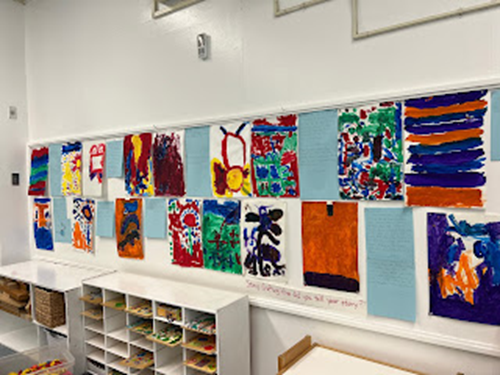
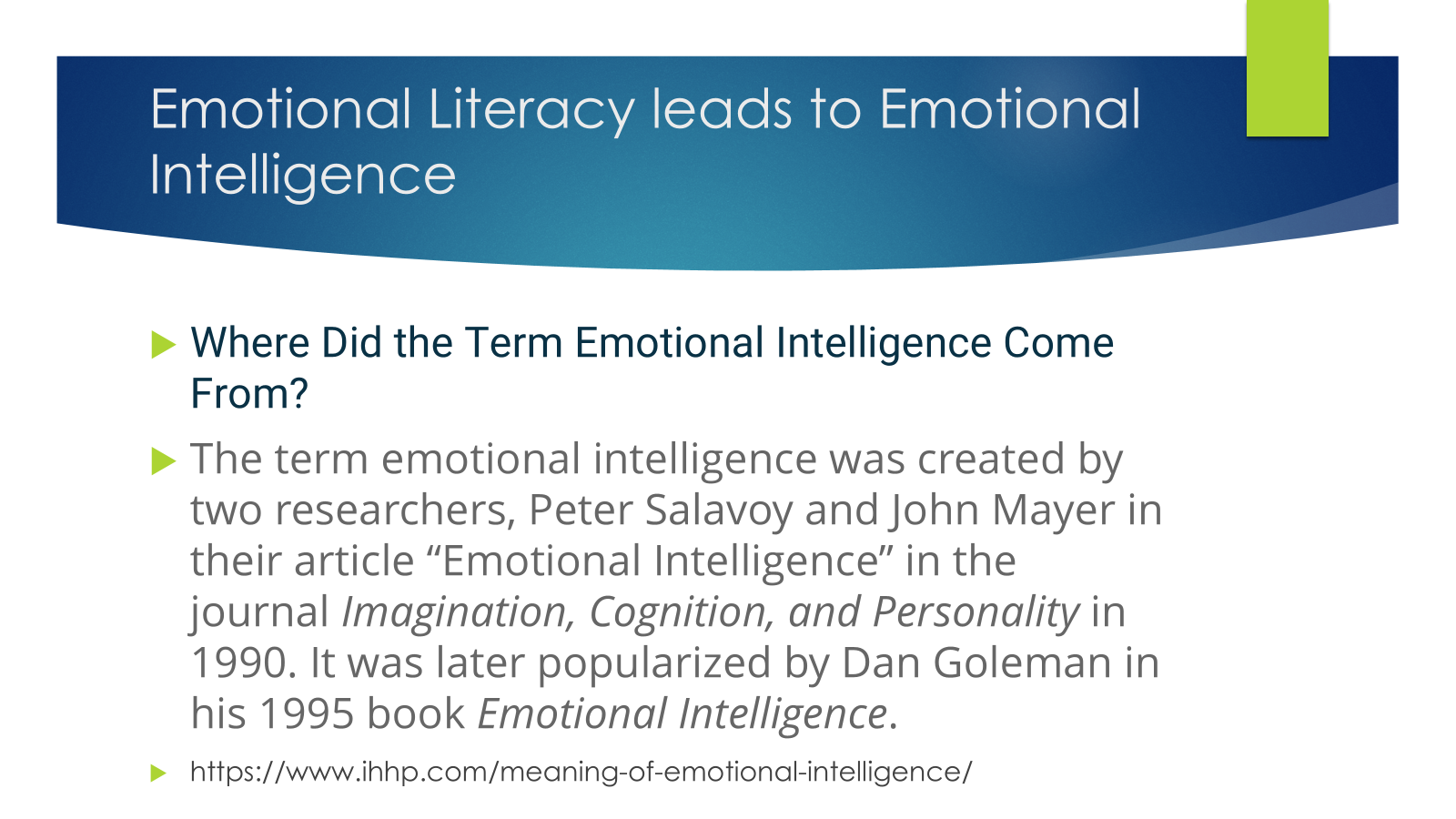
I spend my days with 5-year-olds so I read no less than 15 picture books a week. I believe that my job as a teacher is primarily to listen to children and surface what is alive for them. Building the conditions for emotional intelligence to develop has been a passion for over 30 years. To my delight, Social Emotional Learning or SEL has become a hot topic especially in elementary education for the past decade.  This is reflected in the publishing world as well.  Picture books that reflect Social Emotional Learning are plentiful. And manuscripts on this topic always seem to be in demand.


Picture books are a great way to elicit student-led discourse around social emotional learning.  As authors, we specifically write them for young children.  We take great pains to create developmentally appropriate manuscripts using accessible language. We create characters that children relate to. As a teacher, I tend to use books that address social emotional learning through stories.  Stories help my students make sense of their world.  They recognize and form their identities, and experiences.  Stories shape their interactions and connections.  Stories help them connect to others. Children can step into stories and transform into the characters.  They can experience their feelings as well as those of others in an authentic and safe way. They  develop empathy and compassion through these reading experiences. I especially like to read stories with SEL themes and wait for students to ask questions or lead discussions that are relevant to their social emotional growth.  Often I find books that push the discourse or themes further to provoke deeper thinking.


 I have to be honest, I steer away from picture books that blatantly try and teach my students “lessons.”  Adults who impose their morality onto unsuspecting 5-year-olds usually don’t hold the student’s interest.  I am particularly sensitive about books that aren’t respectful of young children, seeing them as blank slates and not the interesting, thinking humans that they are. Children want to hear stories.  They don’t want to be preached to and believe me, they know.  

But find a good story where universal themes are woven into the characters and their relationships, and you will hold the rapt attention of an entire class.  I’m always on the hunt for these great stories that leave us hankering for a good discussion or leave us with a feel-good moment.  Lately they feel like they’re few and far between.

Don’t get me wrong.  The books my fellow picture book authors are writing and that publishing companies are buying are beautifully written.  But compared to the literature from earlier decades, many feel like they are leaning out of storytelling as we knew it and are more no-nonsense books with sparse wording or non-fiction subjects.  All have their merits and are well produced.  They just lack the storytelling of years gone by when the wordcount hovered well above and over the current 500-word norm and were not influenced by the Common Core Standards.  Books like Stella Luna and Chrysanthemum come to mind in contrast to current books with blatant “you’re beautiful,” “be you,” “be brave,” messaging. 

In 2010, the Common Core Standards were adopted for education across the country.  It’s my understanding they were not developed by educators but rather came out of the business and political community.  Technically they came from The National Governor’s Association (a political organization founded in 1908) and The Council of Chief State School Officers.  At the time, I remember noticing a huge shift away from reading and writing fiction and a move toward non-fiction literature only. This was a shift in language arts instruction in the standards and the standards dictate what teachers teach. They moved us from fiction and fantasy to non-fiction and informational text, even in the primary grades.

As a kindergarten teacher, it didn’t make sense.  It was completely out of balance.  Literary learning shifted away from a focus on imagination and pushed us toward nuts and bolts, cut and dry, no-nonsense reading and writing.  I worried about how it would affect young children and their desire to read and write.  I worried that storytelling would be devalued.  I worried that the publishing industry would shift their product to meet the new demand.  I think I was onto something fifteen years ago.

As authors, we write books that serve the current market.  If we ignore the trends and requests, we run the risk of creating books that are irrelevant. We run the risk of writing books that don’t sell.  But I have faith that complex stories will return despite the education trends.  I believe that children will eventually demand them and we will all have to listen, especially if we are writing books that address Social Emotional Learning.


Tools to use when writing stories that address SEL


By Zeena M. Pliska

 Zeena M. Pliska spends her days immersed in the joy of 5-year-olds.  She is a public school kindergarten teacher by day and a children’s book author by night in Los Angeles, California.  A progressive public-school educator, she believes that the most important aspect of teaching is listening to children. A social justice activist and organizer for over 30 years, she brings race, class, and gender analysis to everything she does.  She is half Egyptian and half Filipino.  A lifetime storyteller, she has facilitated stories as a theater director, visual artist, photographer and journalist and most recently as a short film screenwriter/producer/director.   Her debut picture book, Hello, Little One:  A Monarch Butterfly Story from Page Street Kids came out May 12, 2020.  Her second picture book Egyptian Lullaby from Roaring Brook Press came out April 18, 2023. Two board books in the Chicken Soup for Babies series from Charlesbridge came out in the fall and winter of 2023.

Her blog posts can be found at  www.teachingauthors.com and on social media, Instagram @zeenamar, X (formerlyTwitter) @zeenamar1013, Bluesky @zeenamar, and on Facebook @Zeena M. Pliska or Zeena Mar.For more information you can go to www.zeenamar.com