Showing posts with label Social Books. Show all posts

Thursday, March 6, 2025

Using Picture Books to Facilitate Student-Centered Discussions Around Social Emotional Learning

I’m a kindergarten teacher by day and a picture book writer by night.  I thought it might be useful to share my insights as both a veteran teacher in the Los Angeles Unified School District and an agented, traditionally published kidlit author.  At the core are two different processes that often intersect and ultimately inform each other for me.


This post, the first of 4, focuses on Using Picture Books to Facilitate Student-Centered Discussions Around Social Emotional Learning.
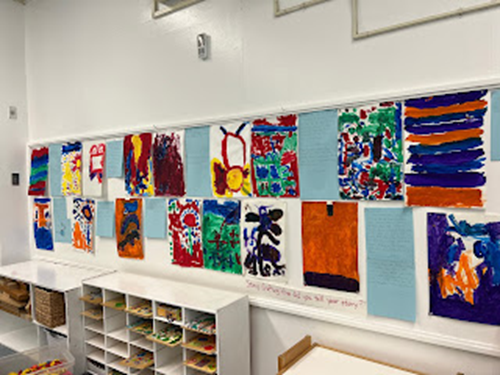


I spend my days with 5-year-olds so I read no less than 15 picture books a week. I believe that my job as a teacher is primarily to listen to children and surface what is alive for them. Building the conditions for emotional intelligence to develop has been a passion for over 30 years. To my delight, Social Emotional Learning or SEL has become a hot topic especially in elementary education for the past decade.  This is reflected in the publishing world as well.  Picture books that reflect Social Emotional Learning are plentiful. And manuscripts on this topic always seem to be in demand.
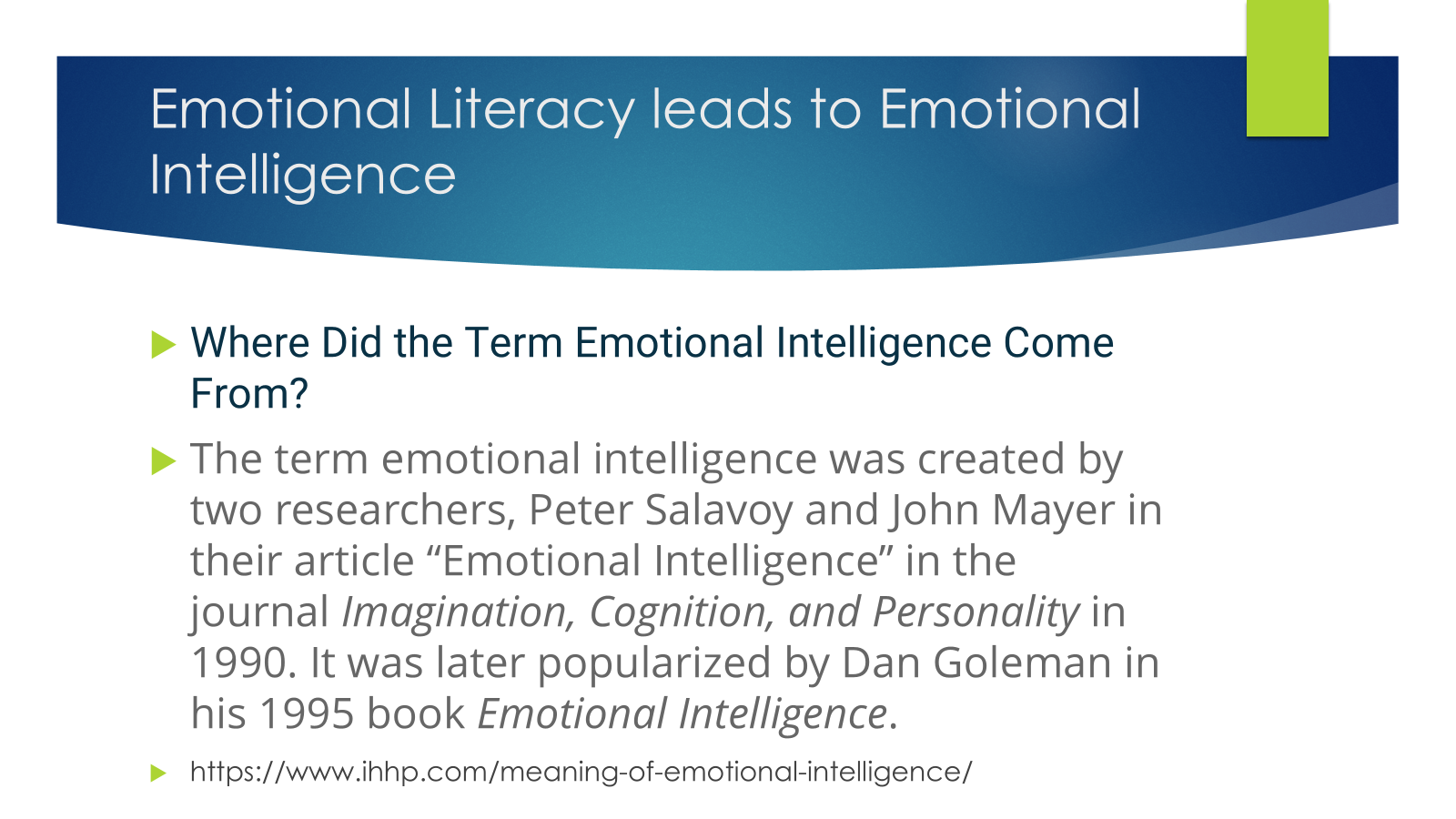


Picture books are a great way to elicit student-led discourse around social emotional learning.  As authors, we specifically write them for young children.  We take great pains to create developmentally appropriate manuscripts using accessible language. We create characters that children relate to. As a teacher, I tend to use books that address social emotional learning through stories.  Stories help my students make sense of their world.  They recognize and form their identities, and experiences.  Stories shape their interactions and connections.  Stories help them connect to others. Children can step into stories and transform into the characters.  They can experience their feelings as well as those of others in an authentic and safe way. They  develop empathy and compassion through these reading experiences. I especially like to read stories with SEL themes and wait for students to ask questions or lead discussions that are relevant to their social emotional growth.  Often I find books that push the discourse or themes further to provoke deeper thinking.


 I have to be honest, I steer away from picture books that blatantly try and teach my students “lessons.”  Adults who impose their morality onto unsuspecting 5-year-olds usually don’t hold the student’s interest.  I am particularly sensitive about books that aren’t respectful of young children, seeing them as blank slates and not the interesting, thinking humans that they are. Children want to hear stories.  They don’t want to be preached to and believe me, they know.  

But find a good story where universal themes are woven into the characters and their relationships, and you will hold the rapt attention of an entire class.  I’m always on the hunt for these great stories that leave us hankering for a good discussion or leave us with a feel-good moment.  Lately they feel like they’re few and far between.

Don’t get me wrong.  The books my fellow picture book authors are writing and that publishing companies are buying are beautifully written.  But compared to the literature from earlier decades, many feel like they are leaning out of storytelling as we knew it and are more no-nonsense books with sparse wording or non-fiction subjects.  All have their merits and are well produced.  They just lack the storytelling of years gone by when the wordcount hovered well above and over the current 500-word norm and were not influenced by the Common Core Standards.  Books like Stella Luna and Chrysanthemum come to mind in contrast to current books with blatant “you’re beautiful,” “be you,” “be brave,” messaging. 

In 2010, the Common Core Standards were adopted for education across the country.  It’s my understanding they were not developed by educators but rather came out of the business and political community.  Technically they came from The National Governor’s Association (a political organization founded in 1908) and The Council of Chief State School Officers.  At the time, I remember noticing a huge shift away from reading and writing fiction and a move toward non-fiction literature only. This was a shift in language arts instruction in the standards and the standards dictate what teachers teach. They moved us from fiction and fantasy to non-fiction and informational text, even in the primary grades.

As a kindergarten teacher, it didn’t make sense.  It was completely out of balance.  Literary learning shifted away from a focus on imagination and pushed us toward nuts and bolts, cut and dry, no-nonsense reading and writing.  I worried about how it would affect young children and their desire to read and write.  I worried that storytelling would be devalued.  I worried that the publishing industry would shift their product to meet the new demand.  I think I was onto something fifteen years ago.

As authors, we write books that serve the current market.  If we ignore the trends and requests, we run the risk of creating books that are irrelevant. We run the risk of writing books that don’t sell.  But I have faith that complex stories will return despite the education trends.  I believe that children will eventually demand them and we will all have to listen, especially if we are writing books that address Social Emotional Learning.


Tools to use when writing stories that address SEL


By Zeena M. Pliska

 Zeena M. Pliska spends her days immersed in the joy of 5-year-olds.  She is a public school kindergarten teacher by day and a children’s book author by night in Los Angeles, California.  A progressive public-school educator, she believes that the most important aspect of teaching is listening to children. A social justice activist and organizer for over 30 years, she brings race, class, and gender analysis to everything she does.  She is half Egyptian and half Filipino.  A lifetime storyteller, she has facilitated stories as a theater director, visual artist, photographer and journalist and most recently as a short film screenwriter/producer/director.   Her debut picture book, Hello, Little One:  A Monarch Butterfly Story from Page Street Kids came out May 12, 2020.  Her second picture book Egyptian Lullaby from Roaring Brook Press came out April 18, 2023. Two board books in the Chicken Soup for Babies series from Charlesbridge came out in the fall and winter of 2023.

Her blog posts can be found at  www.teachingauthors.com and on social media, Instagram @zeenamar, X (formerlyTwitter) @zeenamar1013, Bluesky @zeenamar, and on Facebook @Zeena M. Pliska or Zeena Mar.For more information you can go to www.zeenamar.com


Friday, November 12, 2010

In the News This Week

Fridays on the SCBWI blog, I share snippets of and links to some of the publishing/media-related news I've read during the last week that I found interesting, helpful, and/or fun. Click titles to get to the full articles.

This week's news includes two in-case-you-live-under-a-rock stories---one on Amazon's removal of a pedophile guide (they listened to the Twitter uproar), and another on a career shift for agent Nathan Bransford. Also a few best books lists, ebook in New York Times, NYT on interactive books (minus the E), a new publisher at Scholastic, two ebook devices aimed at kids, and more. Also a count/counterpoint pieces on NaNoWriMo--which are slightly over a week old, but I gave you no news last week during my vacation, so enjoy them now, and keep at it, NaNo-ers!


'Pedophile's Guide' Removed from Amazon (GalleyCat)
The Pedophile’s Guide to Love and Pleasure, a controversial title that generated boycott threats on Amazon yesterday, has been removed. The old link now opens the image embedded above. The Today Show covered the story this morning. The author, Phillip R Greaves 2nd, spoke to reporters during the segment, adding: "Everytime you see them on television, they're either rapists or kidnappers. It's not accurate of that particular sexuality." BNet and TechCrunch have both written about the removal.

PW's Best Children's Books 2010 (PW)
Shark vs. Train
Chris Barton, illus. by Tom Lichtenheld (Little, Brown)
This is one of those elementally brilliant ideas that evokes a "Why didn't I think of that?" response. By pitting a cartoon train and shark against each other in a series of increasingly ludicrous challenges (the train's heft is a liability in a hot air balloon race, but very effective on a seesaw), Barton and Lichtenheld tap into kids' innate ability to turn anything, anything into a competition.

Best Illustrated Children’s Books of 2010
Annually since 1952, the Book Review has asked a panel of judges to select 10 winners from among the several thousand children’s books published during the year. The judges this time around were Robert Sabuda, a co-creator of the best-selling “Encyclopedia Prehistorica” series and twice the recipient of a Times Best Illustrated award; Elizabeth Bird, a children’s librarian with the New York Public Library, whose first picture book, “Giant Dance Party,” is due out next year; and David Barringer, a novelist and designer who is the author of “There’s Nothing Funny About Design.” —The Editors

Interactive Books (‘E’ Not Included) (NYT)
Years ago, I was a supporter of a new literary movement, one that uprooted the traditional tenets of narrative in modern fiction: Choose Your Own Adventure. The books in that series, which first appeared in 1979, did so much more than simply tell a tale: by offering the reader choices at critical junctures, each one gave a rapt fourth grader like me the opportunity to shape the story. (If you decide to use turbo boost, turn to Page 48. If you decide to use shields, turn to Page 50.)

Benton Named Scholastic Trade Publisher (PW)
Lori Benton, whose career in children’s publishing includes a long run at Harcourt’s children’s division where she rose to v-p and publisher, has been named v-p and publisher for the Scholastic Trade Publishing division. In her new role, which begins January 3, Benton will oversee direction of the publishing program for all imprints. She succeeds Suzanne Murphy, who moved to Disney Publishing in June, and will report to Ellie Berger, president of Scholastic Trade Publishing.

Public Libraries by Design: Creating teen-friendly spaces with a gaming area (SLJ)
Library design and services frequently include welcoming spaces for teens. Why should a designated place for teens be considered? According to Kimberly Bolan, author of Teen Spaces: The Step-by-Step Library Makeover (American Library Association, 2009), it builds positive, safe environments for studying, socializing, and leisure activities; encourages community involvement and library appreciation; expands the library’s customer base; and is an effective way to market the library and draw teens to other services the library offers.

Social Books Hopes to Make E-Reading Communal (NYT)
Outside of a book club, reading a book is a pretty solitary affair. Two entrepreneurs, Jason Johnson and Jason Illian, are trying to change that with a new mobile application called Social Books. "Short-form content on the Web is very interactive, very dynamic," Mr. Johnson said. “You can see which of your friends read the same article and what they thought of it. It made us ask, 'Can this be applied to long-form content? Can we take the advent of social media and apply it to the way we read books on tablets?'"

E-Books to Join The New York Times Best-Seller List – NYTimes.com (WIRED)
he New York Times will begin reporting the best selling e-books in new fiction and non-fiction lists early next year, the newspaper reports. The Times has published best-seller lists since 1935 and they have been a significant driver of book sales for decades. Bricks-and-mortar stores post the list and, space permitting, section off these titles outside the fiction and non-fictions aisles as close to the cash registers as is humanly possible. The same has become true with advent of e-book stores, where lists and search are key entry points, and browsing is somewhat more problematic. So expect these lists to be a boon to e-book merchants on day one.
 
eBook Sales To Grow To $2.8 Billion In 2015
(eBook Newser)
eBook sales in the U.S. will grow from just less than $1 billion in 2010 to more than $2.8 billion in 2015, according to a new report from Forrester Research. The study found that the digital publishing category has more than doubled from 3.7 million users in the US at year-end 2009 to more than 10.3 million a year later.

Barnes & Noble Pushing Nook Color To Kids In Test Stores (eBook Newswer)
Looking to reach families, Barnes & Noble is expanding the Toys & Games departments in its stores nationwide and is testing new children’s play spaces in five test stores. The playrooms will be a great gateway drug to get kids hooked on the upcoming Nook Color, as the playrooms will be stocked with the devices.

Fable maker to target youth e-book market (Boston Globe)
Amazon.com is making a fortune selling electronic books, presumably to adults. Now, Concord start-up company Isabella Products Inc. and Boston publisher Houghton Mifflin Harcourt are planning to cash in on an untapped market: e-books for children. Next summer, Isabella will introduce the Fable, a combination tablet computer and e-book reader aimed at children. Unlike the black-and-white screen found on Amazon.com's popular Kindle e-reader, the Fable will feature a full-color, 7-inch touchscreen that can display the colorful illustrations found in most children’s titles.

Nathan Bransford Leaves Curtis Brown & Joins CNET (GalleyCat)
Curtis Brown agent Nathan Bransford told his online community today that he will no longer be a literary agent. He explained in a post: “I am leaving the world of publishing to work at the tech news/review site CNET, where I will be helping to coordinate social media strategy.”

Better yet, DON'T write that novel (Salon)
For me, the end of October is always slightly tinged with dread -- provoked not by Halloween spooks, not even by election season, but by the advent of something called NaNoWriMo. If those syllables are nothing but babble to you, then I salute you. They stand for National Novel Writing Month.

12 reasons to ignore the naysayers: Do NaNoWriMo (LAT)
If you want to write a novel in 30 days, don't let anyone stop you. Not even Salon's Laura Miller. Miller, who I usually find thoughtful and sweet, has written an anti-NaNoWriMo column -- "Better yet, DON'T write that novel" -- that is at best wrongheaded, and at worst, smallhearted. Miller would lay the blame for too many writers -- and not enough readers -- at the foot of NaNoWriMo, the project that challenges would-be authors to write a 50,000-word novel during the month of November.