Showing posts with label #WorldKidLitMonth. Show all posts

Thursday, September 18, 2025

World Kid Lit Month: Retranslating a Classic

Pinocchio. The Little Prince. The Little Mermaid. All of these stories have been translated into English not once, but many times (from Italian, French, and Danish, respectively). Children’s literature includes an array of classic works available in multiple translations, perfected at different times by different translators for different audiences. 


Multiple translations are a bounty for readers, who can explore and compare their favorite books in various forms. This translation might be quieter, that one more dramatic, another one set at a brisk tempo, and still another one more andante.


I have learned that actually performing a retranslation gets me a bit, well, nervosa. As I was translating Sachiko Kashiwaba’s Kiri no mukō no fushigi na machi as The Village Beyond the Mist for US release in 2025, I thought constantly about a predecessor: The Marvelous Village Veiled in Mist, translated by Christopher Holmes and published in Japan in 1987. 


The Holmes translation published by Kodansha. Note the translator cover credit!

Though never distributed internationally before going out of print, this translation has become a collector's item available both abroad and at home. I owned a copy myself before giving it to an editor more than ten years ago, when I was pitching Kashiwaba’s work for publication in the US. The Marvelous Village Veiled in Mist was then the only full translation of a Kashiwaba novel from Japanese into English.


After my pitching succeeded and I translated two of the author's relatively recent novels, Restless Books asked me to retranslate Village, Kashiwaba-san's debut work from 1975. I was flattered and excited to work with the book that is easily her best-known in Japan; I had seen Japanese readers approach her at events in Washington, DC and Hong Kong, asking her to sign their childhood copies. This past summer, I saw the same scene unfold in New York.


With Sachiko Kashiwaba (left) and a reader holding her long-treasured copy of Kiri no mukō no fushigi na machi, Japan Society, New York, 27 June 2025


But as I translated, I felt wary of being compared to Holmes and found wanting—or worse, derivative. I loved the title of his translation, and I didn’t know if I dared reread the rest lest I be influenced. I completely missed that I was influenced already—for throughout my translation, I used the word mist for kiri , when this could just as correctly be translated as fog.


The thought did not even strike me until months after publication, so strong was the Marvelous magic!


I do invite readers to compare the Holmes translation to mine now, partly to appreciate how no two human translations are alike. For seven iterations of a Translation Day event in SCBWI Japan, we also conveyed this through a workshop; the resulting translations show how a passage in the hands of six or nine or ten translators turns into as many faithful interpretations.


In this sense, translation is akin to illustration. Next week, I will share about the illustrators I have encountered along the path of translating Sachiko Kashiwaba.


Avery Fischer Udagawa’s translations include the 2022 Batchelder Award-winning novel Temple Alley Summer, the 2024 Batchelder Honor book The House of the Lost on the Cape, and new release The Village Beyond the Mist, all authored in Japanese by Sachiko Kashiwaba. Avery works in international education north of Bangkok and volunteers as SCBWI Global Translator Coordinator.


Thursday, September 11, 2025

World Kid Lit Month: Taking a Translation on Tour

We don’t often associate translated children’s books with book tours—or at least I didn’t, until going on tour this year!


In New York at the Japan Society, 27 June 2025. From left: moderator Peter Tatara, myself, author Sachiko Kashiwaba, interpreter Mari Morimoto

So much may seem to stand in the way of a tour for a translation: The author may live a hemisphere away, or not speak the local language, or both. The book may have been published by a small or specialized press with limited marketing funds. Internationalism itself may be under attack in the new market.

Seen another way, of course, these are excellent reasons to launch a translation with a series of in-person events—both to help the book stand out and to affirm in the public square that "we are not alone on this globe," to quote Betsy Bird. There is nothing like real-life interaction to bring #worldkidlit and readers together.


At the Japan Society, 27 June 2025


The middle grade novel Kiri no mukō no fushigi na machi (霧のむこうのふしぎな町) by Sachiko Kashiwaba has been a fixture in Japanese bookstores and households for fifty years. Published in 1975, it both launched the author’s career and found an enduring place in the cultural zeitgeist. Hayao Miyazaki’s 1995 film Whisper of the Heart includes a scene where a character reads the book, and its influence is subtle yet unmistakable in the 2001 blockbuster Spirited Away. 


I was honored to translate this eight-chapter classic on the occasion of its half-century anniversary. It was sobering to consider, however, that this title loved by three generations in its home country is still brand-new in mine. When publisher Restless Books obtained a grant to work with Page One Media and send both Kashiwaba-san and me on a tour of several US cities, I wondered if "my" author would be greeted with empty venues.


At the Japan Society, 27 June 2025


I soon learned, like many before me, that not every venue would be sold-out. Not one was empty, however—thank goodness!—and each offered the chance to connect with a particular set of readers.


`At the Coolidge Corner Theatre in Brookline, Mass., an event about The Village Beyond the Mist flowed into a showing of Spirited Away, affording interaction with a mixed crowd of bibliophiles and anime lovers, expertly moderated by Kalyani Saxena. At the Chatham Square branch of the New York Public Library in Chinatown, the function room buzzed with young people encouraged to attend by a passionate youth-services librarian. The author Kate Milford took part and asked keen questions of Kashiwaba-san, one prolific fantasy and mystery writer to another.


At the Coolidge Corner Theatre with book critic Kalyani Saxena moderating, 24 June 2025


At the Chatham Square Library with Greenglass House author Kate Milford moderating, 25 June 2025


At the Brooklyn Public Library’s Kensington Branch, we met fellow kidlit creatives, one who even came in cosplay. At the stately Japan Society in Manhattan, a line of Japanophiles including a brand-new graduate stretched across the lobby. 


At the Kensington Library, 26 June 2025

At the Japan Society, 27 June 2025

At the American Library Association Annual Conference and Exhibition in Philadelphia, we met more heroic librarians—and had a surprise visit from author-illustrator Grace Lin, who was there to launch The Gate, the Girl, and the Dragon.


In Philadelphia at ALA Annual, with Grace Lin, 29 June 2025


Finally, at the historic Vroman’s Bookstore in Pasadena, Calif., we encountered multiple families with two generations present. This was a present.


At Vroman's Bookstore, Pasadena, 1 July 2025


The larger crowds helped me feel we had truly welcomed an accomplished author. The smaller crowds afforded more time to take questions, speak with attendees in the signing line, pose for selfies, and otherwise make personal connections. Anecdotally, I would say the smaller events led to more moments when a casual participant became eager to explore not only Village, but also the backlist titles we had on hand—and even to pick up extra signed copies for friends and relatives.


I learned a few other things on tour that may help colleagues on similar adventures.


First, a multi-city junket is intense! Pace yourself. Half-days of downtime are golden!


Second, it’s key for you to boost and spread the word about your appearances—even if, as in our case, the publisher and a PR firm are shouting them out in addition to the venues. If you are the translator, you are more likely than the author to have family, friends, colleagues, friends of friends, family of colleagues, etc. in the target market. Our tour did not include a stop in my home region, but I would like to add one in the future to connect with more loved ones and longtime acquaintances.


Third, as the translator, you may need to prepare to act as the tour operator, so to speak. Though the hotels, flight, and trains on our tour were blessedly booked for us, I needed to create an itinerary for the author and think frequently about our meals, ground transportation, and communication with the venues and lodgings, since the author was new to those settings and faced a language barrier. This might be the kind of work for which a stipend could be proposed in advance.


Fourth, if you work as a literary translator but not as an interpreter (are more versed in writing than extemporaneous public speaking), avail yourself of a professional interpreter’s services at events, if feasible. The interpreter can convey the author's remarks and responses to questions, freeing you to focus on speaking as yourself, a creative partner in the translated edition of the book. My brain worked overtime at the events where I both spoke and took questions on literary translation, and interpreted the author's statements and responses to questions about authorship, which I relayed to her. Referring back to the first takeaway: a tour is intense!


Next Thursday, I will share about another first-time experience: translating a novel that has been translated before.


The tour described in this post was made possible by a generous grant from the Henri and Tomoye Takahashi Charitable Foundation of the Marin Community Foundation. 


Avery Fischer Udagawa’s translations include the 2022 Batchelder Award-winning novel Temple Alley Summer, the 2024 Batchelder Honor book The House of the Lost on the Cape, and new release The Village Beyond the Mist, all authored in Japanese by Sachiko Kashiwaba. Avery works in international education north of Bangkok and volunteers as SCBWI Global Translator Coordinator.

Thursday, September 4, 2025

AI, World Kid Lit Month, and #scbwiSummer25

Happy World Kid Lit Month! Since 2016, September has been a time of highlighting international children’s and young adult literature. It's a terrific month to read a book authored outside your country and share it with a young person—and, if you like, on social media!


An array of reading suggestions can be found at WorldKidLit.org, together with a brand-new reading challenge program for schools, media assets, interviews, and background information.


A hot topic this World Kid Lit Month is AI. Many global reads for children are translations, and concerns are rising that AI may be perceived as an acceptable alternative to human translators. As one such translator, I say nay!


But you don’t have to take my word for it. To explore what translators do for young readers that bots cannot, you can go right to the SCBWI Virtual Summer Conference 2025 session replays. Registration remains open through September 9, affording access to replays of nearly fifty sessions.


One is a twenty-minute interview with Claire Storey, who explores the role of translators as book “scouts,” bringing titles deserving of translation to the attention of the right publishers. Claire describes how in-person networking, including at the London Book Fair and the Bologna Children’s Book Fair, has been key to pitching books that she has gone on to translate. One work that she pitched and translated won the 2025 Global Literature in Libraries Initiative Translated YA Book Prize!


Claire Storey holding printed materials she hands out at book fairs


Human translators connecting at the #scbwiSummer25 Translators' Social


Another rich offering is Lawrence Schimel’s breakout session on translation of books for different age groups. Lawrence’s philosophy as a translator is “always to recreate the reading experience," which means making moves AI never could, in order to take readers on a particular emotional journey. (AI, lest we forget, cannot feel.) Translating might include reworking humor that does not land in a new language, reinventing wordplay or rhyme, or even making wholesale changes to poetic structure—all for the sake of fidelity to how the source text moves readers. Lawrence describes taking weeks to complete a board book translation of less than 100 words. Don’t you want to read that book?


Lawrence speaking from Madrid

The opening keynote features Soman Chainani discussing how important it is, in the age of AI, for kidlit makers to share the human side of their creative process. This point reminds me of how author-illustrator Debbie Ridpath Ohi took time at a book signing to make a short video for my students, showing how she had included items of personal significance in the art for I Want to Read All the Books. (Debbie accepts the 2025 Stephen Mooser Member of the Year Award at the #scbwiSummer25 closing session!)


I saved a screenshot from the editorial phase of my latest translation, The Village Beyond the Mist by Sachiko Kashiwaba, to show that many humans also come together to polish the final text of a book.


Portion of The Village Beyond the Mist with changes by two editors, a proofreader, and myself


Collaborative revision is yet another aspect of kidlit that is beyond AI—as is hitting the road with an author to launch a translation. For more on that subject, see my post next Thursday!


Avery Fischer Udagawa’s translations include the 2022 Batchelder Award-winning novel Temple Alley Summer, the 2024 Batchelder Honor book The House of the Lost on the Cape, and new release The Village Beyond the Mist, all authored in Japanese by Sachiko Kashiwaba. Avery works in international education north of Bangkok and volunteers as SCBWI Global Translator Coordinator.

Thursday, September 26, 2024

Reading the World through Books for Young People: Asia and Oceania

By Ruth Ahmedzai Kemp

Hi, I'm Ruth, a literary translator and SCBWI member, and  I'm honored to be blogging with Lee Wind this month. Every September is World Kid Lit Month: an annual celebration of international literature for young people. So far this month, we’ve been on a whistle-stop tour of the Americas, Africa and Europe, with book tips from SCBWI members from eight regional chapters. Thank you everyone for getting involved and sharing your favorite international reads!

Today I’m going to attempt the impossible, and whisk you off on a tour of the rest of the world, starting in Oceania and sweeping up into Asia. Yes, it appears I’ve saved the most populous regions of the world until last. 

Our book recommendations from SCBWI members today come from Japan (the biggest hitter in terms of translation when you consider the vast publishing market for manga), but before that let’s explore a few other countries on the way…


Anne Coppell, children’s librarian in Aotearoa/New Zealand, has long been a supporter of World Kid Lit Month, and this year she’s even started a new blog sharing her favorite children's books from around the world but with a strong focus on Aotearoa and Pacific Islands. An absolute gem for anyone wanting to diversify their book collection for any of the many topics she’s explored this month: from Celebrations to Colonisation & history, from Dance, and Grandparents, to LGBTQIA+ and Self Esteem. Amazing. And if you haven’t come across his books before, do look up Gavin Bishop whose books are available in Māori/English bilingual editions from Gecko Press, among other publishers. As Anne says, “Bishop has been at the height of his powers for years, which means he is stratospherically / astronomically brilliant.”


Heading north to Papua New Guinea, Zillah Bethel, known for her generously spirited middle grade novel The Shark Caller, made a comeback last year with The Song Walker, taking us on a brief detour back south to the Australian Outback. But sorry Australia, we’ll have to come back another time, because Indonesia is calling, and two unmissable authors both published by The Emma Press, UK: When It Rains is a celebratory picture book from Rassi Narika, translated from Indonesian by Ikhda Ayuning Maharsi Degoul and Emma Dai’an Wright, and both volumes of the tales of Na Willa - Reda Gaudiamo's charming (fictionalised) memoir about a little girl growing up in Surabaya, Indonesia, translated by Kate Wakeling and Ikhda Ayuning Maharsi Degoul - are a sheer delight, as are the illustrations by Cecillia Hidayat.


From Vietnam, everyone must read and linger over the incredible tropical flora and fauna depicted in Jeet Zdung and Trang Nguyen’s Saving Sorya: Chang and the Sun Bear - one of two translations into English that won the historic 2023 Yoto Carnegie awards (for some reason, most likely to do with metadata and poor #namethetranslator action on the part of the publisher, Saving Sorya wasn’t recognized as a translation while The Blue Book of Nebo was. Anyway, both are incredible books and deserving winners!)


I can’t do justice in this short space to the many fabulous books being translated from China, Taiwan, Japan and Korean - the big hitters in terms of translations from Asia - other than to direct you to some great resources: the incredible Taiwanese Kid Lit series over at Global Literature in Libraries Initiative (they also ran an #IndiaKidLit series for World Kid Lit Month last year); the blog Chinese Books for Young Readers; recent reviews in Words Without Borders; and Ihatov - the blog of SCBWI Japan chapter. 


Much as I long to get sidetracked by my favorite translations from Kazakhstan (Batu and the Search for the Golden Cup, translated by Shelley Fairweather-Vega), Iran (everything from Tiny Owl Books, but especially the bursting-with-compassion There’s Room for Everyone and also the new Mama Shamsi at the Bazaar by Mojdeh Hassani, Samira Iravani and illustrated by Lebanese supestar Maya Fidawi), Israel (Bear and Fred by Iris Argaman and Avi Ofer, translated by Annette Appel), Jordan (everything by Taghreed Najjar), and Palestine (Sonia Nimr - take a weekend off and devour the Thunderbird trilogy, translated from Arabic by Marcia Lynx Qualey. You won’t regret it), I shall stop here, and hand you over to our fellow SCBWI members, Suzanne and Eori for their recommendations from Japan…


Japan


Temple Alley Summer by Sachiko Kashiwaba, translated from Japanese by Avery Udagawa

Restless Books, 2021

Recommended by Suzanne Kamata, SCBWI Japan


Suzanne says …


"There is much to delight fans of Ghibli films in this book, as well as those who have never encountered Japanese children's stories. I imagine it might be like experiencing C. S. Lewis for the first time. I love that it starts with a boy peeing out the window because he is afraid of ghosts, and then evolves into a story of friendship between a human and a supernatural being. There are many glimpses into everyday life in Japan, such as the inevitable summer school projects, but the book avoids pop culture references that might date the story.  It's an intriguing blend of mystery, ghost story, fairy tale, and fantasy, with quirky characters. It's at times sad, scary, funny, and sweet. I think it could become an international classic."


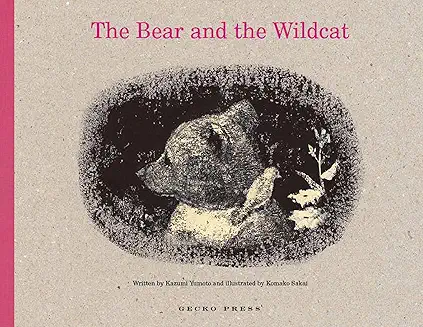
The Bear and the Wildcat by Kazumi Yumoto, translated from Japanese by Cathy Hirano

Gecko Press, 2011

Recommended by Eori Tokunaga, SCBWI Los Angeles, CA 


Eori says …


"The Bear and the Wildcat is a story about a bear who grieves the loss of his best friend and a friendly Wildcat who helps the bear process his feelings of moving on. I came across this book while working at the library and was immediately attracted to the illustrations. As someone who lives with depression, I genuinely appreciate how gently the author weaves empathy and compassion into the story. I would highly recommend this book alongside other socioemotional stories such as The Memory Box: A Book About Grief and A Last Goodbye."


***


You'll find the previous articles in this World Kid Lit Month series here:


And for more recommendations of children’s and YA books from around the world, see the following websites:


***


Suzanne Kamata is an American permanent resident of Japan, and the author of the young adult novel Indigo Girl (GemmaMedia, 2019) and the middle grade novel Pop Flies, Robo-pets and Other Stories (One Elm Books, 2020), both set in Japan.


Eori Tokunaga is an author, illustrator, librarian, and zinester based in Los Angeles. Currently, she is working as an Assistant Editor for the SCBWI-Los Angeles Kite Tales blog and is putting together manuscripts/picture book dummies for submission. 


Ruth Ahmedzai Kemp is an Arabic teacher and a literary translator working from Arabic, Russian and German into English. She gives workshops in schools about reading the world and creative translation, and is managing director of World Kid Lit, the hosts of World Kid Lit Month.