Tuesday, March 14, 2023

Bologna 2023 Wraps With Attendance at Nearly Pre-Pandemic Levels!

The Bologna Children's Book Fair had its 60th anniversary this year, and SCBWI was "in the house!"

SCBWI Instagram post from Bologna with text that reads: Portfolio review at the booth. So many talented illustrators that we went overtime to get everyone seen! Thanks to our reviewers @ericarsilverman @dearnetta @ammi.joan.paquette @martharago#bcbf23 #portfolioreviews #illustratorsofinstagram #illustrationartists #artist

Over at Publishing Perspectives, Porter Anderson reported in this piece, Bologna’s 60th Edition Draws 28,894 Visitors, that the “in-person professional visitor count at Bologna Children’s Book Fair 2023 jumped by 35 percent over 2022... nearly equivalent to pre-pandemic attendance levels."

Read more about the fair here.

Illustrate, Translate, and Write On!
Lee

Thursday, March 9, 2023

So You Want to be an Author/Illustrator


    Frustration is growing among querying picture book creators: currently many agents seem to only want author/illustrator submissions. As a writer-only creator or an illustrating-only creator you may be wondering if you need to be able to both write and illustrate to succeed in this industry. The short answer is no! Take a look at the picture books currently being published and you’ll see that many are still created by a separate author and illustrator. However, you may decide you want to learn to write or illustrate anyway. Do you know where to start? Learning a new aspect of picture book creation can be completely overwhelming, so let’s start with five things you can do.

5 Things To Do As A Writer Who Wants to Illustrate
  
cover of the book Picture This: How Pictures Work by Molly Bang. White cover with 4 black rectangles at varying places and one red triangle.
First, assess why you want to illustrate. Learning to illustrate simply in order to get an agent is not going to be a sustainable motivation. In addition, it is not a quick fix for your querying woes! A lot goes into creating an illustration and this takes time to learn. However, if you enjoy making art, it’s worth exploring illustrating.

    The second thing to do is draw every day for a year. You may have loved art in high school, and may even dabble in it now. Making art is fun! However, illustrating a picture book is a big time commitment, and you will quickly burn out if the process isn’t something you can stick with. Drawing every day for a year is a good way to determine if you actually enjoy the commitment of making art. It’s also a great way to improve your skills.

    Now that you know why you want to illustrate and you know you enjoy making art, the next step is to take art classes and learn the language of art. Just like writing has particular skills to make your work stronger such as sentence structure, word choice, repetition, and more, illustrating has particular skills you will need. These include composition, color choice, character design, and many other things. You do not need an art degree to be an illustrator, and there are many great online options for learning art.

    While taking art classes, start step four: study picture book illustrations. Take what you are learning about art and see how illustrators apply these concepts to picture books. In addition, study how illustrators build on the text, how they pace the images to aid the reading experience, and what choices they make with composition and color to create a visual arc throughout the book.

    Finally, make a lot of art. A LOT OF ART. The more art you create the more consistently you will make good art. Many people jump right into creating a picture book dummy when they move from writing to writing and illustrating. Before you do that, you will need a website of your 10-20 strongest images. When an agent or editor sees your dummy, they are going to want to visit your portfolio to see that you can create consistently strong art.

5 Things To Do As An Illustrator Who Wants to Write

  
cover of Writing Picture Books by Ann Whitford Paul showing a child riding an animal through a scene filled with trees.
    First, assess why you want to write. Writing is less time consuming than illustrating, but you still need to stand out with a unique voice in this competitive market. Usually author/illustrated books have more time between their publication dates, so if you are looking to create more books, this may not be the way to do it. However, if you have a story to tell, learning to write is worth exploring.

    Next, study picture book texts, particularly those written and illustrated by the same person. A common mistake illustrators learning to write make is describing exactly what they are illustrating with their text. Study how picture book art and text works together while not being the same.

    Then, take some writing classes or go to some writing workshops. While many of us know the basics of writing, you will want to learn how this applies specifically to picture books. Published authors have great insight into the particulars of picture book creation.

    While you are attending writing workshops, try creating some stories. Starting from scratch can be intimidating, so try taking one of the illustrations from your portfolio and creating a story for it. Before you know it, you will have a loose structure for a picture book.

    Finally, write a lot of drafts. A LOT OF DRAFTS. The more you write, the more you will figure out pacing, word choice, and how to compliment your art rather than repeat it. The more you practice, the stronger your storytelling voice will get.


3 Tips For Both Writers And Illustrators

    While you are learning how to write or illustrate, I recommend reading WRITING PICTURE BOOKS by Ann Whitford Paul and PICTURE THIS: HOW PICTURES WORK by Molly Bang. These books are both essential reading for picture book creators.

    In addition, get feedback on your work. This can be from a critique group or a paid critique from a professional. I recommend making connections with other writers and illustrators to form a critique group or critique swap before paying anyone for feedback.

    Finally, however long you think it’s going to take to learn to write or illustrate, double that. These are skills that take some time to master, particularly illustration. (If you don’t believe me, ask any published writer or illustrator how long it took them before they signed with an agent and then got published.) Publishing is a slow industry, and it’s worth taking your time to create work that will stand out in a competitive field.


    While I’ve given feedback to many beginning writers and illustrators, I am just one author/illustrator in the industry. Everyone’s path is different. I do hope that this makes the process of learning a little less intimidating for you and gives you a place to start. Have fun discovering your own unique writing or illustrating style!


headshot of person with short purple hair, smiling and wearing a yellow shirt with a tree behind them.
Anne Appert (they/them ) is a nonbinary author/illustrator who spent their childhood with their nose stuck in a book, while their wild imagination transformed their New Jersey backyard into faraway places. Anne still enjoys spending time in their backyard dreaming, and now their imagination turns their dreams into words and pictures for children. Anne wrote and illustrated their debut book Blob, which was published by HarperCollins in Fall of 2021. Their second book What If You Wish? will publish with HarperCollins in 2024. They are a member of SCBWI, from which they received an honor in the 2021 Conference Portfolio Showcase. When not writing and illustrating, Anne enjoys teaching college students, dying their hair every color of the rainbow, and attempting to roller skate.  You can see their work at anneappert.com.


Tuesday, March 7, 2023

What Does Your Next Book Contract Say About AI?

The way artificial intelligence systems are trained is that they intake vast amounts of art* created by humans to then re-mix and re-purpose the human-created art into something ostensibly 'new.'

screen shot of the Publishers Weekly article, "Authors Guild Adds Clause to Model Contracts Prohibiting AI Training Uses"


In a fascinating development announced March 2, 2023 in Publishers Weekly, the Authors Guild has added a new clause to their model contract, 

"that prohibits publishers from using or sub-licensing books under contract to train artificial intelligence technologies. The clause also requires publishers to include the limitation in any sublicensee.

According to a statement, the clause is "a response to recent concerns about publishers and platforms adding language to their terms that allows them to data mine books for use in training AI models that will inevitably compete with human-authored works."

The Authors Guild, in their announcement, shares the model clause:

No Generative AI Training Use.

For avoidance of doubt, Author reserves the rights, and [Publisher/Platform] has no rights to, reproduce and otherwise use the Work in any manner for purposes of training artificial intelligence technologies to generate text, including without limitation, technologies that are capable of generating works in the same style or genre as the Work, unless [Publisher/Platform] obtains Author’s specific and express permission to do so. Nor does [Publisher/Platform] have the right to sublicense others to reproduce and otherwise use the Work in any manner for purposes of training artificial intelligence technologies to generate text without Author’s specific and express permission.

It certainly raises the question for our next contracts, both the ones we're negotiating ourselves and the ones our agents negotiate on our behalf: Do you want your art used to train AI?

Illustrate, Translate, and Write On,
Lee

* "art" would include words and pictures, when it comes to children's content, and beyond...) 

Thursday, March 2, 2023

Writing and Illustrating to Discover Ourselves


    As writers and illustrators of children's books, we often strive to create books for young readers to see themselves or to learn about others. This is something I hope for with many of my projects. However, in writing and illustrating my first book I was surprised with a different outcome: discovering myself.

    In the weeks leading up to my debut, I wrote about the process of writing Blob many times. Blob started as a joke about how no one could recognize the animal characters I was drawing. In exasperation, I declared that I would draw a blob. They were cute, so I decided I needed to learn more about who they were.

    In drafting Blob, I focused mostly on humor. The idea of a character who could be whatever you want them to be lent itself well to fun word play and cute illustrations. And yet, little pieces of me still creeped in. The narrator calling Blob “bob” and Blob painting the “l” in on every page was something I often did with the “e” in my own name. When I started working with my editor, she suggested that we lean in to this a bit more as a theme for Blob. In my first draft, it was a gimmick throughout the book, and she pointed out that Blob needed to stand up for themself and insist on the correct name. I agreed.

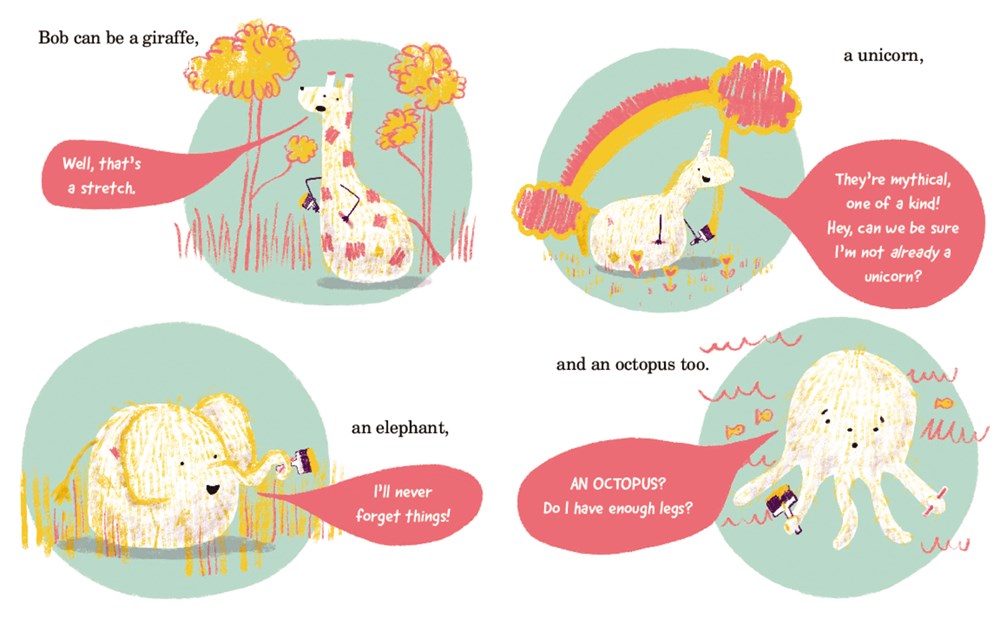
An illustrated page showing a character as a giraffe, an elephant, a unicorn, and an octopus
A page from Blob. Leaning into silly humor was fun!

    Halfway through the process of editing the manuscript, the pandemic began. As we all grappled with the fear and uncertainty of that time, my friendships moved to online forums, where I met more queer and trans authors and artists. For the first time in my life, I heard the word nonbinary. Hearing them describe their own experiences of self discovery, the old childhood uncertainty of making decisions about who I was and wanted to be began to bubble to the surface. I found myself relating to my friends’ stories and wrestling with questions about my own identity.

    As we worked on marketing materials for the book, including the book announcement, everyone was using he/him pronouns for Blob, which didn’t feel right. I asked that we switch to they/them pronouns. At the time, I wasn’t sure why I felt so strongly about this, but the publishing team immediately agreed and updated the marketing materials.

    After Blob was edited and the art completed, my editor asked me to write a letter to readers talking about what it meant to write Blob. In this letter, I discussed the many themes of my own childhood that had woven their way into this humorous story: the fear of deciding what and who to be, the pressure to be who people expected you to be, the disappointment of people not bothering to learn my name because I am a twin, and the frustration of people constantly misspelling my name. In short, Blob is about identity: being who you are, no matter what.

  
illustration of white blob character with star glasses on head wearing a name tag that says "hello my name is blob" and surrounded by drawings.
     
In writing this letter, I wrote “I hope that Blob shows children and their adults the importance of being yourself, regardless of what other people want or expect you to be. That the best answer to “what do you want to be” can be “I want to be me”! There are many children who deal with people mispronouncing their names, whose reality includes people making no effort to know who they are or say their names correctly, or whose name doesn’t fit who they are. I want children reading this book to realize that it’s ok to speak up and ask people to call you what you want to be called, to recognize you as an individual, no matter how many times it takes.”


    A lightbulb went off in my head as I wrote that. All those questions I had wrestled with while writing Blob suddenly had an answer. Blob was not only all the things I had written above, it was my journey of discovering that I am nonbinary. Blob’s feelings of not really being one thing or the other, being all the things yet none of the things was me. Writing Blob was like finding a mirror that truly reflected who I was for the first time in my life.

    I wasn’t able to share this story when Blob published, and yet Blob still found their way to nonbinary readers whose parents’ messages to me will forever remain close to my heart. I love that Blob can be so many things for readers who will come across this story, and that readers can connect to this character in their own way. For me, Blob will always be about discovering myself as a nonbinary person. Thank you, Blob.

   
Image of cover of picture book titled BLOB with white blob character in star glasses in the center.
My advice to other writers and illustrators: write what your heart is pulling you to write. Draw the character that makes you laugh, the character that demands attention. You may find yourself on the page, and this authenticity will connect to you to your readers. 

    I ended my letter to readers with “Blob captured my heart. I hope they capture yours as well.” And so I’ll end this post to you, writers and illustrators: Blob discovered my true self. I hope your writing and illustrating discovers yours as well. Always be you!


Image of person in star glasses and tunic top holding picture book titled BLOBAnne Appert (they/them ) is a nonbinary author/illustrator who spent their childhood with their nose stuck in a book, while their wild imagination transformed their New Jersey backyard into faraway places. Anne still enjoys spending time in their backyard dreaming, and now their imagination turns their dreams into words and pictures for children. Anne wrote and illustrated their debut book Blob, which was published by HarperCollins in Fall of 2021. Their second book What If You Wish? will publish with HarperCollins in 2024. They are a member of SCBWI, from which they received an honor in the 2021 Conference Portfolio Showcase. When not writing and illustrating, Anne enjoys teaching college students, dying their hair every color of the rainbow, and attempting to roller skate.  You can see their work at anneappert.com.


Tuesday, February 28, 2023

The 2023 Golden Kite Award Winners & The Sid Fleischman Award for Humor

If you've got the time (1:05:00) and you want the award-season thrill, watch the full video recording of the Golden Kite Awards ceremony and acceptance speeches here!


The winner in each category received $2,500 plus an additional $1,000 to donate to a non-profit organization of their choice. Each honor recipient received $500 plus an additional $250 to donate.

If you're in a rush, or just need to add to your to-read pile now, here's the list of honorees and winners: 


(scroll down, so we don't have any spoilers...)


PICTURE BOOK TEXT

Winner: Fly written by Brittany J. Thurman, illustrated by Anna Cunha (Caitlyn Dlouhy Books/Atheneum)/Simon & Schuster)

Donation: Young Authors Greenhouse https://www.youngauthorsgreenhouse.org/mission


Honor: The Talk written by Alicia D. Williams, illustrated by Briana Mukodiri Uchendu (Caitlyn Dlouhy Books/Atheneum/Simon & Schuster)

Donation: Promising Pages https://promising-pages.org/


PICTURE BOOK ILLUSTRATION

Winner: Kumo the Bashful Cloud illustrated by Nathalie Dion, written by Kyo Maclear (Tundra Books/Penguin Random House Canada)

Donation: LePhare (The Lighthouse) https://phare-lighthouse.com/


Honor: Farmhouse by Sophie Blackall (Little, Brown Books for Young Readers)

Donation: Virginia Children’s Book Festival https://www.vachildrensbookfestival.org/


NONFICTION TEXT FOR YOUNGER READERS

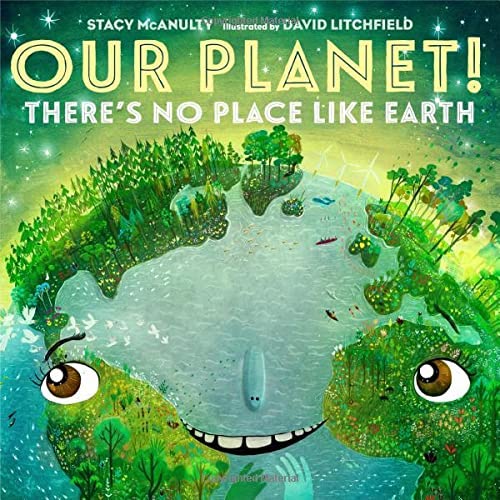
Winner: Our Planet! There's No Place Like Earth written by Stacy McAnulty, illustrated by David Litchfield (Henry Holt Books for Young Readers/Macmillan)

Donation: The Sierra Club Foundation https://www.sierraclubfoundation.org/ 


Honor: H is for Harlem by Dinah Johnson, illustrated by April Harrison (Christy Ottaviano Books/Little, Brown Books for Young Readers)

Donation: Children’s Defense Fund https://www.childrensdefense.org/


NONFICTION TEXT FOR OLDER READERS

Winner: Absurd Words: A Kid's Fun and Hilarious Vocabulary Builder for Future Word Nerds by Tara Lazar (Sourcebooks)

Donation: The Highlights Foundation https://www.highlightsfoundation.org/


Honor: Save the People!: Halting Human Extinction written by Stacy McAnulty, illustrated by Nicole Miles (Little, Brown Books for Young Readers)

Donation: The Sierra Club Foundationhttps://www.sierraclubfoundation.org/ 


MIDDLE GRADE FICTION

Winner: The Civil War Of Amos Abernathy by Michael Leali (HarperCollins)

Donation: Ali Forney Center https://www.aliforneycenter.org


Honor: Iveliz Explains it All by Andrea Beatriz Arango, illustrated by Alyssa Bermudez(Random House Books for Young Readers)

Donation: Boys and Girls Club of Central Virginia https://bgclubcva.org


ILLUSTRATED BOOK FOR OLDER READERS

Winner: The Adventures of Team Pom: Squid Happens, by Isabel Roxas (Flying Eye Books)

Donation: The Center for Fiction https://centerforfiction.org/


Honor: Esme's Birthday Conga Line: illustrated by Marissa Valdez, written by Lourdes Heuer (Tundra Books/Penguin Random House Canada)

Donation: Save the Children https://www.savethechildren.org/


YOUNG ADULT FICTION

Winner: Beneath the Wide Silk Sky by Emily Inouye Huey (Scholastic Press)

Donation: Literacy for Incarcerated Teens https://www.literacyforincarceratedteens.org/


Honor: Destination Unknown by Bill Konigsberg (Scholastic Press)

Donation: NMAC: the National Minority AIDS Council https://www.nmac.org/


SID FLEISCHMAN AWARD FOR HUMOR

Winner: Freddie vs. the Family Curse by Tracy Badua (Clarion Books)

Donation: The Filipino American National Historical Society http://fanhs-national.org/filam/


Honor: The Real Riley Mayes by Rachel Elliott (Balzer + Bray)


Congratulations to all the nominees, honorees, and winners!

Illustrate, Translate, and Write On,
Lee


Thursday, February 23, 2023

5 ways to increase the publishing and availability of children books in African languages - a Guest Post by Christian Elongué (part 4 of 4)


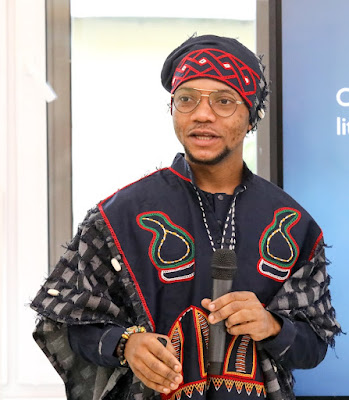
Christian Elongué during a reading workshop at Nungua Methodist School (Ghana), Dec. 2022

1: Create more literary prizes for children books in African languages

By encouraging and incentivizing authors and publishers to consider young adult and children’s literature, we can expose young people to different cultures to give them a more well-rounded literary experience. 

2: Establish stronger network of literary translators in African languages

Translation ensures that young readers have the chance to read brilliant stories from around the world in their traditional language. It also encourages a greater variety in the type of texts children are able to enjoy. Genres such as comic and graphic novels arguably aren’t as well established in Africa as they are in Asian cultures. So, translation has enabled African youth – like me – to experience a different genre such as Manga and Anime books, Japanese comic books and graphic novels that are almost always published in black and white.

However, translating children books is not an easy task. Emma Ramadan shared the experiences and lessons learned by five translators of children books while the award-winning translator Daniel Hahn shared his thoughts on the art of translating picture books. Since English is the most spoken language in the word, it is easier to find Anglophone translator of children’s books than for other languages, especially African languages. There is therefore a need to establish a network of literary translators specialized in African children’ literature and equipped with the required skills, sensitivity and technicity to translate children books and stories. 

Even though there are literary translators in Africa (Bakwa, World Kid Literature etc.), very few are specialized in children’ literature and most are not organized as a network. Muna Kalati, the network of children book specialists in Africa, together with World Kid Literature are pushing for the creation of such a network where translators of children books could share experiences, challenges and opportunities. We believe that translated books can have the most insight to other cultures because people who are native to that setting are the ones who are writing the stories. 

3: Increase investment in publishing of multilingual books for children 

Reading in their own language will ignite children’s curiosity and desire to want to read more. Some children see their language in writing for the first time and it boosts their self-esteem. 

4: Produce more multilingual books for children through open digital licensing

Open digital licensing has the potential for achieving quantity through sharing of openly licensed images. This offers a chance for communities to develop their own literacy materials and include indigenous knowledge for future generations. We, therefore, recommend a community approach to the development and use of children’s storybooks. 

5: Organise more writing workshops on African languages

Educators need to participate in writing storybooks for children because they are the ones who deal with their literacy in systematic ways. Additionally, greater investments should be made towards building public libraries and communities around them encouraged to use them. 


In summary, we must acknowledge that access to children books in African languages is still a big problem for many potential readers and book-buyers because of the high-cost implications for publishers, writers’ visibility and readers’ perception about the privileges and benefits ascribed to local languages.  However, the application of these five key ideas could help ensure there is an increasing body of intercultural stories and books in languages that children are familiar with and about topics that they can respond to. 

***

This is the fourth in a series of four posts. Click here for the firstsecond, and third posts.

About Christian Elongué 

Ngnaoussi Elongué Cédric Christian is an author in children literature and researcher on African video games. Dismayed by a lack of black characters in books available to African children, Elongué founded munakalati.org in 2017 with the goal of building international recognition for African children’s book.  Christian has supported several researchers to undertake research on African Children literature. In 2019, he authored An Introduction to Children Literature in Cameroon, the first scientific book on children’s book industry in Cameroon. Prior to that, he worked with the French National Centre for Children’s Literature. He serves on the Executive Committee of the International Board on Books for Young People  (IBBY International), and is the founding member and Vice-President of IBBY-Cameroon. In 2021, he was one of the 30 Global literacy Champion and innovators by the International Literacy Association and his work on foundational learning and numeracy (FLN), which   impacted at least 3032 African children, was covered by LeMonde, RFI, etc. An avid lifelong learner, he holds three master’s degrees on children literature (University Senghor, Alexandria), Instructional Design (University of Lille, France) and in African Studies (University of Dschang) with 46 international certifications from top global universities.

About Muna Kalati

Muna Kalati was founded in 2017 to promote more diversity, equity and inclusivity in the cultural news ecosystem, especially the children book industry. In 2018, we started publishing Muna Kalati magazine, which is becoming a reference for writers, publishers and illustrators of children’s and Young Adult books. MK is the first and only media network of literary journalists, authors and publishers promoting African children literature. Through our digital platforms, reading workshops, advocacy campaigns and bilingual magazine, we increase access to culturally-relevant resources and information on children books to thousands of children and families in Africa, Europe, US and the diaspora. Thus, we facilitate intercultural communication and improve literacy by exposing kids to African and black children's books and educational materials. By promoting diverse books, we are reducing ethnocentrism and eurocentrism and improving international understanding, preparing kids to be global citizens and changemakers well equipped to confront the increasing volatility, uncertainty, complexity and ambiguity of our contemporary society.  

Please note that this author's statements elsewhere regarding the LGBTQ+ community are not in agreement with SCBWI's Statement of Intent on Equity and Inclusion.

Tuesday, February 21, 2023

Laini Taylor Shares a Fun Writing Exercise

So over on Instagram, Laini Taylor @lainit, author of the bestselling Daughter of Smoke & Bone trilogy among other YA titles, shared this really fun writing exercise. With Laini's permission, I'm sharing it here:

Screen shot of Laini's instagram post with photo and instructions - these are in text and alt text in the rest of this blog post


"This was the writing exercise we did this morning at my weekly Zoom meeting (optional; some people just work on their wip’s):

Choose 1 word off list A and 1 off List B and use the result as a title or prompt for a freewrite, poem, brainstorm, story, or whatever. I posted a numbered version of the list too, since we’ve sometimes found it better to let a dice roll choose for you (there’s a virtual 20-sided die site if you don’t have one). I got “riot whisper” and gave it a quick 15-minute freewrite effort, which was fun! There are some good combos in there if you want to play!” —Laini Taylor

Here's the close-up on those lists:

photo of a sticky note in a notebook that reads: List A: Butterfly, Ghost, Beast, Song, Riot, Scar, Glass, Serpent, Dusk, Dawn, Other, Lost, Hungry, Scream, Winter, Claw, Thunder, Clockwork, Orchid, Angel, Smoke, Saint

photo of a sticky note in a notebook next to 20-sided die that reads: List B: Poem, Eye, Sapphire, Kingdom, Bride, Library, City, Chalice, Body, Wolf, Whisper, Sport, Serenade, Sword, Heart, Baby, Collector, Apple, Witch, Nocturne, Sparrow, Sky

Hope it inspires you as well! Thanks, Laini!

Learn more about Laini and her books here.

Illustrate, Translate, and Write On,
Lee

Thursday, February 16, 2023

Literary Awards Promoting Translation of Children Books in African Languages - a Guest Post by Christian Elongué (part 3 of 4)


Christian Elongué during a reading workshop at Nungua Methodist School (Ghana), Dec. 2022

Awards and literary prizes can encourage or boost literary expression in African languages. Below are few literary prizes and awards worth mentioning, most being from South Africa. 

1. The Sanlam Prize for Youth Literature

The Sanlam Prize for Youth Literature is a biennial award initiated in 1980 by Tafelberg Publishing, to develop high-quality literature for teenage readers (ages 12-18) and YA novels in all the South African official languages. The competition is only open to South Africa, Botswana, Lesotho, Namibia, and Swaziland citizens, who submit their writings in one of the six language categories: English, Afrikaans, Tshivenda, Xitsonga, Nguni and Sotho. Prizes worth R90 000 (approx. 5076.07 USD) are up for grabs and prize-winning authors get their books published by Tafelberg Publishers, catapulting their writing career to the next level. The last edition was organised in November 2021.

2. M-Net Literary Awards

M-Net Literary Awards were a group of South African literary awards, awarded from 1991 to 2013. They were established and sponsored by M-Net (Electronic Media Network), a South African television station. In the awards' fourth year, an award for indigenous African languages was inaugurated, alongside the original English and Afrikaans awards, to encourage writing in indigenous languages.  Some of the famous winners of these awards included Zakes Mda for Ways of Dying in 1997 and Cynthia Jele for Happiness is a Four-letter Word in 2011. 

The award was suspended indefinitely after the 2013 season. The pay TV company cited that the reason they were moving away from literature was that they were re-evaluating its corporate projects. James Murua, a Kenyan literary critic commented that this was very sad when we know that “Big Brother Africa, the scintillating reality show where viewers watch a bunch of folks sit in a house bored out of their wits for three months is still on”.

3. Maskew Miller Longman Literature Awards

The Maskew Miller Longman Literature Awards were established in 2007 by Maskew Miller Longman, an educational publishing company in South Africa, to encourage writing in all of South Africa’s 11 official languages1, with a particular focus on young adult (YA) literature. The genres rotate each year between novels, drama and short stories. Since 2019, with the COVID pandemic outbreak, this literary award has stopped being awarded and we hope it would continue. 


As we realize, there are actually few literary prizes that encourage writing stories in African languages. There are other existing literary prizes for children and young adult literature but we have not included them because they were not focusing on works produced in African language. Kpotufe Delali from Muna Kalati, explored five of these prizes for African children's books in French and English and provided 8 recommendations to improve the legitimacy of children's literature through literary prizes in Africa. 

Our exploratory analysis reveals that much work needs to be done to see African children reading stories and books in their own languages. Our next article shall present five critical recommendations that could help change the status quo and advance the publishing and availability of more children books in African languages.  

***

 1  It was the only competition to invite entries in all 11 official languages.

***

This is the third in a series of four posts. Click here for the first and second posts.

Ngnaoussi Elongué Cédric Christian is an author in children literature and researcher on African video games. Dismayed by a lack of black characters in books available to African children, Elongué founded munakalati.org in 2017 with the goal of building international recognition for African children’s book.  Christian has supported several researchers to undertake research on African Children literature. In 2019, he authored An Introduction to Children Literature in Cameroon, the first scientific book on children’s book industry in Cameroon. Prior to that, he worked with the French National Centre for Children’s Literature. He serves on the Executive Committee of the International Board on Books for Young People  (IBBY International), and is the founding member and Vice-President of IBBY-Cameroon. In 2021, he was one of the 30 Global literacy Champion and innovators by the International Literacy Association and his work on foundational learning and numeracy (FLN), which   impacted at least 3032 African children, was covered by LeMonde, RFI, etc. An avid lifelong learner, he holds three master’s degrees on children literature (University Senghor, Alexandria), Instructional Design (University of Lille, France) and in African Studies (University of Dschang) with 46 international certifications from top global universities.

Please note that this author's statements elsewhere regarding the LGBTQ+ community are not in agreement with SCBWI's Statement of Intent on Equity and Inclusion.

Tuesday, February 14, 2023

5 moments of Inspiration and Advice from #scbwiNY23 - The SCBWI 2023 Winter Conference in New York City


"Our creative work helps us process it all, our lives." —Marla Frazee

A picture book should "deliver emotional impact," an "experience that affects reader and child/children." —Allyn Johnston

Re: Memoir, and the importance to "convey to the reader how you're feeling." —Raina Telgemeier

On AI: "I am looking to publish people, not computers." —Arthur A. Levine

"A funny thing about dreams -- when you achieve one, new ones start populating." We need to redefine success not with "lens of achievement, but with lens of connection and personal meaning." —Aisha Saeed

Check out the official SCBWI Conference blog for more takes on the conference!

And remember, you can still register for the virtual conference on Feb 25, 2023 here.

Illustrate, Translate, and Write On,
Lee

Thursday, February 9, 2023

Overcoming the Barriers to Multilingual Publishing of Children Books in African Languages - a Guest Post by Christian Elongué (part 2 of 4)

Christian Elongué during a reading workshop at Nungua Methodist School (Ghana), Dec. 2022

There are various reasons why many children’s books are not being published in African languages to any great extent, including historical legacies, the limited number of authors and small reading markets.

a. Authors challenge: choosing between cultural pride and visibility 

The main challenges for authors are three-fold: 

1. the need to understand the ingredients for successful children’s books; 

2. the sensitivity to negotiate the linguistic challenges associated with a newly emergent genre in African languages; 

3. the fear of not being visible globally. Most authors, even though speakers of their mother tongue, prefer to write in official/colonial legacy language in order to get a wider audience.

b. Publishers concerns about publishing in African languages: nexus between business and philanthropy 

Publishers too, argue that, while the most spoken home languages are African languages, there is lower reader demand for African language books, and it is not financially viable for them to publish books in these languages. Books in African languages are mostly educational and very few are purely recreational, meaning that there is a limited number of books in African languages beyond books for schools. 

Additionally, publishing stories and children's books in African languages requires new resources that are different from the existing international languages. For example, the publisher may need to buy additional equipment and software that can handle African signs and symbols. One may think that if publishers published more books in African languages outside the school market, more people would read these texts. But, publishing houses are also businesses and a publisher is more a businessman than a philanthropist. So, a publisher would naturally prefer publishing in a language that is more marketable with a greater potential for return on investments (ROI). Thus, unless a book can be used in schools and a market thus assured, publishers are generally unwilling to undertake its printing. “When a nation’s literature is dependent on prescription for schools in order to survive, the irony of transformation is patent. Clearly there is little or no adult readership ”. There is therefore an urgent need for innovative strategies to create high-quality work in African languages which will remain cheap and accessible. 

c. Parental and readers challenge: Insufficient readership in African indigenous languages

Most African parents would prefer to purchase books for their children in official languages (English, French or Portuguese primarily). They would deliberately not look for multilingual books because they consider official languages as global languages with more privileges and opportunities for their kids. I have many friends who themselves are not able to speak any indigenous languages and neither can their children. Therefore, these parents would naturally not go for books in local languages. For such cases, eBooks and audio formats are convenient to enable such kids and parents to read and hear stories in an indigenous language. In this regard, here is Muna Kalati’s list of 37 apps and platforms proposing children’s books and stories for Africans.  

However, parents must not neglect their responsibility to build that readership interest in local languages and this would take time, hard work, financial risk and commitment. They should remember that the international languages that are widely used today are the product of history, rising out of many then-unknown indigenous languages in their home countries through policy and practice.

d. Other factors influencing multilingual publishing

Libraries are usually understocked, and bookshops are rarely to be found outside the more affluent parts of urban areas which means extra travel costs for those who are far away. 

The major booksellers stock few indigenous language titles, and the majority of books sold are in English. However, in South Africa and Kenya, most bookstores have dedicated Afrikaans and Swahili language sections respectively. 

These are the main challenges limiting the growth of multilingual books for children in Africa. There are also many reasons to remain hopeful when we look at the growing number of initiatives that have sprung up across the continent, in an effort, to bridge language barriers between worlds.1

Initiatives contributing to the publishing of multilingual children books in Africa

In the first part of this article, I presented the main challenges to the publishing of children books in African languages. Now, I will be describing key initiatives that are integrating African languages, encouraging literary translation and celebrating translated children books. 

1. African Storybook

The African Storybook (ASb), is a literacy initiative of the South African Institute for Distance Education (SAIDE), to address the severe dearth of local language literacy resources for children through the development of openly-licensed literacy materials. The ASb is concerned about providing multilingual, context-appropriate children’s storybooks that can be use to practice reading and develop a love for reading. In this regard, diversity, quantity, accessibility and effective use of these storybooks matter. ASb encourages educators and other literacy promotors to create, translate and adapt storybooks to the practical needs of children. It allows teachers to write children’s books in local language and to learn to teach literacy in local languages. 

2. World Kid Literature

WorldKidLit is a collective of translators who started a blog in 2016, to feature children’s books in translation and sample translations of ones which are not yet published in English but should be. The World Kid Lit month was first launched in 2016 by global literature experts Marcia Lynx Qualey, Lawrence Schimel and Alexandra Büchler to help promote and celebrate literature, whether that be fiction, non-fiction or poetry, that has been translated from other languages into English.

3. Global Literature in Libraries Initiative 

The Global Literature in Libraries Initiative was created by Rachel Hildebrandt in 2016 with the primary goal of bringing more international literature to American library patrons. Today, the project facilitates close collaboration between literary translators, librarians, international literature advocates, publishers, editors, and educators, who are uniquely positioned to help libraries provide support and events to engage readers of all ages in a library framework.

4. Global Digital Library 

The Global Digital Library (GDL) was launched by the Global Book Alliance (GBA), to provide children everywhere with the books and learning materials they need to learn to read and read to learn. GDL is collecting existing, high-quality, open educational reading resources, and makes them available on digital platforms so they can be accessed online and in print format with the long-term goal of facilitating translation and localization of these resources into more than 300 languages. During the launch, the GDL platform had resources in 15 languages, seven of which were Ethiopian. The ASb was one of its main sources, contributing 85 storybooks in Amharic, Afaan Oromo and Tigrigna. The GDL is working with another digital platform, Kolibri, to avail all stories on its offline site. 

5. 1001 Languages project

The children’s charity, the Book Pirates is a world-leading publisher of open-access bilingual picture books in online and physical forms. Their projects generally aim at enabling children and young people to experience literature creatively and independently. More specifically, the 1001 Languages project, consists of the creation of a large database of bilingual picture books written and illustrated by children and for children. Children from across four continents, including Africa, have helped to create these books in over 700 language combinations to choose from, with 75 distinct languages included.

6. Global Storybooks Project

The Global Storybooks project has taken 40 storybooks from the ASb site and created country-specific sites. For example, Storybooks Rwanda, Storybooks Kenya, Storybooks Tanzania, Storybooks South Africa, etc. These specific sites help to make the larger ASb site more visible, therefore making it easier for educators, teachers and librarians to use the storybooks more effectively. 

7. Bakwa Literary Translation Workshops

Since October 2019, Bakwa organised a Literary Translation Workshop in partnership with the University of Bristol where 13 participants were trained by literary translators Ros Schwartz, Georgina Collins, and Edwige Dro. Over the course of the workshop, participants attended a range of practical sessions introducing them to literary translation across genres and forms, as well as more theoretical issues. After the workshop, they were paired with an expert mentor who worked with them for ten weeks to complete a short story translation. The 2021 workshops were co-convened with London Intercollegiate Network for Comparative Studies (LINKS). In 2022, Bakwa Books continue acquiring translation rights of famous African writers, even though, most are not authors of children books

8. In Other Words, by Book Trust

In Other Words was an initiative that encouraged the translation and UK publication of outstanding children's literature from around the world that ran from 2017-2018. UK Book Trust funded a sample translation and synopsis of eight children’s books originally published in other languages besides English. 

9. Midako Publishing 

Midako Publishing produces culturally relevant and inspiring stories that foster creativity, critical thinking and above all love of reading in children. Midako has developed a series of decodable books that uses phonetics rather than strict memorization of the Amharic (Ethiopian) language. For this, it won the African Union’s All African Public Sector Innovation Award in 2018. 

In an increasingly globalized world, our children need an international perspective now more than ever. What better time than now to encourage young children to interact with other cultures and create a publishing environment where shared stories throughout Africa and the world are valued. I firmly believe in the power of words to cross borders and indeed the importance of sharing stories, characters and experiences through the written language.

This is part two of a four part series by Christian. Read part one here.

***

1 Möller, “The State of Multilingual Publishing in South Africa.”

***

Ngnaoussi Elongué Cédric Christian is an author in children literature and researcher on African video games. Dismayed by a lack of black characters in books available to African children, Elongué founded munakalati.org in 2017 with the goal of building international recognition for African children’s book authors and increasing access to African children’s books. See Christian's full bio here.

Please note that this author's statements elsewhere regarding the LGBTQ+ community are not in agreement with SCBWI's Statement of Intent on Equity and Inclusion.

Tuesday, February 7, 2023

Margot Atwell shares "What to Watch in Book Publishing in 2023"

Margot Atwell, previously Director of Outreach and International for Kickstarter, is now the Executive Director and Publisher of Feminist Press.

screen shot of Margot Atwell as new editorial director and publisher of Feminist Press announcement


In Margot's recent On The Books newsletter, she summarizes five areas to watch in the year ahead: 


#1: Consolidation and Monopolization
#2: Cash Flow Uncertainty
#3: Labor Justice
#4: Moving Beyond Representation to Equity and Inclusion
#5: The Rise of Fascism in the United States

Margot quotes Ursula K. Le Guin, who said: 

“Any human power can be resisted and changed by human beings. Resistance and change often begin in art. Very often in our art, the art of words.” —Ursula K. Le Guin

And it is also a call to action, to be proactive:

“As leaders in an industry that is so powerful in shaping and disseminating ideas, we need to take a stand and take risks as we’re able. The more power we have, the more privilege we have, the more crucial it is for us to take risks, and to put ourselves on the line for our beliefs.” —Margot Atwell

Read the full piece here.

Illustrate, Translate, and Write On,
Lee

Thursday, February 2, 2023

Multilingual Publishing Within the Children’s Book Industry in Africa - a Guest Post by Christian Elongué (part 1 of 4)

photo of Christian Elongué
Christian Elongué

Africa is the second-largest continent in the world and the most multilingual. According to the African Language Program at Harvard, there are between 1000 and 2000 languages spoken on the continent, with possibly as many as 8000 dialects. These indigenous languages have been negatively affected as a result of colonization, which almost led to their extinction because of the impact of official languages (English, French, and Portuguese primarily) and their ascribed privileges. Today, African languages continue to be marginalized and remain under-used by most of the native speakers, who see them as being inferior to English and other colonial languages. 

Even when African indigenous languages like Arabic (in Somalia) or Swahili (in Kenya) are in a co-official role, the ex-colonial language still enjoys greater prestige than the local official language. In countries where the ex-colonial language is not official by law, de facto it often plays an important official role and enjoys significant prestige. Cameroon is unique as the only African country that has more than one ex-colonial language, English and French, as official languages.1 As a result, almost all of the existing stories and books for children are in English and European languages (98%). South Africa is one of the few African nations where more than 10% of books’ sales are directly in one of the nine indigenous languages: English-language publications accounted for 72% of sales across all sectors, while those in Afrikaans accounts for 16% and those in isiZulu, IsiXhosa, Sepedi and Setswana account for 12%. Thus, the interest for books published directly in African languages is extremely small.

This under-utilization of African languages affects the quality of education delivery, especially the foundational literacy programs for children: 130 million of children globally still did not achieve the minimum benchmarks in literacy and numeracy. The Global Book Fund Feasibility Study 2016 revealed that a significant contributing factor to this crisis is the lack of reading material available in languages familiar to children. This is further reinforcing the growing interest in bilingual education in sub-Saharan Africa, where there is an increased need to produce more children's books, textbooks and early readers in African languages. 

Conscious of this, the Global Book Alliance together with the Association for the Development of Education in Africa (ADEA), advocated to increase production of high-quality textbooks and reading books, in children’s own languages, at the 2022 Transforming Education Summit (TES). At the TES, all education stakeholders agreed on the need for more children's books written in the children’s own languages, and with vocabulary and syntax that are within their competence. For these books to be culturally and linguistically relevant, and supportive of children’s sense of belonging, the content should be created and published by people who are grounded in the children’s own cultures. Academics Grassi and Barker recommend the use of students’ native language for content instruction as it increases students’ academic achievement. Researchers Doiron and Asselin confirmed that learning to read is most successful with mother tongue texts. Therefore, children’s sense of belonging is nurtured by books that are relevant to their environments, cultures, genders, and ability status. And ‘it is especially valuable to make the best books for young people written in any language available to them while they are the right age for them’ commented Anthea Bell, a famous translator of children’s books who was three times awarded the prestigious Marsh Award for Children’s Books in Translation.2

 “How many books about other countries or translated books did you read as a child?”

This question, though apparently simple, would generate different answers depending on the continent where it is asked. In Africa, the majority of response will refer to foreign books for children while in other continent, the answers will most likely refer to an indigenously produced children book. In my case, my favorite book as a child was Zembla and many in my generations also read Astérix, Babar, Pinocchio, Iliad and the Odyssey, which are all from Europe. So the question is, where were the stories from the rest of the world — Asia, Australia, Africa or the Americas?

The need for diversity in global children literature is increasing. Translation and bilingual publishing are two key ways of growing the existing body of children and young adult books from diverse continent, especially in African languages. But currently, they are few expert translators of children’s books from international languages (English, French, Portuguese, Spanish etc.) to African indigenous languages. Authors and publishers of children’s books in Africa have difficulty finding competent and trained translators of the books and stories. Moreover, the level of development and use of African indigenous languages is affecting the level of development of literary translation in Africa. 

This is part one of a four part series. Christian's next article explores key obstacles and opportunities to increase the continuous production, accessibility and use of children's books in African languages. 

***

1 There are countries like Algeria, Egypt, and Libya where Arabic, the official language is also a local medium; in Morocco and South Africa, more than one local language is constitutionally recognized as official in co-equal status with English.

2 The Marsh Award for Children’s Literature in Translation is a biennial award, given from 1996 to 2017, that celebrated the best translation of a children’s book from a foreign language into English, published in the United Kingdom. Through these translations, children who are primarily English-speakers are able to be exposed to stories that are written and take place in another country. It important to note that no African language book has been awarded through this prize. 

***

Ngnaoussi Elongué Cédric Christian is an author in children literature and researcher on African video games. Dismayed by a lack of black characters in books available to African children, Elongué founded munakalati.org in 2017 with the goal of building international recognition for African children’s book authors and increasing access to African children’s books. In 2018, he started publishing Muna Kalati magazine, which is becoming a reference for writers, publishers and illustrators of children’s and Young Adult books. Christian has supported several researchers to undertake research on African Children literature. In 2019, he authored An Introduction to Children Literature in Cameroon, the first scientific book on children’s book industry in Cameroon. Prior to that, he worked with the French National Centre for Children’s Literature

He serves on the Executive Committee of the International Board on Books for Young People  (IBBY International), an international network of people from all over the world who are committed to bringing books and children together and is the founding member and Vice-President of IBBY-Cameroon. In 2021, he was one of the 30 Global literacy Champion and innovators by the International Literacy Association and his work on foundational learning and numeracy (FLN), which impacted at least 3032 African children, was covered by LeMonde, RFI, Askan etc.

A trained instructional designer, he is a pioneer in the field of mobile serious games in Africa and has regularly been invited by universities, UNESCO, eLearning Africa and MGIEP to speak on Gamification in Africa.  He excels at educational technologies research, strategic development communications, and capacity building. He is a highly approachable trainer, blending humor, applicable stories of best practice and high levels of audience involvement. As the president of the International Network for the Promotion of Arts of Speech in Africa and the Caribbean (RIPAO), he delivered uncommonly original and useful trainings and insights that lead to individuals doing their best work and teams providing superb results. As a trainer of Trainers for the WDI-World Debate Institute (USA) since 2013, he has coached and trained at least 700 managers in Africa and Europe, helping them to train more effectively, and tailored workshops around their needs.

He has mentored 36 young African leaders via his mentoring initiative and more via the Ashoka, Total  Energies, Future Africa Fellowship, YALI MWF, African Changemakers, Global Give Back Circle, Commonwealth Mentorship  Programme, etc. He has conducted over 80 presentations at state, regional, national, and international conferences, received grants from several international organisations and taught over 1000 Masters and Undergrate students of the University of Dschang through the APC Learning Center. 

An avid lifelong learner, he holds three master’s degrees in management of Cultural Industries (University Senghor, Alexandria), Instructional Design (University of Lille, France) and in African Studies (University of Dschang) with more than 46 international certifications from top global universities. He consult and publish regularly on knowledge management, eLearning, communication and innovation in education. Learn more about Christian and Muna Kalati here.

Please note that this author's statements elsewhere regarding the LGBTQ+ community are not in agreement with SCBWI's Statement of Intent on Equity and Inclusion.