Showing posts with label Deborah Halverson. Show all posts

Thursday, July 23, 2026

State of the Children's Publishing Market with Deborah Halverson - June 2026

State of the Children's Publishing Market with Deborah Halverson - June 2026

We are a week out to the 2026 SCBWI Virtual Conference! Before you attend, check out this free offering from to SCBWI Members! Hosted by Deborah Halverson, the "State of the Children's Book Market" is a great resource to get a gauge of what is happening in the Kidlit space!

Deborah discusses trends, and how to strategically understand and navigate the children's book world as well as broader market dos and don'ts in this 90 minute video, giving the SCBWI Members a comprehensive overview of the industry and marketplace. Deborah discuss the "influences of AI", the "current landscape of the Middle Grade Market", and "challenges around book banning."

Whether you are new or returning this year to the conference, this is a great tool to help you brush up and tune into the pulse of the publishing industry.

Tuesday, October 10, 2023

What's the Line Between "Upper Middle Grade" and "Lower Young Adult"? - Deborah Halverson Explains

screenshot of Deborah Halverson's Instagram post


With Deborah's kind permission, we're sharing this from her Oct 6, 2023 DearEditorDotCom Instagram Post:

“Look at your character journey. Even if the external journey is as big as saving the world, a middle grade protagonist's internal journey is about identity and relationships within one's immediate social group. It tends to be more inward-focused, working out identity within that small circle.

“YA tends to look more outward, as characters try to establish themselves as independent individuals in a bigger world. Friends and family still matter, but the young adult's world view is expanding.”

I certainly know writers who have been asked to age their characters up or down when close to this boundary. Hopefully, better understanding this distinction can be helpful to us all.

Thanks, Deborah!

Illustrate, Translate, and Write On,
Lee

Thursday, May 28, 2020

SCBWI Announces New Round of Free-to-Members #SCBWIdigital Workshops


Six new free online workshops for SCBWI members start June 4, 2020. Every Thursday at 1pm Pacific, you'll get to learn from:

June 4: Tracey Baptise, author
"The World Isn't Flat: World Building for Realistic and Fantasy Stories"

June 11: Vashti Harrison, author/illustrator
"Character Building for Writers and Illustrators"

June 18: Beth Kephart, author
"Writing Our Lives: From the Telling Detail to the Evocative Scene

June 25: Lesa Cline-Ransome, author
"Telling Their Stories: Writing Nonfiction Picture Book Biographies From Beginning to End"

July 2: Deborah Halverson, editor
"Submission Studio: Writing Queries, Strategizing Submissions, and 10 Ways to Translate "No" to "Yes!"

July 9: Tiff Liao, editor, Henry Holt
"Straight Through the Heart: How to Make Readers Fall in Love With Your Characters"

Read all the details here and learn more about the workshop faculty here.

Registration opens the Monday before the workshop. Only the first 3,000 members who sign up can watch it live and ask their questions. But every SCBWI member can watch the recording for 30 days after the workshop presentation. They promise to be great!

Illustrate and Write On,
Lee

Thursday, February 20, 2020

Do You Know About the "Edited By?" SCBWI Member Benefit?

As a benefit of SCBWI membership, SCBWI offers a publication called "Edited By" that lists editors and what they have recently acquired.

The title page of "Edited By"


Compiled by Deborah Halverson, the idea is that,
Each year, the SCBWI surveys publishers and editors for lists of up to seven books acquired or edited recently. It is our hope that this publication will be a useful tool in targeting your manuscript submissions. By providing you with information about each publisher/editor’s tastes and acquisition decisions, this document can help you determine where to submit your manuscripts and/or illustrations.

It's page 99 of The Book: Essential Guide to Publishing for Children, which you can access by signing into your SCBWI profile and looking under publications. The direct url is: https://www.scbwi.org/online-resources/the-book/

Illustrate and Write On,
Lee

Tuesday, April 5, 2016

Sneak Peek At #LA16SCBWI Keynotes!

SCBWI's 45th Annual Summer Conference, July 29-Aug 1, 2016, will feature keynotes from these bestselling and award-winning authors and illustrators:

Marie Lu


Sophie Blackall

The_Baby_Tree

Neal Shusterman


Carole Boston Weatherford


Deborah Halverson


Ellen Hopkins 


Drew Daywalt 

23310161

Jon Klasson


Pam Munoz Ryan


and

Jenni Holm


Registration will go live at scbwi.org on April 19, 10am Pacific Time!

We hope to see you there.

Illustrate and Write On,
Lee

Thursday, August 20, 2015

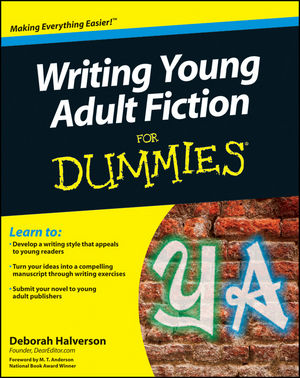
Writing Young Adult Fiction for Dummies - A Great Craft Book by Deborah Halverson

I need to start this post with an apology to Deborah and all of you.  I resisted checking this book out for too long, because I didn't love the self-defined idea of claiming "dummy" status by picking it up... I guess I was embarrassed. (I'm almost embarrassed to admit that!)

But really, I'm over it now. Because Deborah Halverson (who I'm always so impressed with) has put together a really useful guide, for all of us who write YA.


And her book is packed with good stuff. Like on page 76, where Deborah explains:

Calling all heroes

Your goal with your main character (or protagonist) is to move the plot forward and in the process transform that character into something better or wiser, thereby giving life to the story's themes. The reader, too, should be better off for having read this character's tale. To accomplish this, all protagonists, regardless of their age or the genre, have to share three attributes:

 Check mark symbolA need or want strong enough to make the hero struggle onward, no matter what obstacles frustrate his quest to achieve it: This need or want is the character's goal. In teen novels, the need/want must be something other teens can relate to. After all, shattering the glass ceiling at the office has no meaning for readers whose career arc is still in the squeezing-lemons-at-Hot-Dog-on-a-Stick phase – if they're even old enough for a work permit. Examples of teen-friendly needs/wants are parental or peer approval, salvation of other characters in physical or emotional peril, or winning a competition against other teens.
Within this need/want attribute is its opposite: the fear of failing to attain that Big Want. This is an important factor because the more undesirable you make the consequence of failure, the greater your hero's fear will be, increasing the tension in your story. Tension makes readers turn pages. I talk about raising the stakes to heighten tension in Chapter 6.

Check mark symbol A key flaw. The protagonist's flaw is that undesirable trait he keeps tripping over as he tries to attain his goal. Another way to look at his flaw is as his vulnerability. Maybe he's afraid of heights, or painfully shy, or too self-centered. Achieving success is darned hard when you're in your own way. Hard... but not impossible, thanks to the character's core strength.

Check mark symbol A core strength. This is the personality trait that will overcome the key flaw. The core strength must be evidenced in the character in one form or another throughout the entire story. Simply pulling it out of your hat for the climax feels contrived. Maybe your characters didn't notice this strength or it was just budding, but it was there. For example, if you want to set up a character's extreme act of compassion, the hero may rescue an abandoned animal early in the story and nurse it to health, or he may stop his bike so as not to run over an insect hobbled by a broken wing, or he may surreptitiously give a favorite toy to a needy kid he meets at the park. Small moments like these set the stage for the core strength to blossom at the end of the story.

Perhaps your hero's want is to be popular, his flaw is glory-hogging on the basketball court (earning him not admiration but further alienation), and his strength is a moving compassion for underdogs like himself. In this scenario, his compassion for someone else finally overcomes his need to set a point record when he passes the ball to a teammate with even more at stake for the game-winning basket. Both characters become school heroes, and your main character has made a key transformation. That's an example of a successful character arc, which I focus on later in this chapter.

Here's the table of contents, to give you a big-picture idea of what's covered:


So are we dummies for wanting to write YA? Nahhh.

As M.T. Anderson says in the book's Foreword, we're the smart ones:

"If you write to stir the emotions of readers, to move people deeply, to change people's lives, then you should consider writing for young adults. Who else will read your book 12 times? Who else will try to steal a copy from the library? Who else will sleep on top of your book? Who else will make a diorama of your book with the main character played by a Styrofoam cup? Who else, in short, will invest themselves imaginatively in your world like a young person will?"

Writing YA is a great calling.

And "Writing Young Adults For Dummies," even with that title, is an excellent guide.

Illustrate and Write On,
Lee

Thursday, August 23, 2012

SCBWI Summer Conference: Market Keynote Follow-Up with Deborah Halverson

One of the amazing benefits of membership in the SCBWI is getting the latest and greatest on what's going on in the marketplace for children's literature.

Award-Winning Author and Editor Deborah Halverson complied the "2012 SCBWI Market Survey: Publishers of Books For Young Readers" report, and gave a keynote at the recent #LA12SCBWI Summer Conference about what she learned from her survey - giving us the current market needs and trends.

Deborah presenting her keynote to over 1,200 attendees at #LA12SCBWI

While it's not about writing to a trend, Deborah advised that better understanding the market could potentially help writers and illustrators decide between creative projects, and could certainly help us in strategizing submissions.  The information is vital and fascinating.

Deborah was kind enough to share just a few of her insights with us here on SCBWI: The Blog!

What’s being submitted: Agents and editors are receiving lots of submissions with the theme of foster care, many gateway fantasies, and many graphic novels— but that’s not necessarily what they’re looking for. Topping many wish lists is realistic contemporary fiction that is light and funny.

MG/YA fiction: Agents and editors said that while they want to see more instances of literary narratives performing well, for now submissions with commercial appeal in addition to strong craft are faring better.  There was talk about sci-fi interest emerging from the paranormal boom, but that seems a more scattered interest than a real “trend.” It’s worth keeping our eye on that genre, but at this time sci-fi is not looking like a strong contender for the “next wave.”

Historical fiction: Editor/agent interest in historical fiction is not in “straight historical” but rather in stories about people in the past that have another layer, such as paranormal or mystery—like Jennifer Donnelly’s Revolution. There was low agent/editor interest in straight historicals.

Library market: Sales potential in the library market is still fuzzy for physical books, since e-book and audiobook demands have libraries looking for funds from other areas, including physical book purchases.

Picture books:  The entire picture books category has emerged from its tough times leaner and better.  There is room for multicultural picture books that find a fresh way to present their topics and for narrative nonfiction that digs beyond the obvious and has a distinct point of view.  The most dominant trend in picture books remains the shorter, character-driven story, with fewer contracts going to stories featuring longer, more detailed narratives and plots.

2011 children’s book sales: The July 2012 BookStats report showed there was $3.3 Billion sales in the children's book market last year (up 9.4%)  For details, see Publisher’s Weekly’s coverage here.


Thanks, Deborah!

As you can see, SCBWI's Market Survey is an incredible resource.  And members can download a pdf of the report here.


Here's more about Deborah:

Deborah Halverson spent a decade editing books for Harcourt Children's Books before becoming the award-winning author of Writing Young Adult Fiction for Dummies, two teen novels (Honk If You Hate Me and Big Mouth with Delacorte/Random House), a forthcoming picture book about Santa, and three books in an upcoming series for struggling readers. She has been working with authors—bestsellers, veterans, debut, and aspiring—for over fifteen years. The books she’s edited have garnered awards and rave reviews, and many of the aspiring writers she’s coached have landed agent representation and lucrative book deals. Deborah is now a freelance editor, author, writing instructor, and the founder of DearEditor.com. She speaks extensively at workshops and conferences for writers and edits adult fiction and nonfiction while specializing in teen fiction and picture books.

Tuesday, July 19, 2011

Blog Tour Stop Guest Post: Deborah Halverson on Serving Up Subtext

Deborah Halverson
I'm thrilled to host day two of Deborah Halverson's blog tour for WRITING YOUNG ADULT FICTION FOR DUMMIES. Deborah is also the author of YA novels HONK IT YOU HATE ME and BIG MOUTH. She was as an editor at Harcourt for a decade before leaving to write full-time and now maintains DearEditor.com, an advice website for writers, and works as a freelance editor. For more about Deborah, visit her website or follow her on Twitter.

Below is Deborah's craft-oriented guest post offering a remedy for flat fiction. Find similar helpful instruction in WYAFFD.


SERVING UP SUBTEXT, by Deborah Halverson

Alright, you’ve done your due diligence and shown your manuscript to your critique group, your trusted colleague, or your hired editorial gun for feedback on its strengths and weakness. You sincerely want to hear what they say, good or bad, because you’re committed to doing whatever is necessary to make your story great. You’ve put on your thickest skin, you’ve picked up your favorite pen, you’re waiting for the feedback, totally ready to revise . . . and then somebody goes and calls your manuscript “flat.”

Huh?

What in the world does “flat” mean?

And how in the world do you go about, er, unflattening it?

FIRST, THE TRANSLATION

A “flat” manuscript has characters who say and do things in a wholly expected, straightforward manner. They don’t surprise readers, they don’t keep readers guessing about their sincerity or their plans or their motives. And their behavior and actions are equally straightforward, supporting exactly what the character just said. What you see is what you get with these folks, and a manuscript filled with characters saying and doing what seems like the logical thing to do without doing it in a way that intrigues anybody lacks subtly, richness, pizazz. It feels “flat.”

NOW, A SOLUTION

A great solution for “flat” is subtext. Subtext refers to what’s going on behind the spoken words. When your narrative beat (the bit of exposition that separates two snippets of dialogue) offers action that directly undermines or contradicts what’s being said in the dialogue, the reality behind the words is the subtext. For example,
“So that’s it, then,” Trish said. “I’ll run for class president, and you’ll be my campaign manager. That’s our play.”
“I knew you’d love it!” Beth flipped open her notebook and started writing wildly. “We’ll get posters made, and buttons. Gotta have buttons. Oh, and stickers. People love stickers. I’m telling you, you’ll be on that student council with Tom in no time.” She ripped a blank page out of her notebook and gave it to Trish along with a pen, and then went back to her list. “Campaign speech, slogan, t-shirts…. I’m so glad I came up with this! It’ll be a lot of work, but if we stay focused we’ll pull it off.”
“Oh, we’re focused,” Trish said, rubbing the side of her pencil lead on the paper to pick up the texture of the bumpy tile table beneath it. “We’re totally focused.”
The subtext here is their relationship and Trish’s letting Beth be the workhorse while she herself gets the glory. Her random doodling demonstrates her lack of commitment to the work despite her verbal pledge that she’s up to it. At this point, readers can guess at Trish’s motives: She may be oblivious to the mismatch of her words and actions, or she may not be willing to face the truth behind that mismatch (it does make her a rotten friend, after all), or perhaps she’s deliberately encouraging Beth’s misperception of their relationship because it works in her favor. Regardless of Trish’s awareness or motives, she is implying one thing with her words and implying something else entirely through her actions, and readers will pick up on that.

Creating a subtext is a rich and deliciously teasing way to tell a story. It puts readers “in the know” while leaving characters clueless. And I ask you, What young person doesn’t love knowing more than everyone else? Subtext is a great way to give your young adult fiction depth. When kids clue in to those contradictions, they start
  • questioning, which means they are interacting with the text. Good 
  • realizing, which means they’re probably feeling pretty darned clever. Great. 
  • anticipating, which means they’re acting on that extra knowledge of theirs to guess at the next plot development . . . which is further interaction with the story.

When you can get a young reader to interact with your story, you’ve hooked her. Score!

CREATING CONTRADICTIONS

Here are three ways to create subtext in your story:

1.    Contradict spoken words with body language or behavior

See the Trish and Beth example above.

2.    Contradict a character’s perception of a setting with the realities of that setting


Consider two teens cruising down the highway in peppy electric car on a road trip to the national high school band competition:
“Wait, what did that sign say?
“Compton, next exit.”
“I’ve heard of Compton.” Kelly turned on her blinker and started to change lanes. “So it must be a big town. There’s bound to be a Starbucks. Let’s turn off here and get a latte. I totally need a caffeine hit.”
Kelly’s ignorance of Compton’s notoriety conflicts with the reality of that city’s ranking by the FBI as the 8th most dangerous city in the United States. Readers will know why Compton’s name strikes a bell thanks to popular music, news, and the story description on the back of the book. Peppy, preppy Kelly, on the other hand, has no idea.

3.    Contradict one more obvious meaning with a second less obvious—and wholly different—one


This exchange seems to be about a boy driving his car too fast to show off for his girlfriend. But when we know that in other scenes he’s tried to push the girlfriend into having sex with him, there’s rich subtext:
“Stop the car,” she said. “Now.”
“Why?”
“Because I don’t want to go so fast, that’s why.”
“You’re such a chicken.”
“I’m not a chicken.”
“You are, too,” he said. “You always make me pull over when it starts getting fun. Where’s your sense of adventure? Where’s your joy in life? There’s a totally wild turn up there. Trust me, you’ll love it. Just a little further—”
“No.”
“C’mon.”
“I said no!”
Contradictions throw motives into question, inject undertones of secretiveness and deceit or fear and hesitation, help flaw main characters, expose relationship histories, and lay the groundwork for rewarding revelations. The end result is a young adult story with more depth—both emotional and intellectual—and a plot with more complexity.

There ain’t nothin’ “flat” about that.